Coffee Hours and Comfortable Pews Are Creepy . . . Not Christian Martyrs

Logo 071414Post by Pastor Tim – I remember being exposed to Voice of the Martyrs at a young age – I didn’t really know much about it, but I remember feeling as if all the martyrdom stories were a little weird.  I guess I figured that the important Christian teaching would be taught on a regular basis in my church, and the stuff that Voice of the Martyrs talked about was more of a fringe thing, certainly not a core aspect of the Christian life.

I thought that it was certainly real, but not normal.  Not normal in my world, anyway – the world with the nice youth group, good home, comfortable pews, and a 15 minute homily every Sunday that was followed by a lively and joyful coffee hour.

I probably felt a little like Annie Turner who asked in her recent post, “Is anyone else as creeped out by martyrs as I am?”

It’s not that I’m against honoring those who have died being faithful witnesses, like the seven monks in the new French film, Of Gods and Men. After all, martyr comes from the Greek word martys meaning “witness.” I like witnessing to my own faith and try to do so with some regularity without causing people to either drool excessively or fall into comas.

But in the long run, I just don’t get the martyr thing, nor could I do it. It’s the whole idea of “What are we willing to give up for God?” that nags at me. I’d so much rather come down on the side of, What can we give out for God? How can we be more merciful, more compassionate, more understanding, more forgiving? Like that.

Thirty years later my viewpoint has changed a little bit . . . actually quite a bit.  I’ve realized that suffering and persecution are actually normal parts of the Christian life – and not just for Christians in places like the Middle East or North Korea.

The Scriptures confirm this in places like 1 Timothy 3:12, where we read that “all who desire to live a godly life in Christ Jesus will be persecuted.”   Or when Jesus says in John 15:20, “if they persecuted me they will also persecute you.”

Not only do the Scriptures confirm this, but faithful Christians throughout the centuries do as well. Over 100 years ago, Henry Drummond, scientist and close personal friend of D.L. Moody captured this sentiment well when he said,

Every man who lives like Christ produces the same reaction upon the world. This is an inevitable consequence. What men said of Him, if we are true to Him, they will say of you and me. The servant is not above his master. If they have persecuted Me, they will also persecute you.

So maybe coffee hours, church youth groups, and 15 minute homilies are really what’s weird and creepy.  Not Christians who are living out their faith in such a way that it attracts persecution.  Not Christians who are proclaiming the gospel despite the fact that they could be imprisoned.  Not Christians who are giving up their lives for the sake of being a witness for Christ.

Posted in persecution | Tagged , , | 1 Comment

A Martyr Is Not A Victim But Also Not A Hero. Instead, The Martyr Is A _____________________

Logo 071414

Marc at Bad Catholic wrote the kind of near-perfect blog post last week that I would have cut out and put on my refrigerator if we were still in the newspaper age and if our refrigerator here in Korea wasn’t the size of a postage stamp. Entitled The Difference Between a Martyr and a Victim, Marc wrote:

The martyr, then, is not the victim. The victim is referred to some enemy (a victim of a freak boating accident, of the measles, of terrorism) while the martyr is referred to some friend (a martyr for God, for country, for peace). The victim is referred to a moment in the past (she was a victim of gang violence) while the martyr is a martyr by virtue of a quality she has in the present moment, even after she is dead (she is a martyr). The victim is held up to direct our negative attention towards the cause of her victimhood (look at what evil has wrought!) while the martyr is held up to direct our positive attention towards the reason for her martyrdom (look at her incredible faith, her courage, her commitment, her love for God, etc.). The victim’s death works against her life, coming in the form of a homicide, a buffalo stampede, a car crash, all without any meaningful, harmonious relationship to the content of her existence. The martyr’s death, on the other hand, is in profound harmony with the content of her existence. It does not end her life, pulling down the curtain in the midst of Act II, so much as it crowns her life, a fruit and reasonable consequence of its direction and intention — she lived as a Christian and died for it.

The danger in regarding martyr as victim, continues Marc, is that “we do combat with our dead”:

Denigrated into victims, the slain becomes symbols of accusation against some evil, real or perceived. Thus objectified, they may be used as threats, weapons, and knockout punches — powerful pawns of the culture wars. The person, considered as a pure victim, becomes a completely negative phenomenon, a mere reference to an enemy power, an accusation in the flesh. The person, considered as a victim, becomes evidence of evil.

The 21 Coptic martyrs, then, become not patterns for our own Christian living but symbols of just how loathsome (and fearsome) ISIS is.

Make sure to read the rest of the article, as the distinction between martyr and victim is all but lost today. The only thing I would add to the article is that the distinction between martyr and hero is equally unclear today as well. That distinction is to be found in the meaning of the word martyr, which Marc rightly notes is “a witness, a pointing-towards, an icon and profound evidence of the immense value and the unspeakable worthiness of that for which she dies.” The martyr points away from self and toward Christ, particularly Christ’s salvific death on behalf of his enemies.

This is exactly why the intent of martyrdom is not, as Marc suggests, that we would say of the martyr, “look at her incredible faith, her courage, her commitment, her love for God, etc.” but rather of the Christ, “look at his faithfulness, which calls out to me to repent, believe, and proclaim with the centurion at the foot of the cross.”Surely this man was the Son of God!”

The martyr always dies pointing, in other words. And we are called to look not at the heart or the faith of the one pointing but rather to the One pointed at, namely, Christ:

“Look,” he said, “I see heaven open and the Son of Man standing at the right hand of God.” (Stephen, in Acts 7:56)

When some of the 21 Coptic Christian martyrs whispered “Jesus” with their last breath, we are to say not “Look at what faith they had!” but rather “Look at what strength He has given them!”

Posted in Uncategorized | Tagged , , , , | Leave a comment

When Is A Prison Not A Prison? When There’s A Christian Inside Of It

Rembrandt_st__peter_in_prisionWhen preachers exposit the story of Joseph they often aptly title their messages something like “From the Prison to the Palace.”

But when we look at the testimonies of imprisoned believers we find that the palace fashioned from prison walls is almost preferable to the palace built by human hands.

Perpetua

The reality is that at first, prison seemed like a terrible place to the famous martyr from the third century.  She spoke openly of being terrified and being overwhelmed by the gloomy darkness. Admittedly she had other concerns, such as her nursing, infant son.  But later Perpetua said,

Once my distress and concern for my child had eased up, I recovered my health right away.  All of a sudden the prison become like a palace to me.  I wanted to be there more than anywhere else! (Early Christian Martyr Stories, 94).

Mr. Bae – These are the Generations

Mr. Bae also recognized the unpleasant nature of prison, and you can watch this short video where he describes the difficulties of physical suffering.

But he had a similar conclusion to Perpetua.  He said,

In prison, even amidst the torture and unspeakable deprivations, there is seemingly endless time to pray, as the days slip by into months and years. You can remember the story of your life and repent of your sins.  You can sing the hymns of faith and recite the Scriptures of the Bible in your head.  And you can experience Christ’s visitation and grace in so many ways.

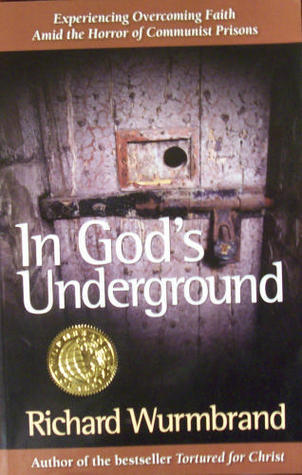
Rev. Richard Wurmbrand

After Rev. Wurmbrand had been released from prison, he wrote

The tortures were sometimes horrible.  I prefer not to speak too much about those through which I have passed; it is too painful.  When I do, I cannot sleep at night. (Tortured for Christ, 34)

And yet he also wrote,

When I look back on my fourteen years in prison, it was occasionally a very happy time.  Other prisoners and even the guards very often wondered at how happy Christians could be under the most terrible circumstances.  Christians in prison danced for joy.  How could they be so happy under tragic conditions? (Tortured for Christ, 57).

Tertullian – Prison Theology

Tertullian wrote a prison theology of sorts to encourage imprisoned believers.  It is believed by many that he wrote to Perpetua and her fellow Christians awaiting execution.  Tertullian fully admitted that prison was an unpleasant place, even to Christians.  But he also compared prison to what the “desert used to provide to the prophets.”  He said,

The Lord himself often went to a remote place so he could pray without interruption and withdraw from public life.  So let’s drop the name “prison” and start calling it a spiritual retreat.  Though your body is shut inside a building and your flesh is restrained, the whole world is open to your spirit (Early Christian Martyr Stories, 113).

Tertullian went a step further and called for imprisoned Christians to consider the prison a sanctuary.  He said,

Yes, it’s dark in jail – but you are the light.  You may be in chains, yet you’re free before God.  Though the place exudes a foul stench, you are a sweet odor there.  In prison you may await the judge, but the reality is, you will pass sentence on those very judges. (Early Christian Martyr Stories, 113).

In all of these stories, there is no attempt to hide the atrocities and horrors of being imprisoned for faith in Jesus.  And yet at the same time, there is a strong theme of God’s presence not only making the prison bearable, but also a place of prosperity and joy.

As we read stories about North Korean Christians being killed for their faith and Christians being imprisoned and beheaded by ISIS, we will do well to remember that as terrible as prison can be, it can also be a place of worship (like a sanctuary), spiritual growth (like the desert), and a place where the presence of God reigns (like a palace).

Posted in North Korea, persecution | Tagged , , , , | 3 Comments