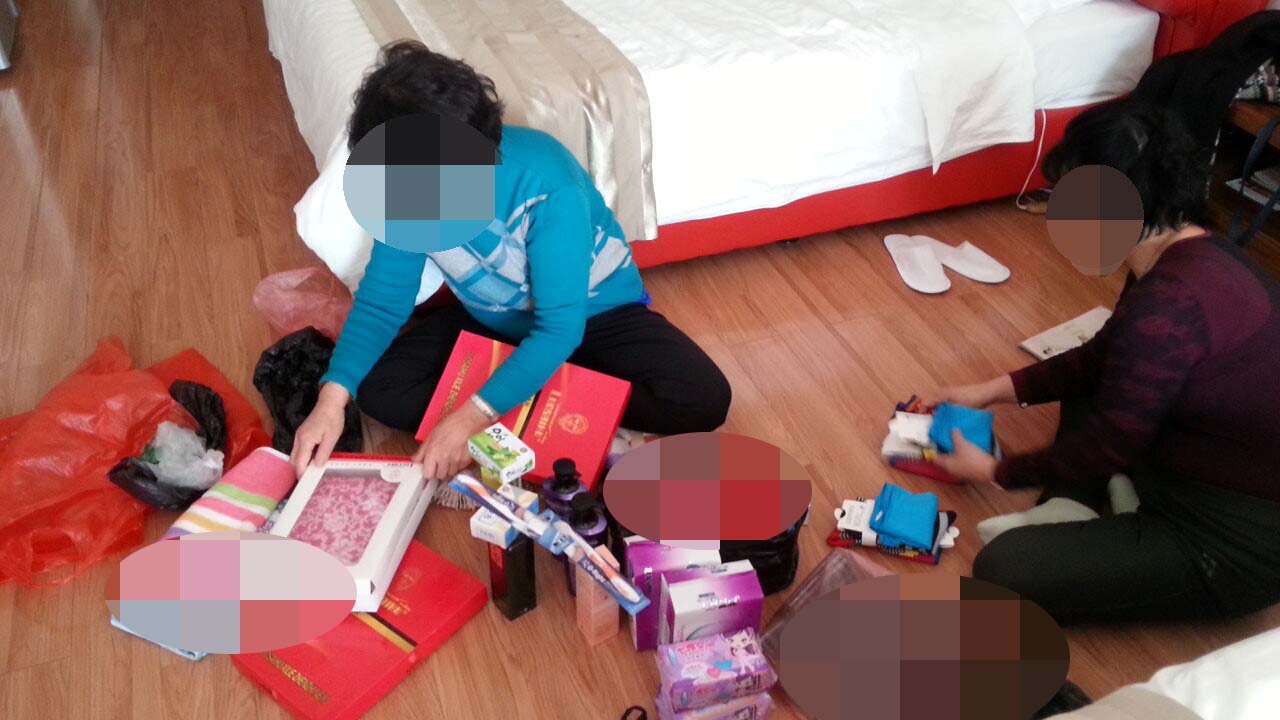
 One of the most interesting and unique ways that we spread the gospel into North Korea is through our North Korean ministry packs. The ministry packs contain basic necessities customized to the location to which they are being delivered. Some packs contain hygiene supplies, undergarments, socks, rice, or noodles. Others contain shoes and jackets and even work tools.
But loneliness, emptiness, and disillusionment can’t be remedied by a pair of socks. The packs also include the gospel in the form of a tract, MP3 Player, New Testament, or other Gospel-sharing resource, such as The Story of Jesus, a visual depiction of Bible stories. All of these are done in the North Korean dialect.
Although we’ve done many MP3 players in the past, this year we made an intentional shift to less print and more electronic media in the packs. This is because many countries continue to crack down much harder on the easily detected printed material for NK ministry rather than the easily disguisable electronic media. This year, we are placing 1,250 MP3 players loaded with gospel content into the hands of NKs in Asia. The MP3 players contain the Dramatized New Testament, 60 NK style hymns, Prequip leadership segments, and In The Shadow Of The Cross lessons.
“These packs will be very helpful for people in NK,” one of our partners, Mr. H, told us with excitement as we gave him the funds to assemble and distribute 30 ministry packs to NKs. Later, he assembled these packs with living necessities such as personal hygiene items, socks, clothes and towels. These packs also contain greatly needed medicine that is difficult for NKs to get because it is so expensive.
Through a contact of Mr. H who is returning to NK, these packs are being carried into NK and distributed to those in need.
We were also excited to provide one of our partners with money to purchase 50 ministry packs and distribute them to North Korean workers in a nearby town. Our partner has a good relationship with one of the NK leaders who works there, and she will be allowed to distribute the packs. The women’s salaries are low, and they do not have enough supplies to live on. Many of them also suffer from sickness, which means that the medicine in the packs will be especially helpful to them.
The Lord continues to use these ministry packs to open doors of ministry with North Koreans that normally wouldn’t be open. Please pray that the Lord would allow more and more packs to enter into North Korea this year. Also pray that God would use the individuals carrying the packs to share the gospel in the power of the Holy Spirit. Finally, pray that God would open the hearts of each North Korean receiving a pack.