
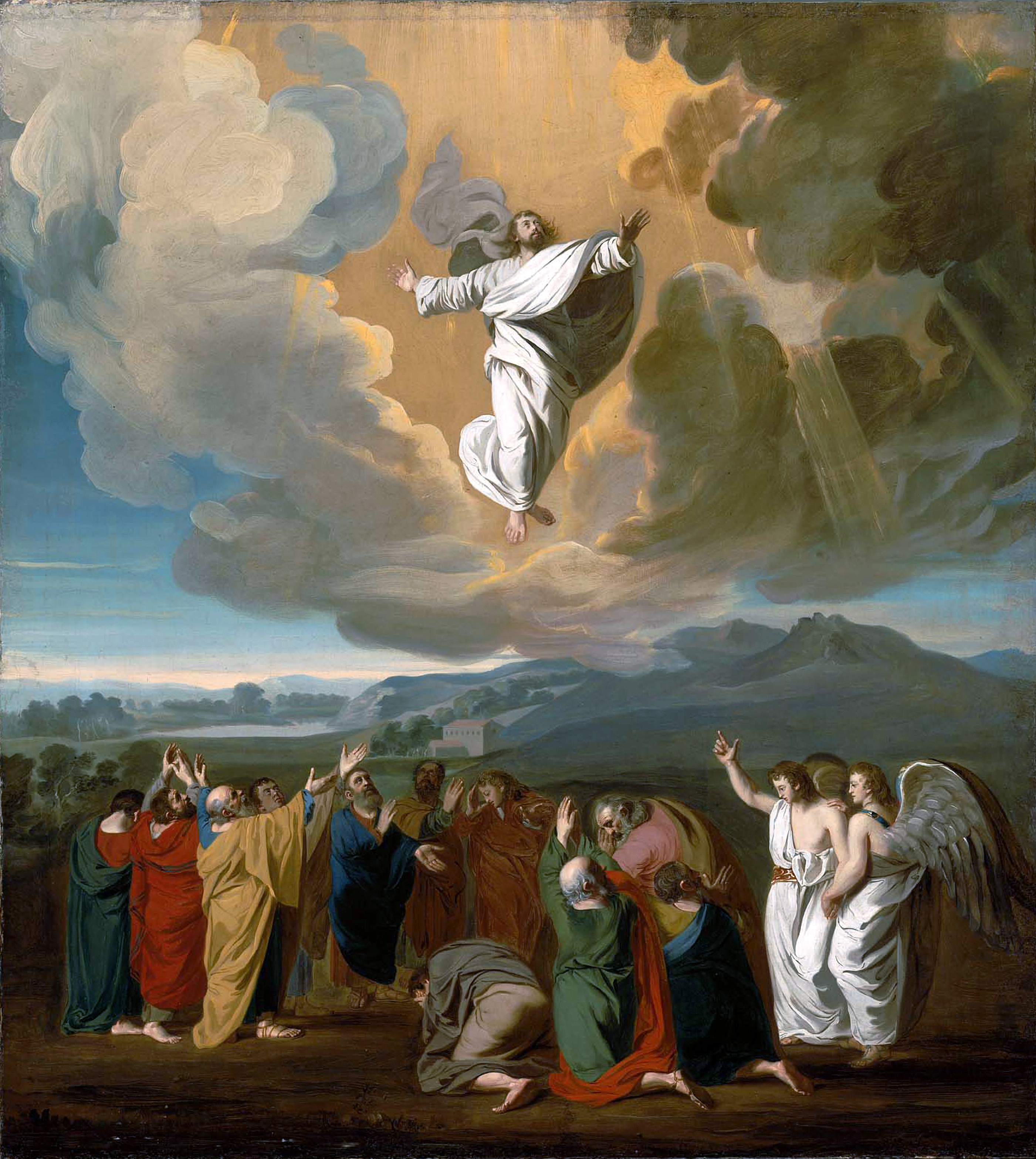
If your Easter is a single day of the year, your Easter is too short. And if Jesus’ ascension is not part of your gospel, it is not the gospel.
The teaching of the Lord Jesus is not “On the cross, the Father transferred our sins to Jesus and poured out his wrath on Jesus and forsook him. Then the Father’s wrath was satisfied, so, if we believe in Jesus, we can go to heaven when we die.”
If this is what you believe, there is no need for the burial, resurrection, ascension, or any other part of the gospel beyond the three hours of Jesus’ time on the cross. If this is what you believe, what you believe is not the gospel.
Sin is a broken relationship with God, not an invoice for which God demands payment or punishment. When Israelites brought an animal to offer to the Lord, they weren’t transferring their sins to the animal so that it would be killed instead of them. They were acknowledging their guilt in breaking the relationship with God. They offered the animal as a sign of their repentance. The person making the offering could not enter God’s presence because of their sin. That was why the animal was slain outside the temple, and then the blood was brought into the temple and sprinkled on the altar as their offering. Why was the blood the offering?
For the life of a creature is in the blood, and I have given it to you to make atonement for yourselves on the altar; it is the blood that makes atonement for one’s life. (Leviticus 17:11)
The Father never turned away from the Son. Even when Jesus said, “My God, my God, why have you forsaken me?” he is quoting a passage of scripture the way rabbis do in abbreviating it by quoting the beginning of the passage.
My God, my God, why have you forsaken me? Why are you so far from saving me, so far from my cries of anguish? (Psalm 22:1)
Jesus wants us to read the entire Psalm. And, when we do, we get a picture of what is being accomplished on the cross.
For he has not despised or scorned the suffering of the afflicted one; he has not hidden his face from him but has listened to his cry for help. (Psalm 22:24)
All the ends of the earth will remember and turn to the Lord, and all the families of the nations will bow down before him, (Psalm 22:27)
This is why Jesus says, in John 12:32:
And I, when I am lifted up from the earth, will draw all people to myself. (John 12:32)
When Jesus says “lifted up”, he doesn’t only mean lifted up on the cross. He means lifted all the way up—lifted up on the cross, then lifted out of death, and then lifted into heaven.
Jesus is slain outside the city just as the animals were slain outside the temple in the sacrificial system. In the sacrificial system, the blood is brought inside the temple and sprinkled on the altar. In the same way, Jesus ascends to the highest heaven to offer his blood in the heavenly temple. It is on the day of Jesus’ ascension, when he offers his blood, that the Father gives us repentance and the forgiveness of sins.
But if we walk in the light, as he is in the light, we have fellowship with one another, and the blood of Jesus, his Son, purifies us from all sin. (1 John 1:7)
It isn’t that God was demonstrating his wrath for us on the cross. Scripture says that God was demonstrating his own love for us through Christ on the cross. God’s wrath will be poured out at the end of the age by Christ himself on those who have rejected God’s offer of repentance in Christ Jesus.
But God demonstrates his own love for us in this: While we were still sinners, Christ died for us. (Romans 5:8)
When Christ’s wrath is poured out, you will know it because you will see it. It will destroy the whole of creation.
But do not forget this one thing, dear friends: With the Lord a day is like a thousand years, and a thousand years are like a day. The Lord is not slow in keeping his promise, as some understand slowness. Instead he is patient with you, not wanting anyone to perish, but everyone to come to repentance. (2 Peter 3:8–9)
The Father never forsakes the Son. Everyone else forsook Jesus when he was on the cross. But the Father did not.
“A time is coming and in fact has come when you will be scattered, each to your own home. You will leave me all alone. Yet I am not alone, for my Father is with me. (John 16:32)
Always remember that the persons of the Trinity always act jointly. On the cross, the Son is revealing the patience, love, and mercy of the Father.
Very truly I tell you, the Son can do nothing by himself; he can do only what he sees his Father doing, because whatever the Father does the Son also does. (John 5:19)
We can see a good picture of the joint ministry of the Father and the Son in John 17. We are used to thinking of the ascension narrative as appearing only in Luke and Acts. But in John 17, Jesus prays about his coming ascension.
After Jesus said this, he looked toward heaven and prayed: “Father, the hour has come. Glorify your Son, that your Son may glorify you. (John 17:1)
The Father glorifies the Son by revealing himself through the Son on the cross, raising him from the dead, having him ascend, receiving the sacrifice of his blood, and having the Son sit at his right hand, ruling and reigning over all.
Now this is eternal life: that they know you, the only true God, and Jesus Christ, whom you have sent. (John 17:3)
“Eternal life” does not mean “going to heaven when you die.” That is a false gospel. Eternal life is not about where we live. It is about who lives in us and who we live with. We are seated with Christ in heaven from the moment we are baptized.
And God raised us up with Christ and seated us with him in the heavenly realms in Christ Jesus, (Ephesians 2:6)
But our stay in heaven is temporary because we go wherever Jesus goes. So, when Jesus comes at the end of the age, we will come with him.
In John 3:16, Jesus does not say, “Whoever believes that I died for their sins will go to heaven”. He says, “Whoever believes in me will have eternal life”. At our baptism we receive the Holy Spirit. Through the Holy Spirit, the Father and Son come to live in us forever. That, says Jesus, is eternal life.
For God so loved the world that he gave his one and only Son, that whoever believes in him shall not perish but have eternal life. (John 3:16)
The reason why Jesus says, “It is finished” before dying on the cross is because, at that moment, Jesus completed all the work God gave him to do on earth. But that doesn’t mean his offering is finished. His work on earth is completed on the cross, but his offering for our sins is made in heaven at his ascension.
I have brought you glory on earth by finishing the work you gave me to do. (John 17:4)
Jesus said, “Do not hold on to me, for I have not yet ascended to the Father. Go instead to my brothers and tell them, ‘I am ascending to my Father and your Father, to my God and your God.’” (John 20:17)
Amazingly, Jesus prays that the Father would glorify him “now” in John 17:5 before he went to the cross.
And now, Father, glorify me in your presence with the glory I had with you before the world began. (John 17:5)
The reason he does this is because, for Jesus, his death, burial, resurrection, and ascension are all part of the same “hour”.
“I have revealed you to those whom you gave me out of the world. They were yours; you gave them to me and they have obeyed your word. Now they know that everything you have given me comes from you. For I gave them the words you gave me and they accepted them. They knew with certainty that I came from you, and they believed that you sent me. (John 17:6–8)
Jesus says that his words and teachings come from the Father. At our Baptism, the Holy Spirit is given to us to remind us of his words and teachings and to reveal them to us fully. Just as the Son only says what the Father says, the Holy Spirit only says what Jesus says.
The Father and Son dwell through the Holy Spirit in the one who holds to the words and teachings of Jesus.
I pray for them. I am not praying for the world, but for those you have given me, for they are yours. All I have is yours, and all you have is mine. And glory has come to me through them. (John 17:9–10)
It is quite amazing the glory comes to Jesus through us, his disciples. Christ is glorified when we only relate to God and one another according to the teachings of Christ.
We may know that Jesus is interceding for us in heaven. But you may not know what he is praying for. What would there be to intercede for if the Father has already given us the forgiveness of sins? He intercedes for us the same way he did in John 17.
I will remain in the world no longer, but they are still in the world, and I am coming to you. Holy Father, protect them by the power of your name, the name you gave me, so that they may be one as we are one. (John 17:11)
You may think, “There are very many churches and denominations. All Christians are not ‘one’ like Jesus prayed, so the Father must not have answered Jesus’ prayer yet.”
But that is not true. Jesus says that when we believe in him, he and the Father come to live in us through the Holy Spirit. That’s not a metaphor. They really and truly live in us. And their living in us is what unites us with each other as the body of Christ across all times and places. Churches and denominations may be divided, and there may be some sheep who are pastors’ sheep or denominational sheep rather than the Lord’s sheep. But all who belong to the Lord are in fact one because the one God—Father, Son, and Holy Spirit—lives in us. How do we experience that oneness? By leaving behind all that does not come from the words and teachings of Jesus as taught to us by the Holy Spirit.







thank you so much…confirming the Word! All glory be to God and HiSon Jesus Christ!