We get letters: When is it OK for a nonprofit to ask for money to meet a need?

Great question arrived over the comment transom this week from faithful blog buddy Herb R:

My question does not apply to this post specifically, but TG in general. I have been reading your blog and the Mission Increase web site for some weeks now. I have also bought several resources (books, DVDs) that I am in the process of reviewing. What I am trying to understand is this: From a TG perspective, is there any situation where it is ‘valid’ for a Christian ministry to ask for donations simply because there is a need and not have their primary focus be on developing champions, at least initially, with respect to a particular fundraising event. Many Christian schools and ministries, for example, conduct various ‘a-thon’ events: walk-a-thon, jog-a-thon, bowl-a-thon, etc. to help meet their budget. So how does one reconcile verses such as the following with TG as it relates to schools or ministries conducting a walk-a-thon or other ‘a-thon’ event?

Exodus 12:35-36 – “The Israelites did as Moses instructed and ASKED the Egyptians for articles of silver and gold and for clothing. The Lord had made the Egyptians favorably disposed toward the people, and they gave them what they asked for, so they plundered the Egyptians.”

Also, verses in the NT such as: “Now to him is able to do immeasurably more than all we ASK or imagine…” (Ephesians 3:20); and “You do not have, because you do not ASK.” (James 4:2).

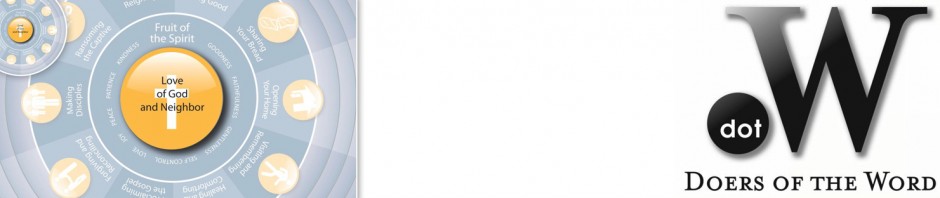
I recall seeing somewhere on your blog (or perhaps it was the MIF web site) a diagram showing a small TTF circle within a larger TG circle. As I try to wrap my head around the principles of TG, that diagram seems to be saying (at least to me), “OK, it is o.k. for a ministry to conduct a TTF fundraising event such as a walk-a-thon, but ultimately the focus should be on the bigger (Biblical) picture and not the $$’s, in other words, coaching a donor to spiritual maturity and transforming them into champions.” Am I getting it or am I missing something?

These are super questions, Herb. Let me lay out a reply that links you to further information from some of the previous posts on the site here.

  1. It’s crucial to distinguish between a church and a nonprofit organization. We want to make sure we don’t take verses from the scripture that apply to the church and/or to the people of God in general and apply them across the board to the Christian nonprofit. A Christian nonprofit organization is not a church. It’s a church renewal movement. Its purpose is to prophetically call the church to own and embody a cause central to God’s purpose that has, over time, fallen out of the church and either become professionalized or neglected by the society at large and/or Christians in particular.

    And here’s the key point, Herb: The church does not exist to resource the nonprofit. The nonprofit exists to resource the church.

    Check out more on this idea of the Christian nonprofit as church renewal movement in this previous post.

  2. Some folks harbor the major league misconception that embracing Transformational Giving means never having to talk to your constituents about their giving. Nothing could be further from the truth!

    Check out one of my favorite posts of all time on this site for an in-depth discussion of this topic. Here’s the gist of the piece:

    “What drives the giving process in Transformational Giving is not our organization’s need or the champion’s comfort level, but what Scripture calls them to do generally and what the Holy Spirit is calling them to do specifically. As leaders, we’re called to help each champion walk in the works God has prepared for them. That requires open and honest conversation, even–and often especially–in the area of giving.”

    Dang, that was a good post. Now make sure to click the link and read the rest of it, Herb.

  3. TG has a way of causing jog-a-thons and read-a-thons and cheese-a-thons and all-a-thons to be blown apart into a million pieces as you approach TG warp speed. Here’s why, from a previous post that I encourage you to read on the subject:

    “The key is that the event needs to provide the occasion, the equipping, and the opportunity for your owner-level champions to invite those in their sphere of influence to actually do the word related to your cause. Not just learn about it. Not just be emotionally impacted by it. Not just to give money towards it. But to be it.”

    The problem with a-thons is that they attract people to participate based on two data points–the need of the organization and the willingness of a sponsor to underwrite the cost of someone doing something other than participating directly in the cause–neither of which enables the champion to grow to full maturity in Christ. Since that’s the key point of our work as Christian leaders (see Ephesians 4:11-13), we need to rethink (translation: discontinue) our use of these events. More in the past post, so do make sure to read that.

Thanks again, Herb, for hitting up with some excellent questions and giving me a chance to reprise some of my favorite prior posts. It’s like memory lane today.

And if you yourself, dear reader, have a Transformational Giving question, use the comment section on this or any post to grab my attention, and I’ll be happy to mess with your mind, life, and career as well.

Posted in Uncategorized | Leave a comment

What the Jehovah’s Witnesses can teach us about P/E/O

In this space we previously wrote about What The Mormons Can Teach Us About Major Donor Development. In the interest of providing equal time for all cults [Editor’s note: that’s a joke], we highlight today an absolutely fascinating piece from the New York Review of Magazines (tip courtesy of GetReligion.org) entitled The Most Widely Read Magazine in the World:

Every month, nearly 40 million copies of The Watchtower are printed in more than 180 languages and sent to 236 countries. There are no subscriptions and you won’t find it on newsstands, but it’s still hard to miss. Thanks to the efforts of Witnesses like the Tavolaccis, The Watchtower is the most widely distributed magazine in the world, with a circulation of more than 25 million. Last year, the world’s 7.3 million-strong Jehovah’s Witnesses spent 1.5 trillion hours knocking on doors and “street Witnessing” — stopping folks in parks and on streets — to preach the “good news” with a copy of The Watchtower. Its closest competitors are AARP The Magazine (circulation 24.3 million) and Better Homes and Gardens (7.6 million). It doesn’t hurt that The Watchtower has been free since 1990, with the option of a small donation.

Here’s the crucial P/E/O insight–don’t miss it:

The Jehovah’s Witnesses don’t produce The Watchtower as a piece primarily to be read by their own constituents. They produce it as a tool for their constituents to use to spread the cause within constituents’ own spheres of influence.

What would happen if we nonprofits changed the way we thought about our newsletters and magazines? What if we saw them not as targeted at our constituents but rather as tools that we train them to use to reach others with the cause?

Armed with their copies, Frank and the other Witnesses at the Glendale Kingdom Hall head back upstairs for a pep talk. “Elder” John Juels leads the 10-minute session from the stage, offering tips on how the congregation might keep doors open this morning. Frank Tavolacci calls it “a little bit of rah rah rah.”

“Raise a topic of interest,” suggests Juels, a short, bespectacled man in a bright orange tie. He invites a young blonde, “Sister Rachel,” up from the crowd to the stage for a role play. After a quick knock-knock and some polite doorfront introductions, Juels says the government is a hot topic right now, so Witnesses might raise the spectre of Governor Paterson to keep their bleary-eyed targets listening. “The government of Jesus Christ is coming,” he tells his mock door-opener. “Certainly God would do a better job than some of the people we have today.”

Role playing. Training in how to use the tools. Creative suggestions on how to share the cause. Do you suppose any of this might provide useful insight into how we go about deploying our own periodicals and publications?

The article notes that a special “study edition” of The Watchtower is produced for Jehovah’s Witnesses themselves. What a fascinating idea: a “mass appeal” issue of your newsletter or magazine to be used as a tool by your champions, and a special “study edition” of your newsletter or magazine to be read and discussed by your champions themselves.

Another key learning:

The articles in the Watchtower are not about the Jehovah’s Witnesses and what is happening in, um, Witnessdom. Instead, they are about subjects perceived to be of interest and value to the reader, making the cause of Witnessdom accessible and relevant to issues the reader is currently facing.

“It’s for Witnesses but also for the public,” Pellechia says of The Watchtower. “For people who would be interested in what the Bible would say about subjects like child-rearing and how to keep marriages united.” The magazine might focus on infidelity in May, homosexuality in June and earthquakes in July. Articles might answer questions like “Should you be honest at all times?” and “Has God left us?” (Yes, and no, in case you were wondering.) Each article is littered with scriptural references, which function like hyperlinks, directing readers to Bible pages for further reading. The committee also decides questions and answers for the special “study” editions of The Watchtower produced specifically for Witnesses already in the flock to study at Kingdom Halls every week. The number of study editions printed is undisclosed.

Study editions with questions and answers to help champions grow in the cause. I can’t get over that. That’s a million dollar idea.

Maybe I will develop a study edition of this blog that asks, “Why are cults, for-profit organizations, and secular nonprofits so much better at applying biblical principles governing the spread of causes than we evangelical nonprofits are? When will our development strategies become as evangelical as our theology?”

Posted in Uncategorized | 2 Comments

When does fundraising become unethical? When fundraisers act as takers, not lead givers

Jim Harries had me from hello.

Even the title of his post on the Lausanne Global Conversation site–Biblical Giving, Holding Donors Accountable–is about the best five word summary of why Biblical fundraising and development is–and must be–different than any secular fundraising approach.

  • In secular fundraising, the trendy battle cry these days is “Hold nonprofits accountable!”
  • In Biblical fundraising, the core truth has always been that the giver must be held to account–namely, to carry out that which God commands the giver to do in relation to the causes and attendant courses of action He explicitly commends.

Lest Christian fundraisers cheer too quickly, though, Harries notes that they more than anyone bear a primary sort of accountability, one which, tragically, they exercise all too rarely. The result?

An ethics fail which happens in broad daylight every day.

These days we have many charitable specialists in the West.  That is, those who act as ‘middle men’ between the conscience-stricken and the poor.  Their raison d’être obliges them to promote and defend the notion that ‘giving’ is both helpful and effective in impact.  Yet they themselves are not ‘givers’ in the normal sense of the word, because the ‘giving’ they do is of the money of others, from which their own incomes have already been extracted.  This unfortunately leaves them suspect. These ‘middle men’ can be accused of profiteering from the maladies of others.  Their self-interest often has them promote strategies against poverty that are actually oriented to the perpetuation of their own activities.

Responsibility for the ethics of giving is delegated to the above group.  Those who give to the middle-men have to trust that they pass on their funds in an appropriate way.

From a Transformational Giving standpoint we’d say it like this:

  • The role of the Christian fundraiser is to be the lead giver to the cause.
  • This leadership is drawn from knowing, doing, and teaching what the Bible calls all Christians to do in relation to the cause.
  • In other words, Christian fundraisers are not solicitors of funds but player-coaches of giving.
  • They encourage others to imitate their actions, not merely respond to their solicitations.

Sum it up and say:

If you seek to be good at Christian fundraising, let it be through growing into the fullness of Christ in relation to your cause and then coaching others to imitate that same maturity. Let it not be because you learned tools, techniques, and strategies that made it possible for you to solicit like the pros.

Posted in Uncategorized | 3 Comments