
“At that time the kingdom of heaven will be like ten virgins who took their lamps and went out to meet the bridegroom. Five of them were foolish and five were wise. The foolish ones took their lamps but did not take any oil with them. The wise ones, however, took oil in jars along with their lamps. The bridegroom was a long time in coming, and they all became drowsy and fell asleep. At midnight the cry rang out: ‘Here’s the bridegroom! Come out to meet him!’ Then all the virgins woke up and trimmed their lamps. The foolish ones said to the wise, ‘Give us some of your oil; our lamps are going out.’ ‘No,’ they replied, ‘there may not be enough for both us and you. Instead, go to those who sell oil and buy some for yourselves.’ But while they were on their way to buy the oil, the bridegroom arrived. The virgins who were ready went in with him to the wedding banquet. And the door was shut. Later the others also came. ‘Lord, Lord,’ they said, ‘open the door for us!’ But he replied, ‘Truly I tell you, I don’t know you.’ Therefore keep watch, because you do not know the day or the hour.” (Matthew 25:1-13)
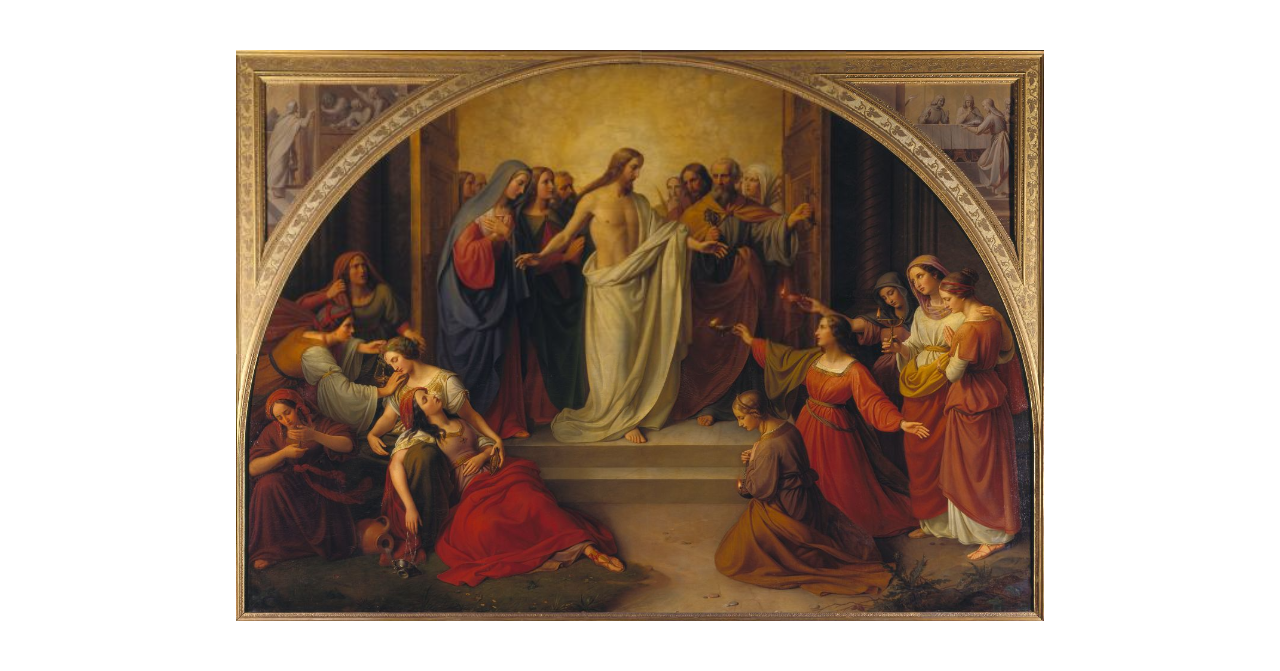
When we hear this parable, we wonder what the oil represents, who the virgins are, and why there are ten of them. We may be confused because we thought we were the bride, yet here we seem to be the virgins.
But here is important news: Almost none of Jesus’ parables are allegories! The few times that Jesus tells parables that are allegories, he then reveals the details to the disciples so they can understand.
Jesus spoke all these things to the crowd in parables; he did not say anything to them without using a parable. So was fulfilled what was spoken through the prophet: “I will open my mouth in parables, I will utter things hidden since the creation of the world.” (Matthew 13:34-35)
Jesus’ parables reveal to his disciples what was hidden since the creation of the world. Their meanings remain a mystery to the crowds and religious leaders, but Jesus makes them known to his disciples. These explanations are recorded in Scripture for us to read. We do not need to search for secret meanings beyond what he has revealed.
I no longer call you servants, because a servant does not know his master’s business. Instead, I have called you friends, for everything that I learned from my Father I have made known to you. (John 15:15)
Jesus commands us to have only one Teacher. His teachings do not require another teacher to uncover and explain hidden meanings. Jesus’ teachings are complete and lack nothing. Through the Holy Spirit, the Lord opens Scripture so that we can understand him.
This is true of today’s parable. Jesus tells us its meaning in the final verse:
“Therefore keep watch, because you do not know the day or the hour.” (Matthew 25:13)
We do not need to assign a hidden meaning to the oil, the virgins, or every detail of the wedding feast. The point is what Jesus draws our attention to with the word “therefore.”
Professor Philip Kern suggests that if Jesus told this parable today, he might describe people driving through a desert to attend a wedding. The wise pack water and extra fuel; the foolish do not. If we heard somebody tell this kind of story today, we would not ask “What do the water and fuel symbolize?”. We would just recognize them as necessities for a journey through the desert.
In the same way, Jesus’ hearers would have understood that the virgins needed oil to fulfill their role at the wedding. The point is not to decode the oil but to keep watch, because we do not know the day or the hour.
But what does Jesus mean by “keep watch”? And what event does he mean when he says we do not know the day or the hour?
Before telling this parable, Jesus left the temple for the last time after the religious leaders rejected him. His departure marked the permanent departure of God’s presence from the temple. His visit was the time of God’s visitation, part of what Scripture calls the Day of the Lord.
The disciples pointed out the impressive temple buildings, but Jesus told them that all would be destroyed.
As Jesus was sitting on the Mount of Olives, the disciples came to him privately. “Tell us,” they said, “when will this happen, and what will be the sign of your coming and of the end of the age?” (Matthew 24:3)
In Matthew 24, Jesus answers the disciples’ question about the temple’s destruction. They did not yet understand that he would be betrayed, killed, and raised from the dead. What happened was so different from their expectations that even when he appeared to them after his resurrection, some doubted.
When they saw him, they worshiped him; but some doubted. (Matthew 28:17)
Their expectations shaped their question on the Mount of Olives: “What will be the sign of your coming?”
They were not asking when Jesus would return from heaven to judge the living and the dead. They expected the Messiah’s first and only coming to bring the present age to an end. When Jesus announced the temple’s destruction, they understood it as a sign that he was about to reveal himself publicly as the Messiah.
Their question meant, “What will be the sign that you are revealing yourself as the Messiah and thus bringing this age to an end?” They expected this to happen very soon.
In response to their question, Jesus describes wars, persecution, false messiahs, and signs in the heavens. He makes clear something different from what Jews—including his disciples—were expecting. He made clear that there will be a long delay between his first coming and the end of the age.
This difference in expectation remains a dividing point between Jewish and Christian understandings of the Messiah to this day. The expectation was that the present age would end when the Messiah came. Yet when Jesus came, the age did not end.
Jesus taught his disciples to understand this delay. Paul and Peter also had to address it when proclaiming Jesus as the Messiah: if the Messiah had come, why had the present age not ended?
Jesus’ answer is that the Day of the Lord has begun with his coming, but its fulfillment unfolds like birth pains. As thunder follows lightning, the end of the age follows his coming after a delay.
And this gospel of the kingdom will be preached in the whole world as a testimony to all nations, and then the end will come. (Matthew 24:14)
Here Jesus reveals for the first time that the gospel will go beyond the Jewish people. This explains the delay: Christ will offer mercy to God’s enemies in every nation. Then the end will come.
What should the disciples do during this time? In Matthew 24, Jesus tells them not to be deceived, to stand firm, not to return home to retrieve their possessions, and to keep watch. The approaching end of the age does not change our responsibility as disciples. We must continue doing what Jesus commanded from the beginning, even when the world is falling apart around us.
This is why Jesus tells the Parable of the Ten Virgins. He echoes the language of the Sermon on the Mount, his first sermon on discipleship.
“Not everyone who says to me, ‘Lord, Lord,’ will enter the kingdom of heaven, but only the one who does the will of my Father who is in heaven. Many will say to me on that day, ‘Lord, Lord, did we not prophesy in your name and in your name drive out demons and in your name perform many miracles?’ Then I will tell them plainly, ‘I never knew you. Away from me, you evildoers!’” (Matthew 7:21-23)
The parable puts that teaching into a story. The five foolish virgins knock at the door and say, “Lord, Lord,” but the bridegroom replies that he does not know them.
Jesus also returns to the contrast between the wise and the foolish from the Sermon on the Mount:
“Therefore everyone who hears these words of mine and puts them into practice is like a wise man who built his house on the rock. The rain came down, the streams rose, and the winds blew and beat against that house; yet it did not fall, because it had its foundation on the rock. But everyone who hears these words of mine and does not put them into practice is like a foolish man who built his house on sand. The rain came down, the streams rose, and the winds blew and beat against that house, and it fell with a great crash.” (Matthew 7:24-27)
Disciples are foolish when they hear Jesus’ words but do not put them into practice. They are wise when they hear and obey. What should they do when the sun stops giving light and the stars fall from the sky? Continue hearing and doing Jesus’ words.
Sadly, only days later, on the night Jesus was betrayed, the disciples forgot this teaching and acted like the foolish virgins.
Then he said to them, “My soul is overwhelmed with sorrow to the point of death. Stay here and keep watch with me.” (Matthew 26:38)
“Keep watch” is the same command Jesus gives in the parable. Yet when their world began to fall apart, his disciples did not hear and obey.
Then he returned to his disciples and found them sleeping. “Couldn’t you men keep watch with me for one hour?” he asked Peter. (Matthew 26:40)
We are to understand Jesus’ parables by remembering his teachings and recognizing the words and expressions he uses throughout them—including in the parables we are seeking to understand—rather than scouring the parables for hidden meanings.
Whatever happens in the world, we must treasure Jesus’ words and continue doing what he commanded from the beginning.
Keeping watch is not a matter of relying on human strength. Peter was confident in his own resolve:
Peter replied, “Even if all fall away on account of you, I never will.” (Matthew 26:33)
Yet Peter fell away.
Jesus’ command here is not “Be strong,” but “Keep watch.” That is, watch out for anything that takes your attention away from hearing and doing the words of Christ.
In Matthew 24, Jesus warns his disciples of many things that can distract us: natural disasters, wars, false teachers, false messiahs, other believers falling away, political events (including elections!), family responsibilities, and even our physical limitations can draw our attention away from Christ’s words.
We should therefore avoid worldly entanglements as much as possible and guard our devotion to the Lord.
The Apostle Paul picks up on the language of Jesus’ parable of the virgins in 1 Corinthians 7:32-35 when he writes:
I would like you to be free from concern. An unmarried man is concerned about the Lord’s affairs—how he can please the Lord. But a married man is concerned about the affairs of this world—how he can please his wife—and his interests are divided. An unmarried woman or virgin is concerned about the Lord’s affairs: Her aim is to be devoted to the Lord in both body and spirit. But a married woman is concerned about the affairs of this world—how she can please her husband. I am saying this for your own good, not to restrict you, but that you may live in a right way in undivided devotion to the Lord. (1 Corinthians 7:32-35)
Paul teaches the same principle: undivided devotion to the Lord.
Undivided devotion means simplifying our lives to focus on one thing: hearing and doing the words of the Lord Jesus at all times. Heaven and earth will pass away, but his words will not.
This undivided devotion to hearing and doing Jesus’ words is what he calls wisdom.