NORTHERN ETHIOPIA: AS TWO REFUGEE CAMPS ARE DESTROYED, TEN NEW CHURCHES FORM

As heavy fighting in the northern Ethiopian region of Tigray continues into its ninth month, the UN’s Special Rapporteur on human rights in Eritrea has “sounded the alarm” calling for prompt UN investigation of what he is calling the “horror stories” of Eritreans fleeing the destruction of two refugee camps in the region. But amidst the horror, Voice of the Martyrs Korea is calling attention to signs of new life: Ten new churches have formed as Eritrean Christian refugees begin the work of putting their lives back together outside the camps.


An estimated 20,000 Eritrean refugees forced from two camps in the Tigray region of Northern Ethiopia are now missing. Reports say thousands have been kidnapped back into Eritrea while thousands more have fled to other cities in Ethiopia.

We typically think of church planting as something that occurs under optimal social conditions. But the New Testament consistently shows that churches are formed like stars: Under immense pressure in clouds of swirling chaos. That’s certainly what’s happening in the case of these new refugee churches in Ethiopia.

But these new church plants should not be celebrated naively or idealistically by Christians in other parts of the world. Very few Christians around the world have ever experienced the kind of absolute dependence on Christ that has brought these new Eritrean refugee congregations together. These are ten groups of Christians clinging to each other and to God because everything else in their lives is shattered, splintered, and burning. Like the disciples in the Upper Room, they are meeting behind locked doors in whatever cities they can reach and whatever rooms they can afford. They are encouraging each other in the Word, because the Word is all they have left. Even in the big cities like Addis Ababa where many of the refugees are fleeing, it is impossible for them just to “blend in”: Ethnic tensions are soaring due to the conflict in the northeast, so Protestant Christians of Tigrinian ethnicity and Eritrean citizenship like them are viewed with deep suspicion and even hatred by the majority ethnic groups of Muslim and Orthodox background in whose neighborhoods they are forced to hide.

The reports by Mohamed Abdelsalam Babiker, the UN Special Rapporteur on the situation of human rights in Eritrea, on the situation facing the estimated 25,000 Eritrean refugees displaced by the destruction of the Hitsats and Shimelba refugee camps match the reports that Voice of the Martyrs Korea is receiving from its own long-time Eritrean and Ethiopian partners. Based on eyewitness testimonies as well as the report from the UN High Commission on Refugees Commissioner to the region, the Special Rapporteur told the UN in June that he is “sounding the alarm” and calling for immediate UN investigation into what he calls “clear and consistent patterns” that these refugee camps were being “specifically targeted” for horrific abuses by Eritrean troops fighting alongside Ethiopian National Defense Forces. He said, “As many as 20,000 Eritrean refugees were missing” after they were “left for months without food, water, medical supplies or other basic necessities”. The specific “alarm” that the Special Rapporteur sounded was due to what he called “horrifying reports of sexual and gender-based violence, and of Eritrean refugees in Tigray being kidnapped, killed, attacked and prevented from fleeing”.

Reports from a long-time Voice of the Martyrs Korea partner from Tigray add another layer of concern. He wrote, “Thousands of Eritreans were taken by the Eritrean government back to Eritrea. Some of them are Christians. When they arrived in Eritrea, some were sent to prison, and some were taken to military camp as soldiers because they were soldiers before they came to Ethiopia.”

Dr. Hyun Sook Foley does a trauma recovery training with Eritrean refugees in Tigray in 2019, shortly before the conflict broke out.

But reports confirm that thousands of other Eritrean refugees escaped, fleeing to other cities in Ethiopia. It is from this massive refugee pool that ten new Eritrean refugee churches in Addis Ababa have formed. All over Ethiopia, Christ is comforting his people–not only these refugees but others whose lives have been turned upside down by this Tigray conflict. People are gathering in the churches. They’re grieving at the churches. They are bringing dead bodies to the churches to bury them in mass graves. Christ is still making a way for people to have hope.

Voice of the Martyrs Korea has so far sent 13,500,000 KRW (around $13,000 USD) in 2021 to aid Eritrean Christian refugees in Ethiopia and the families of Eritrean Christians imprisoned or martyred in Eritrea, with additional transfers planned for the third and fourth quarters of the year based on donations received. Donations made this month to Voice of the Martyrs Korea Families of Martyrs and Prisoners fund will be used to support this ongoing Eritrean work.

Donation to VOMK’s Families of Martyrs and Prisoners (FOM/FOP) fund can be made at www.vomkorea.com/en/donation or via electronic transfer to:

국민은행 (KB Bank): 463501-01-243303

예금주 (Account Holder): (사)순교자의소리

Please include the name “FOM/FOP” on the donation.

For more information on Voice of the Martyrs Korea’s partnership with Eritrean underground Christians, please visit www.vomkorea.com/en/country-profile/eritrea.

Dr. Foley prays with an Eritrean widow, whose husband died in prison due to his faith in Jesus Christ. Reports say thousands of Eritrean refugees have been repatriated to Eritrea during the current conflict.

Posted in eritrea | Tagged , , , , , , , , , | Leave a comment

Move over, megachurches; homes–and home schooling–are the new “front line” of the Chinese church

Police in Taiyuan, Shanxi Province, China again summoned a homeschooling father for questioning, this time on suspicion of “illegal holding of materials promoting terrorism and extremism”.

The July 7 detention is the latest in a series of troubles with Chinese authorities for Zhao Weikai, a 35-year-old Christian from Taiyuan Xuncheng Reformed Church whose refusal to stop homeschooling his three children led to a home raid and charges of proselytism in May.

Zhao Weikai, Li Xin, and their three children

The case signals an increase in China Communist Party intervention in Christian homes.

The Party overrules the parents in every aspect of a child’s life. Parents must act as extensions of the state or face severe punishments. In the case of Brother Zhao, his Christian beliefs prevent him from subjecting his children to an atheist public education. The response of the authorities was to detain him, raid his home, confiscate his home schooling materials, and investigate him as a terrorist.

Zhao and his wife Li Xin have repeatedly been summoned by officials from the Religious Affairs Bureau, Education Commission, and the National Security Agency and threatened with arrest for their refusal to send their children to public school. Brother Zhao and Sister Li refused to compromise their beliefs and instead continued to provide Christian education for his children in his home.

Twenty police officers then raided Zhao’s home on May 17, showing Zhao a subpoena for proselytism. First Brother Zhao, and then later Sister Li, were summoned to the police station while officers who remained in the family’s home confiscated books, a computer, a hard drive, and a flash drive. Li was released the same day, but Zhao was forced to serve a 15-day administrative detention penalty and was denied visitation by his family and attorney. When his attorney complained, authorities said that because the case involved classified information and national security concerns, the visitation request was denied.

Police used the investigation of Zhao’s home schooling to gather information about Zhao’s church. Zhao is not the pastor of Taiyuan Xuncheng Reformed Church, but he works closely with the church’s minister, An Yankui. Brother Zhao and Minister An studied theology together in Chengdu Huaxi Seminary, a Christian university founded by Pastor Wang Yi, the pastor of Early Rain Church who was sentenced to nine years in prison in December 2019. It would appear to be a case of guilt by association.

Brother Zhao with his wife and children after his release from the Lishi Detention Denter, where he was held in May.

Minister An wrote, “They arrested Brother Zhao without an arrest warrant and searched his home without a search warrant. They summoned and detained him using the excuse of home schooling his children, but they interrogated him about our church, completely irrelevant to the case. Until now, his family has not received any document, not even a list of items they impounded nor a detention notice. Everything remains a secret, a public secret. CCP authorities persecute God’s church.”

Zhao’s case reveals more than Communist Party concerns over home schooling.

For years, the Chinese government tried to control Christianity by cracking down on China’s megachurches. But Chinese churches responded by shifting away from the megachurch model of professional pastors and Christian educators to a home-based model where Christian parents like Zhao and Li take the primary responsible for the evangelism and discipleship of their children. The Chinese government knows that it is the home-based model, not the megachurch model, that is the future of the Chinese church. So they are devoting more and more state resources to cracking down on Christian parents. As Christians in the rest of the world, we need to devote more of our resources to supporting Chinese Christian parents like Zhao and Li. They are the new “front line” of the Chinese church.

Individuals interested in learning more about Voice of the Martyrs Korea’s partnership with China Aid to support home-based discipleship can visit www.vomkorea.com/en/ssib.  

Posted in China | Tagged , , , , , , , , | 4 Comments

Traces of North Korean Underground Church Detectable in Defectors’ Recollections

North Korean defector Ms. KMS (name withheld for security reasons) recalls her first exposure to Christianity, which occurred while she was still living in North Korea. “In 2002 I was arrested and brought to North Korean police,” she says. “Many people were interrogated at the same time. A young woman next to me was closing her eyes, folding her hands, and praying to God. The police yelled, ‘You dog, you are praying!’ They beat her and sent her to a prison camp. I knew she was praying because my mom had told me that people eventually pray to God when they are in trouble.”

Experiences like Ms. KMS’ are shared by approximately one third of North Korean defectors enrolled in Voice of the Martyrs Korea’s discipleship training schools, yet many defectors do not initially realize they encountered underground Christians. When defectors are asked questions like, “Do you think there is an underground church in North Korea?”, they typically answer, “No.” But when they are asked whether they recall seeing anyone in North Korea pray, sing a hymn, share a Bible story, use the Christian name for God, or even possess a Bible or other Christian artifact, many will answer, “Yes.” Then they begin to realize they encountered traces of the North Korean underground church, even within their own family.

North Korean defectors often do not realize they were exposed to underground Christians inside of North Korea because they have been conditioned to think of “church” according to the South Korean model. The two most frequent associations for the word “church” among South Korean Christians are church buildings and pastors. North Korea certainly has neither of these. So, many South Korean Christians and North Korean defectors conclude, “Therefore, there must be no church in North Korea.”

North Korean defector Mrs. SYA, a June 2021 graduate of Voice of the Martyrs Korea’s Underground Technology training program (center), surrounded by Voice of the Martyrs Korea founders Pastor Eric Foley and the Dr. Hyun Sook Foley. Mrs. SYA first encountered Christianity in North Korea when her neighbors were allegedly taken away for their faith. 

Other studies are also confirming what Voice of the Martyrs Korea hears from its students: A growing number of North Koreans are being exposed to Christianity while still inside of North Korea. The North Korean Human Rights Database, an independent data-gathering NGO, has been conducting an ongoing study where they found that in the year 2000, effectively 0% of people inside North Korea had ever seen a Bible with their own eyes. They have continued to update that study, and at the end of 2020 they determined that around 8% of people inside of North Korea have now seen a Bible with their own eyes. In a different study released in June, the Center for the Study of Global Christianity (CSGC) at Gordon-Conwell Theological Seminary estimated that more than 6% of North Koreans inside North Korea have had personal contact with a Christian.

But it is the detailed interviews with North Korean defectors that reveal the most important information about the source and characteristics of the Christian faith inside North Korea. Most of the North Korean Christians our defector students met inside of North Korea didn’t become Christian as a result of South Korean missionaries or through the North Korean government’s purported “state churches”. They became Christian because of other North Koreans.

Consider the example of Mrs. YEJ (name withheld), a North Korean defector enrolled in a Voice of the Martyrs Korea training program, whose mother was an underground Christian. “My mother believed in God, and, as she was dying when I was thirteen, gave me a silver or iron cross,” says Mrs. YEJ. “Because I was so young at the time, I didn’t even know what it was. My mother told me to bury it in the ground because I would die if someone found it, so I wrapped it in paper and buried it under a persimmon tree at night.” Mrs. YEJ says that she never heard anything more about the cross or about Jesus. “I only remember that I often saw my mother murmuring in front of water or food in the room. Sometimes I saw her make the sign of the cross. But, at the time, I didn’t understand what my mother was doing, so I figured she must just be upset.”

A June 2021 graduate of Voice of the Martyrs Korea’s Underground Technology discipleship training program for North Korean defectors, Mrs. SYA (name withheld), says she witnessed some of her neighbors being taken away by security guards when she was still living inside North Korea. She was told by other neighbors that it was because they were members of the underground church. Mrs. SYA said she did not know much about God when she saw the underground Christians being taken. But what she did know is that she would be in trouble if she ever believed in God.

Mrs. SYA’s eldest son defected from North Korea to China when he was young. At the time, she told her son to never to believe in God. Later, Mrs. SYA also defected from North Korea and lived in China. Her son would call her every Saturday and tell her to believe in God and go to church. He also sent her praise music tapes. Whenever she listened to the tapes, her heart felt at peace. Sometimes, she would stay up all night and listen to the tapes over and over. After this, she began to attend church.

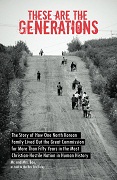
I had the opportunity to write These are the Generations, a book on North Korean underground Christianity, together with a third generation North Korean underground Christian husband and wife who have since defected to South Korea. Through the book, we can see how different the North Korean and South Korean models of church are. In the North, there are no church buildings and no pastors, yet the underground church there continues to endure and even grow and thrive, perhaps at a higher rate of growth than the South Korean church, which has been in numeric decline since the 1990s.

These are the Generations by Pastor Eric Foley.

Recording, studying, and publishing these traces of the North Korean underground church experienced by North Korean defectors should be the basis for North Korean mission, now and in the future. South Korean Churches and mission groups are raising funds and preparing to plant South Korean-style churches inside North Korea if and when North Korea opens, and they are increasingly drawing North Korean defector pastors into that way of thinking. That is unfortunate because it overlooks the reality that God has already planted a unique and beautiful church in North Korea, one that has endured the harshest conditions in history and continued to grow.

Pastor Richard Wurmbrand, the founder of Voice of the Martyrs, said that when the Soviet Union collapsed, he was grieved to see so many pastors rush into Russia from the outside in order to plant Western-style churches. He said that instead, these pastors should have rushed in to sit at the feet of the Russian pastors who had survived communism and the Soviet gulags in order to learn how to plant a church capable of surviving under any conditions. We should have the same thinking about North Korea.

Voice of the Martyrs Korea joins international human rights groups and government analysts in estimating a current population of around 100,000 Christians inside of North Korea. While some of these converted due to South Korean missionaries and radio broadcasts and Bible balloon launches from South Korea, what we can see from the testimonies of the North Korean defectors enrolled in our Voice of the Martyrs Korea training programs is that most of the Christians they met in North Korea did not learn Christianity from pastors or in church buildings. They learned it underground. We have a lot to learn from following the traces of these underground North Korean Christians.

More information about Voice of the Martyrs Korea’s North Korea ministry and its training programs for North Korean defectors is available at https://vomkorea.com/project/northkorea/.


Posted in North Korea, North Korean defector | Tagged , , , , , | 4 Comments