Voice of the Martyrs Korea receives certification of financial transparency

The Christian Council for Financial Transparency Korea (CCFK) renewed its certification of Voice of the Martyrs Korea this month.

“Voice of the Martyrs Korea received initial accreditation from the Evangelical Council for Financial Accountability (ECFA), CCFK’s parent organization in 2014,” said CCFK President Hwang Ho Chan. “Upon the formation in 2015 of a Korean affiliate of the ECFA, the CCFK, Voice of the Martyrs Korea has since then pursued and received its accreditation in Korea. That accreditation has been renewed continually by CCFK, including the present year.”

Officials from the Christian Council for Financial Transparency Korea (CCFK) confirmed Voice of the Martyrs Korea’s financial transparency by renewing its certification again this month. From L to R: Choi Soo Nam (General manager, CCFK), Hyun Sook Foley (Representative, VOMK), Eric Foley (CEO, VOMK), Lee Yoon (Vice-President, CCFK)

Dr. Foley and I have always maintained that financial accountability should be every ministry’s highest priority. Now more than ever, donors want to be certain that when they give a donation, the money will be used exactly as the donor intends and as efficiently as possible.

We sought accreditation with ECFA and CCFK as part of our overall commitment to meeting the highest international standards for financial accountability and transparency. Since the beginning of VOMK 20 years ago, we have felt that Christian organizations must do more than obey the local laws. We must obey the higher standard laid out in scripture.

In accordance with CCFK guidelines, Voice of the Martyrs Korea submits annually to a full financial audit and certification of financial statements by an independent auditor. We also post our annual audit on our website so that our donors and the general public can see exactly where money goes when it is donated to Voice of the Martyrs Korea. Our administrative costs area under 5%, in accordance with NGO best practices advocated by CCFK and other independent financial accountability agencies.

There is a growing trend toward donors holding ministries accountable for how their donations are spent. Voice of the Martyrs Korea welcomes that trend. We believe donors should always be able to call and check on a ministry before they make a gift, to know what they can expect in terms of receipts and reports on the projects they are considering funding. Dr Foley spends one day each week traveling throughout Korea to update Voice of the Martyrs Korea donors individually and in small groups on the progress of ministry campaigns and the ministry’s financial expenditures. To Dr. Foley and me, it doesn’t matter if a person gives us 1,000 KRW (approx. $1 USD) or 100,000,000 KRW (approx. $100). God will hold us accountable for all the funds he directs to us. We should keep donors updated on how their money was spent rather than just asking them for more money.

Dr. Foley and I hope that more churches and ministries consult with CCFK on how to be more financially transparent. We hear missionaries and ministries saying, “Oh, we can’t show any receipts or financial reports about how we spent donations because our work is secret.” But at Voice of the Martyrs Korea we have been working with underground Christians for 20 years, and we have always found a way to receipt and report on our expenses while keeping our field work confidential. Our experience is that if a ministry consults with groups like ECFA and CCFK, they can always find a way to receipt and report on expenses. What is required is simply to place a high priority on donor accountability. The truth is, many ministries don’t do more receipting and reporting simply because the public hasn’t yet demanded it. But that is changing. Donors are demanding greater accountability when they donate. Hopefully VOMK and CCFK can help other Christian ministries increase their financial transparency by sharing what we have learned.

For more information on Voice of the Martyrs’ financial accountability practices and to see its most recent audited financial statements, please visit https://vomkorea.com/about/financial-accountability/.

Posted in accreditation, financial transparency | Tagged , , , , , , , , | Leave a comment

COVID has created a “window of opportunity” to evangelize stranded NK foreign workers


More than 100,000 North Koreans working in China, Russia, Mongolia, Southeast Asia, and the Middle East have been unable to return home due to North Korea’s COVID lockdown. That has created a “window of opportunity” for evangelism which Voice of the Martyrs Korea is seeking to maximize.

File photo of NK workers in a foreign country. 

Perhaps many of us are accustomed to thinking that COVID-related lockdowns make evangelism difficult, but in the case of NK workers sent out to foreign countries by their government, it has made evangelizing them much easier because they are stuck in their current locations until the lockdown is lifted. In many cases they are undersupplied and quite naturally worried about their families and their own future.

VOMK’s estimate of 100,000 stranded North Korean foreign workers comes from our network of field workers as well as from our consultation with secular analysts who study and monitor North Korean foreign workers.

Reaching the workers requires a customized effort in each location. In some cases, electronic Bibles are the most useful tool. In other cases, printed Bibles draw the most interest. Other workers prefer Bible phone apps or links to online videos, like our Gospel of Mark video.

Voice of the Martyrs Korea uses Christian workers from a variety of backgrounds to reach NK workers. Most NK workers have been trained to be wary of contact with South Koreans, so in most cases local Christians can be more effective Bible distributors than South Korean missionaries. And local construction workers or neighbors or even customers can sometimes have access to workers that pastors and missionaries don’t have. There are sometimes even believers or people who are familiar with or especially open to the Bible among the North Korean workers themselves.

So far in 2021 Voice of the Martyrs Korea has distributed more than 4,500 electronic and print Bibles to NK workers, with plans to try to double that amount by year’s end. (We do not release a more detailed breakdown of distribution by country or Bible type to protect the safety of Bible recipients and our own field workers.)

Bibles awaiting distribution to NK workers in foreign countries by Voice of the Martyrs Korea field workers. The ministry uses a variety of Bible types including various digital formats and print.

In most cases, contact with the workers must be very brief and discrete, and follow-up discipleship is often not possible. But we regularly receives letters of thanks sent through our field workers.

The workers’ only exposure to Christianity in most cases is the Bible they receive. They don’t know any Christian “vocabulary”, so their thank-you letters often contain phrases drawn from their daily North Korean life and experience. One NK worker wrote that we should “put Jesus on a pedestal”, which is an expression that is generally reserved only for the Kim family. Similarly, another worker wrote that they should have “single-hearted filial piety and allegiance” to God—a phrase usually used only for North Koreans’ devotion to the Kims. Another worker was worried that writing God’s name could be a security risk, so they referred to God simply as “that person”.

A sample of the thank-you letters Voice of the Martyrs Korea has received this summertime follows: 

A collage of thank-you letters received this summer from NK workers stranded in foreign countries who received Bibles through Voice of the Martyrs Korea distributions


1. John 6:26-28…The words of Jesus told us that one should not work for food that spoils, but for food that endures to eternal life. That food is given to us. God gave Jesus authority, so that we should put him on a pedestal and try to live as the Words of Jesus say.

2. Our hearts for the Father who cares for us is more precious than ‘single-hearted filial piety and allegiance’. We will follow you with single-minded devotion. Where else is the Father like you in the world? Even after looking for other fathers, you are the only Father.

3. Until now, we have thought that we have lived without any regret on our conscience. This time, as we listened to the audio Bible, we thought about it for some days. After listening and listening… we had only thought the monkeys became humans and the world was made in that regard. Even our grandparents told us that way. In the strange land, <country name omitted>, we have received amazing glory and affection from you. We had never seen outside world but the Father came to people like us. We were truly blind before, but the audio Bible awakened and opened our eyes and thoughts. We are giving thanks to you who have sent precious gifts and the audio Bible. We will keep it and treasure it, and live as we hear.

4. In His bosom, we will be reborn like a sunflower to trust in you and follow you. We will be your pure daughter, the Father. Our hearts are becoming peaceful while working as listening to your warm voice. It is like our parents whispering and giving advice to us.

More information about Voice of the Martyrs Korea’s North Korea ministry is available at https://vomkorea.com/en/project/northkorea/.


Posted in Uncategorized | Leave a comment

We should not plant SK/Western-style churches in NK. But we should plant NK-style churches in SK and the West

Dr Foley and I spoke at the Bukkichong North Korean Defector Pastors Association summer retreat on August 10. We urged the association members to become proficient in North Korean underground church planting methods and to apply these in both North and South Korea, instead of using South Korean and Western methods.

Here’s why:

Years ago when the Soviet Union collapsed, Western missionaries rushed in to Russia, bringing their Western church planting methods with them. It made our Voice of the Martyrs founder, Pastor Richard Wurmbrand sad. The Western missionaries wrongly acted as if both Communism and the underground Russian church had failed, when in reality the underground Russian church was spiritually stronger than the church in the West. Pastor Wurmbrand said that Western Christians should rush in to Russia, but only for the purpose of sitting at the feet of the underground Russian Christians who remained faithful witnesses under Communism.

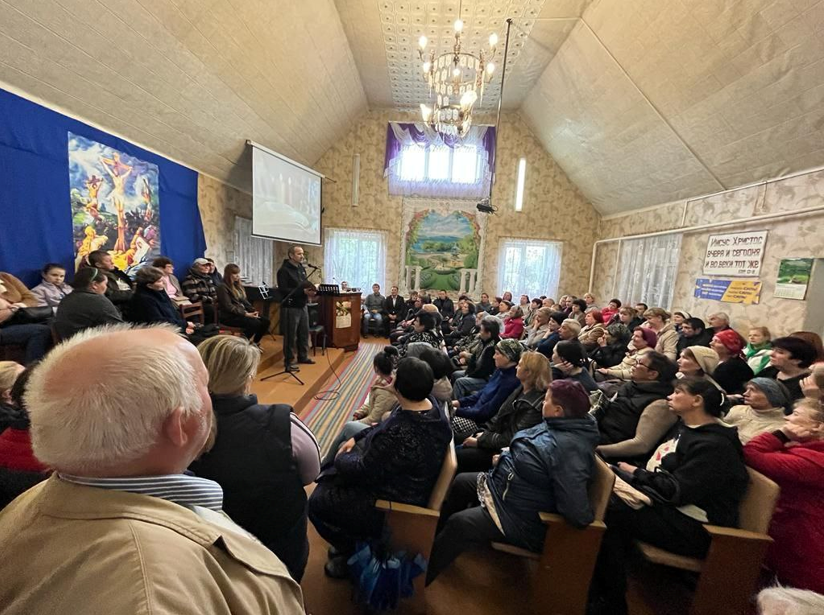
Pastor Eric Foley and Dr. Hyun Sook Foley address North Korean defector pastors at the Bukkichong North Korean Defector Pastors Association summer retreat on August 10.

We told the North Korean defector pastors, “God has not called you to bring South Korean Christianity to North Korean people. The North Korean underground church is not defeated. It is the South Korean church that is defeated and in need of repentance and revival. It has lost its spiritual strength. It needs to sit at the feet of the North Korean underground Christians who have faithfully kept the word of God alive under four generations of Communist persecution.”

We wrongly think because the South Korean church has money and buildings and seminaries, God has said ‘yes’ to it, and because the North Korean underground church faces constant persecution and has no earthly treasure, that God has said ‘no’ to it. But this is human thinking, not God’s thinking. Despite fierce persecution, the North Korean underground church has been growing at the same time the South Korean church has been mired in decades of numeric decline, according to most estimates.

Dr Foley and I referred to the North Korean underground church as “the church built according to the John Ross method” and the South Korean church as “the church built according to the method of Appenzeller, Underwood, and Allen”. Missionary John Ross’ strategy was simple: Translate the Bible. Distribute it. Trust that as people read it, they would meet Christ because he is fully present in his word. Meanwhile, the method of Appenzeller, Underwood, and Allen was a humanitarian aid-based outreach strategy in which Koreans’ interest in Christianity came through a demonstration of its power and attractiveness, especially through the creation of social institutions like schools, orphanages, and hospitals.

At first it would appear that the method of Appenzeller, Underwood, and Allen was more effective. But today the social institutions founded by the earliest missionaries have become secular and no longer advance the gospel. In fact, many of these formerly Christian universities are increasingly hostile to the Christian faith.

By contrast, the method of John Ross has enabled North Korean underground churches to survive the destruction of all the church-related institutions planted by missionaries. Unlike the shrinking South Korean church of Appenzeller, Underwood, and Allen, nothing that has descended from the North Korean underground church of John Ross has been lost.

Growing hostility against Christianity in South Korea will require the South Korean church to rely increasingly on Ross’ Bible-only method. The Lord Jesus warned us in his word that from now until the day he returns, we will face more and more hostility from the world, not less—even here in South Korea. The time is here when the Lord’s people can no longer freely worship or drink coffee or meet in their church buildings, or be trained and receive certificates in person at their seminaries, or have enough money to fund church planting projects in North Korea in 2028, such as has been planned. The time is here in which the Lord intends to lead his people out of buildings and out of seminaries and out of a humanitarian aid mindset so that he can be present to his people through his word alone—the Bible—and to have his people meet with him in the ordinary places of their everyday lives, not mediated by pastors or buildings or megachurch programs.

Many South Koreans and even some North Korean defector pastors continue to doubt the existence of the underground North Korean church. The reason why is that they use the characteristics of the South Korean church–ordained pastors, church buildings, corporate Christian worship–as their criteria to answer the question. They then conclude, no, there are no ordained pastors, church buildings, or corporate Christian worship in North Korea, so there is no underground North Korean church.

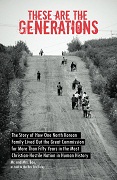
But after 70 years of data gathering we know now with certainty that the North Korean underground church exists. We can trace its continuous existence back to the entry of the gospel into South Korea through the work of John Ross. In fact, we actually know quite a bit about the characteristics of the North Korean underground church, its worship and discipleship practices, and even some of its history and some of its people, especially its martyrs. The book I wrote with underground North Korean Christians, These are the Generations, documents the existence and practices of the North Korean underground church and advocates their emulation by South Korean and Western Christians.

North Korean Christianity is the true heir of the earliest Korean Christians, who were called ‘Bible Christians’. God is pruning the South Korean church of its Western style Christianity that is built on pastors and seminaries and ordination and denominations and humanitarian aid-style outreach strategies and coffee shops. He intends that the NK underground church will purify and revive South Korean Christianity and become the church of unification.

You can see the video of our message below.


Posted in Living in the Underground Church, North Korea, North Korean defector, Planting the Underground Church, preparing for the underground church | Tagged , , , , , , , , , , , | 4 Comments