
Random Acts of Kindness Don’t Release Captives

Part VIII of our series on Ransoming the Captive
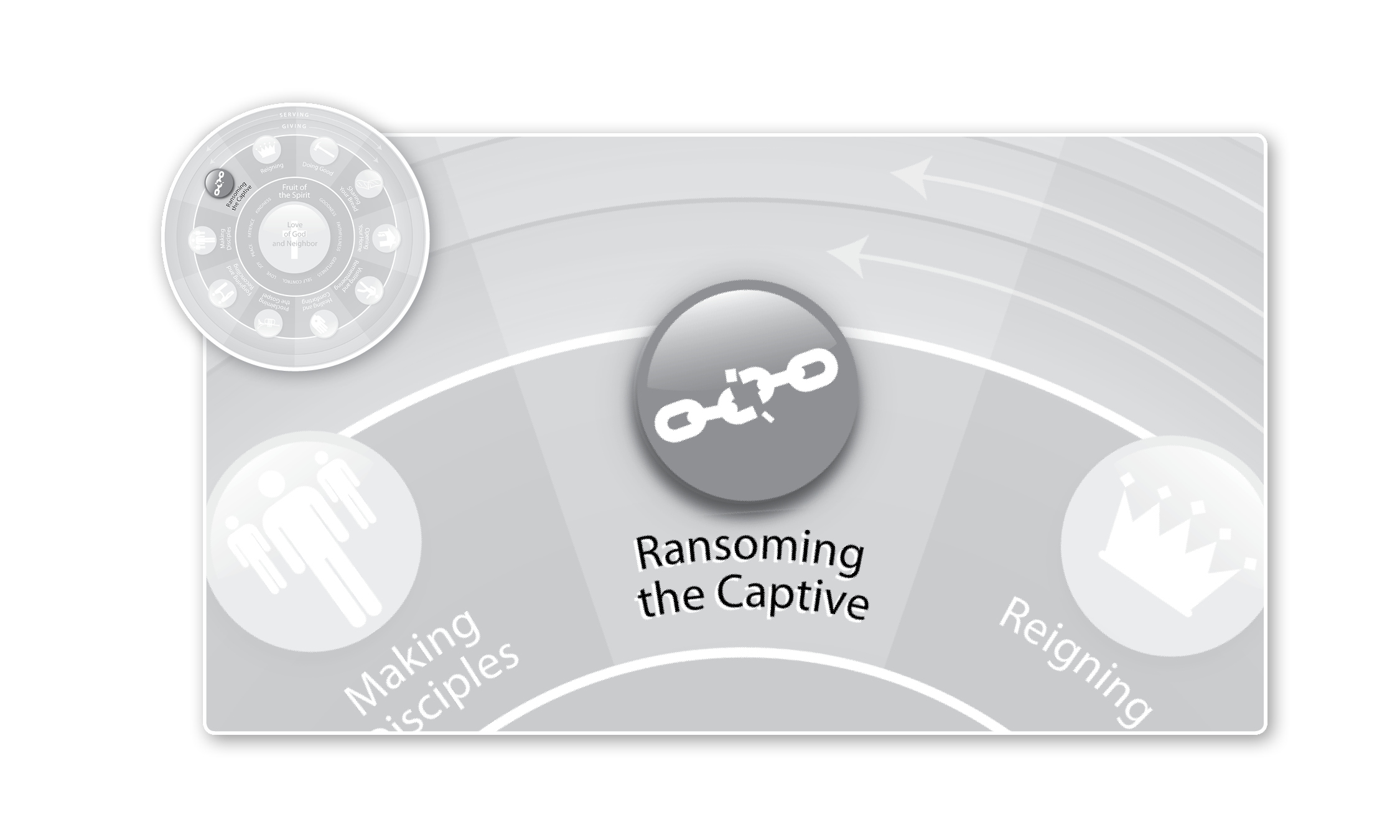
Look back at the Works of Mercy you’ve undertaken in Jesus’ name this year and ask about those to whom you have given yourself: Have your gifts, given in Christ’s name, been used by God to set them free?

    • To those with whom you shared bread, are they still in bondage?
    • And those to whom you opened your homes, are they yet captives?
    • What about those you visited? Free or captive?
    • Those you healed and comforted in Jesus’ name: Are they free or captive today?
    • Those to whom you proclaimed the gospel, those you forgave, those you are discipling: Free or captive in Jesus’ name?

The Work of Mercy of ransoming the captive reminds us that we are called to something more than doing nice things for other people when the occasion arises.

We are called to love people for a lifetime by laying down our own lives for them. By drawing on the love of God to do more than cheer them up or walk alongside them for a day. Ransoming captives means staying with people long enough and getting to know them well enough and giving as much of ourselves as is necessary often enough so that we can see them set free in Jesus’ name. In spirit, soul, and body.

Maybe you don’t know anyone who is being held captive for their faith. But let me ask you this: What kinds of captivity did you see as you performed the Works of Mercy on others in Jesus’ name throughout this year? And did you stay with those people long enough, and were you willing to allow Christ to use you enough, that you could be his instrument in seeing them truly set free, in spirit, soul, and body?

Think back to The Ransom Church in Sioux Falls that I’ve been picking on all month long (God bless ‘em!). When you pay 50 cents per gallon of gas for all the motorists who stop by the gas station that day, you’ve done a nice thing. But when those motorists drive away, how many of them are still in bondage? And to what are they in bondage? Do we even know? And do we really want to know? Do we even ask?Are we prepared to find out, and to give more than 50 cents a gallon to see them delivered in Christ’s name?

Now it’s possible to say, “Yes, the 50 cents a gallon gift is just a way to get to know them. That’s not intended to be the only thing we do to help set them free.” Good! So what comes next, then? What is the plan? Invite them to church? Teach them financial management? Give them an encouraging message every week? Set up a support group to help them stop drinking?

None of these are bad things. But Christ did more than teach us and encourage us and set up a support group for us. He laid down his life for us. He made an eternal commitment to us. As you’ve carried out your Works of Mercy this year, have you begun to love anyone else so deeply that you’re willing to make the kind of commitment to them in Jesus’ name that he made to you?

Remember, Christ didn’t make a commitment to support your sinful lifestyle. So don’t go getting the idea that ransoming the captive means giving them money and letting them sleep on your couch when they get drunk or bailing them out of trouble every time their sinfulness and stupidity plunges them deeper into it. That’s not how Christ ransomed you, and it’s not how you should mirror his ransoming to others.

Do you know how much divine thought went into ransoming you effectively? Scripture calls this plan of ransom the wisdom of God. It’s not something he came up with while driving to work one day!

So how much thought and time are you putting into the question of how God can use you in his work of really, genuinely ransoming people from all the captivity they are facing? Are the Works of Mercy you are doing leading you deeper into lifetime love for others…or are they just random acts of kindness for you?

Posted in Uncategorized | Tagged , , , , , | Leave a comment

How to Ransom Captives: Love. With Your Whole Life. And All Your Resources.

Part VII of our series on Ransoming the Captive

We concluded our last post asking to what length you would go to get back a family member who was abducted.  For most of us, there is almost nothing we wouldn’t do.  But when it comes to ransoming others, we tend to abdicate that responsibility to someone else.  Their own family perhaps.

But is that the love Christ showed to us and which we are called to show to others?

It is a customary thing, not an odd thing, to ransom a captive who is your own blood. Even non-believers do that.

The miracle is not in the act of ransoming a loved one but rather in coming to love with your whole life and all your resources the one who is not your own blood. 

And remember: This—loving others who do not share our own blood—is a gift we receive from Christ. It’s not just a command. It’s a transformation of our hearts, by the one who made us one blood, through the ransom of his own blood.

I like the Weymouth translation of 1 John 4:7 for this reason. It says, “Dear friends, let us love one another; for love has its origin in God, and every one who loves has become a child of God and is beginning to know God.” Loving others who we’re not related to is God’s gift to us. That love has to come from him.

So understand this: the church does not set out to pay ransom or even to be ransom.

And we don’t set out to find people just for the sake of ransoming them. See, ransoming the captive is the ninth Work of Mercy, not the first. The church sets out to mirror the fullness of Christ to the world through those first eight Works of Mercy. When we do this, some people respond to his love shown through us. Then, as the world strikes back and takes these people (and, often, us) captive, other Christians undertake the necessary ninth Work of Mercy of ransoming captives in the same way that any army should ransom its own soldiers.

You know where you see this perfectly? In the story of Peter and John in Acts, healing the beggar at the Temple gate. It’s like a story of ransoming in three acts—or, more accurately, in three chapters of Acts: Acts 3, 4, and 5. It starts in Acts 3. I want you to watch carefully what happens.

Acts 3:1-10

Now Peter and John were going up to the temple at the hour of prayer, the ninth hour. And a man lame from birth was being carried, whom they laid daily at the gate of the temple that is called the Beautiful Gate to ask alms of those entering the temple. Seeing Peter and John about to go into the temple, he asked to receive alms.

And Peter directed his gaze at him, as did John, and said, “Look at us.” And he fixed his attention on them, expecting to receive something from them.

But Peter said, “I have no silver and gold, but what I do have I give to you. In the name of Jesus Christ of Nazareth, rise up and walk!” And he took him by the right hand and raised him up, and immediately his feet and ankles were made strong.  And leaping up he stood and began to walk, and entered the temple with them, walking and leaping and praising God.

And all the people saw him walking and praising God, and recognized him as the one who sat at the Beautiful Gate of the temple, asking for alms. And they were filled with wonder and amazement at what had happened to him.

Notice that Peter and John didn’t go out to ransom captives. They went out to pray. But when they found a captive, they ransomed him with everything they had. Remember: Peter did not say, “Silver and gold I have, but I’m not going to give it to you because I don’t give money to beggars. Instead, I’m going to set you free spiritually.”

Peter didn’t withhold money from the beggar. He had no money. Why? Because one chapter earlier, in Acts 2, he and the other Christians sold everything he had, and it was held in common with the church! He was honest: He was going to the temple flat broke! But this did not stop him from giving what he did have. And when he gave that, the captive was freed.

But wait. That’s not the end of the story!

Acts 4:1-3

And as they were speaking to the people, the priests and the captain of the temple and the Sadducees came upon them, greatly annoyed because they were teaching the people and proclaiming in Jesus the resurrection from the dead. And they arrested them and put them in custody until the next day, for it was already evening.

Ransoming the captive is personally very costly—and money is the smallest part of the cost. In Acts 3, the captive is ransomed by Peter and John. In Acts 4, Peter and John become captives because of their ransoming. And, now, you’ll see how costly that ransoming proved to be:

Acts 5:17-21,40

But the high priest rose up, and all who were with him (that is, the party of the Sadducees), and filled with jealousy they arrested the apostles and put them in the public prison.

But during the night an angel of the Lord opened the prison doors and brought them out, and said, “Go and stand in the temple and speak to the people all the words of this Life.” And when they heard this, they entered the temple at daybreak and began to teach.

…when they had called in the apostles, they beat them and charged them not to speak in the name of Jesus, and let them go.

The message here is that it’s not that you need to run around and look for strangers to ransom. The message is that God wants to transform your heart such that your Works of Mercy become costly, lifetime commitments to help unlovable others who want to be delivered from captivity in Jesus’ name. 

Ransoming the captive, in other words, almost always results in the ransomer becoming the ransom. Just like Jesus.

That’s why this month’s field trip is not, “Find a captive and ransom them in Jesus’ name.”

Ransoming may start in a day, but it typically really does last a lifetime.

Not because a person becomes permanently dependent on us to bankroll their sin (more on that in the next post). But because the unlovable other becomes, in the deepest sense, our brother or sister in Christ.

What do you have that you can use to ransom others? Who will you begin to love with it?

Posted in Uncategorized | Tagged , , , , | Leave a comment

Who Did Christ Die For? Not Sinners.

Part VII of our series on Ransoming the Captive

Before we progress any further into this series on Ransoming the Captive, we need to make one thing clear:

Jesus did not die for strangers. Nor did he die primarily for sinners. Nor did he die primarily for his enemies. 

That the people he dies for are all these things—sinners estranged from God who are thus his enemies—is absolutely true and Scriptural. In fact, in Romans 5:8 the Apostle Paul even says, “but God shows his love for us in that while we were still sinners, Christ died for us.”

But listen to that verse again carefully:

“but God shows his love for us in that while we were still sinners, Christ died for us.”

Who did Christ die for? Not sinners. Us.

He died for us while we were sinners. But the best description of who Jesus died for is that he died for us, his beloved humanity, which, tragically, had become his sinfully estranged enemies.

And in this is a world of difference.

We must always remember that it is God’s nature to love human beings. Yes, he is full of righteous wrath toward sinners. But he did not create our race as sinners. He created us as his beloved children. The sin part we added in! So ransoming his beloved children is simply the costly but very natural consequence of his fatherly love toward us.

And that’s why, since the dawn of the race, he has done good to each one of us, fed each one of us, shared his bread with each one of us, opened his home to each one of us, visited and remembered each one of us, and healed and comforted each one of us. Having done all these things for each human being, would he not also give himself to ransom us from whatever separates us from him?

The Apostle Paul says it this way in Romans 8:32. It’s a short, simple passage that I would highly encourage you to memorize.  Actually, don’t just memorize it. Meditate on it, and plant it in the deepest place of your ransomed heart:

He who did not spare his own Son but gave him up for us all, how will he not also with him graciously give us all things?

In the same way, when we Christians mirror his love to the world—when we do good to unlovable others in his name, sharing our bread with unlovable others in his name, open our homes to unlovable others in his name, visit and remember unlovable others in his name, heal and comfort unlovable others in his name, proclaim the Gospel in his name, forgive and reconcile in his name, and make disciples in his name, fall in love with unlovable others in his name…then why in the world would we not also give our lives in his name to ransom the unlovable others to whom we have given all these things? It is our reasonable and joyful worship.

So think of ransoming others as all eight other Works of Mercy extended across time, anchored by the decision to hold nothing back, even our own lives, until the unlovable other be freed in Jesus’ name.

This makes a lot of sense if you think for a moment about non-believers. If a non-believer’s family member gets kidnapped, he or she would of course sacrifice everything to meet demands for ransom. He or she would call the police, the TV station, every friend and relative and casual acquaintance who might possibly be able to help. And he or she wouldn’t try for just a day to raise the ransom. I’ve seen stories on TV of non-Christians who have been trying for more than a decade to free family members who have been kidnapped by the Contras or the Sandanistas or the FARCs or whoever the kidnapping group happens to be. They—these non-believers—put their own lives on hold and devote everything to the ransoming of captive family members.

So among Christians, when those God gives us to love—whether members of the family of God or captives we believe Christ is working to set free—are imprisoned, we should stream in from cities around the world bringing food, raising money, spending the night at the prison, helping the prisoner, defending him, strengthening him, lavishing everything on him because this is what we do in our family.

It’s how Christ taught us.

If a family member of yours were abducted, is there anything you wouldn’t do to get them back?  How should that affect how we show love to captives?

Posted in Uncategorized | Tagged , , , , | Leave a comment

