
In Matthew 13, Jesus’ first parable is the parable of the four types of soil. After the parables, Matthew shows Jesus encountering these four types of soil in sequence.
The first type Jesus encounters is the “path” soil–those whom the word essentially “bounces off” of. At the end of Matthew 13, the “path” people in Jesus’ hometown do not receive his word and in fact take offense at him. At the beginning of Matthew 14, when John the Baptist opposes Herod’s illegitimate marriage, Herod—the worst soil in the New Testament—likewise refuses the word and instead imprisons John the Baptist, ultimately having him beheaded.
After this, we see the “rocky soil” of the crowds, who receive healing and bread from Jesus. Unlike the people of his hometown, they initially receive Jesus’ word with great joy, like little children. But after that?
It’s worth some discussion.
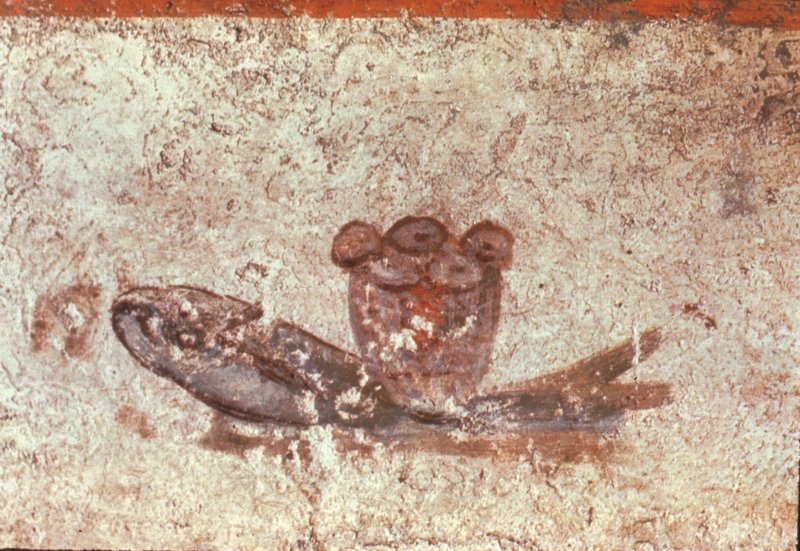
The feeding of the five thousand is the only miracle recorded in all four Gospels. It is not told by any of the Gospel writers as a story about Jesus wandering around, finding hungry people, and feeding them. It is told as a story about Jesus directly providing for all who follow him. This difference matters because the Kingdom of God is about God in Christ providing for, teaching, and leading his people directly, without middlemen.
In John’s Gospel, Jesus withdraws from the crowds after feeding them because he knows they will try to make him king. They want to place him at the top of their existing hierarchy and have him run their nation. But Jesus did not come to reform existing hierarchies. He came to bring a new Kingdom. So, when the crowd follows him and finds him again, he rebukes them:
Jesus answered, “Very truly I tell you, you are looking for me, not because you saw the signs I performed but because you ate the loaves and had your fill. Do not work for food that spoils, but for food that endures to eternal life, which the Son of Man will give you. For on him God the Father has placed his seal of approval. (John 6:26-27)
Notice that Jesus does not rebuke the people for coming to him with their material needs. He rebukes them for living lives focused on meeting those needs. He teaches the same truth in the Sermon on the Mount:
Therefore I tell you, do not worry about your life, what you will eat or drink; or about your body, what you will wear. Is not life more than food, and the body more than clothes? Look at the birds of the air; they do not sow or reap or store away in barns, and yet your heavenly Father feeds them. Are you not much more valuable than they? Can any one of you by worrying add a single hour to your life? And why do you worry about clothes? See how the flowers of the field grow. They do not labor or spin. Yet I tell you that not even Solomon in all his splendor was dressed like one of these. If that is how God clothes the grass of the field, which is here today and tomorrow is thrown into the fire, will he not much more clothe you—you of little faith? So do not worry, saying, ‘What shall we eat?’ or ‘What shall we drink?’ or ‘What shall we wear?’ For the Gentiles run after all these things, and your heavenly Father knows that you need them. But seek first his kingdom and his righteousness, and all these things will be given to you as well. (Matthew 6:25-33)
Jesus delights to provide everything we need. But he does not provide all things so that we can live a good life by the standards of this age. Instead, he provides everything we need so that, with confidence, we can leave everything behind and follow him. The order is: first, serve Jesus; second, do not worry whether he will provide along the way. Jesus did not come to improve our present lives. He came to call us to leave those lives behind.
If the crowds are the rocky soil, does that mean that the disciples are the good soil in this story?
No, they are the thorny soil:
The seed falling among the thorns refers to someone who hears the word, but the worries of this life and the deceitfulness of wealth choke the word, making it unfruitful. (Matthew 13:22)
The disciples hear Jesus’ word, but the worries of this life and the deceitfulness of wealth make them unfruitful in today’s passage:
As evening approached, the disciples came to him and said, “This is a remote place, and it’s already getting late. Send the crowds away, so they can go to the villages and buy themselves some food.”Jesus replied, “They do not need to go away. You give them something to eat.”“We have here only five loaves of bread and two fish,” they answered. (Matthew 14:15-17)
Notice that the disciples do not look to Jesus to act. Instead, because they are preoccupied with the cares of this world, they tell him what to do.
The deceitfulness of wealth does not only affect the rich. Poor people are deceived by the value of wealth, too. Both rich churches and poor churches often assume that the more money they have, the more ministry they can do, and the less money they have, the less ministry they can do.
But this is not how the Kingdom of God works. In the Kingdom, Jesus provides for people directly. That is why he tells the disciples to bring the food and the crowds to him. As the king, he provides for his people directly:
“Bring them here to me,” he said. And he directed the people to sit down on the grass. Taking the five loaves and the two fish and looking up to heaven, he gave thanks and broke the loaves. Then he gave them to the disciples, and the disciples gave them to the people. They all ate and were satisfied, and the disciples picked up twelve basketfuls of broken pieces that were left over. The number of those who ate was about five thousand men, besides women and children. (Matthew 14:18-21)
If even the disciples are thorny soil, who is the good soil?
That’s the point of one of Jesus’ other parables from Matthew 13: The parable of the wheat and the tares. The point of that parable is: Until the end, the wheat and the tares—or the thorny ground and the good soil—look alike. That’s why the owner of the field says the tares shouldn’t be removed until the harvest: Some of the wheat might be removed by accident.
The same thing is true with the thorny soil: Sometimes, in the end, it proves to be good soil after all. Peter was continually an unfruitful disciple, all the way through Galatians 2! But the one thing he never did was to walk away from Jesus. As he told Jesus in John 6:
“Lord, to whom shall we go? You have the words of eternal life. We believe and know that you are the Holy One of God.” (John 6:68-69)
In the end, the only qualification for good soil is that it ultimately never rejects the seed.







