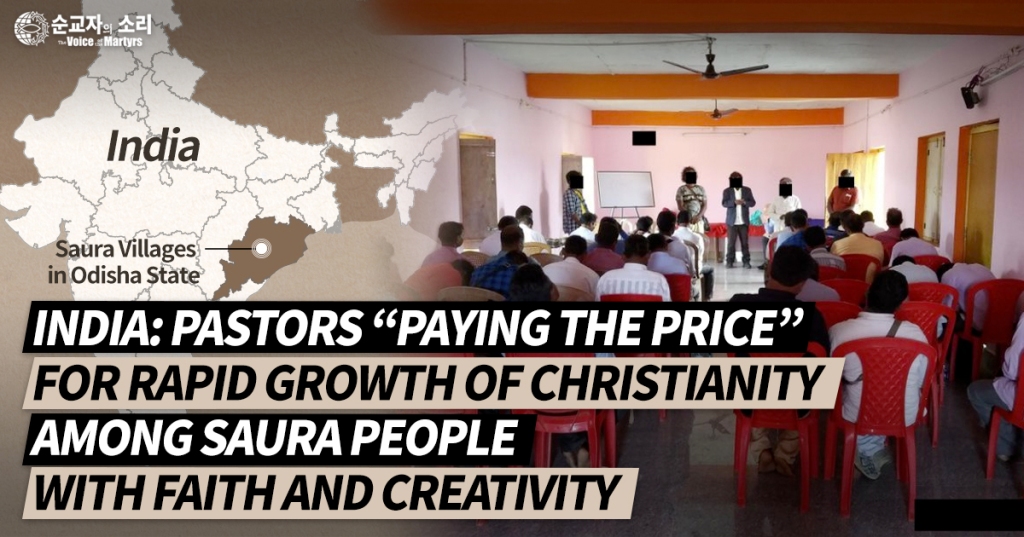
India: Pastors “paying the price” for rapid growth of Christianity among Saura people

This image has an empty alt attribute; its file name is 1012-pr_e.jpg

According to researchers, the number of Christians among the Saura tribe of eastern India has increased from 2,000 30 years ago to more than 200,000 today, an estimated 60% of the Saura population.

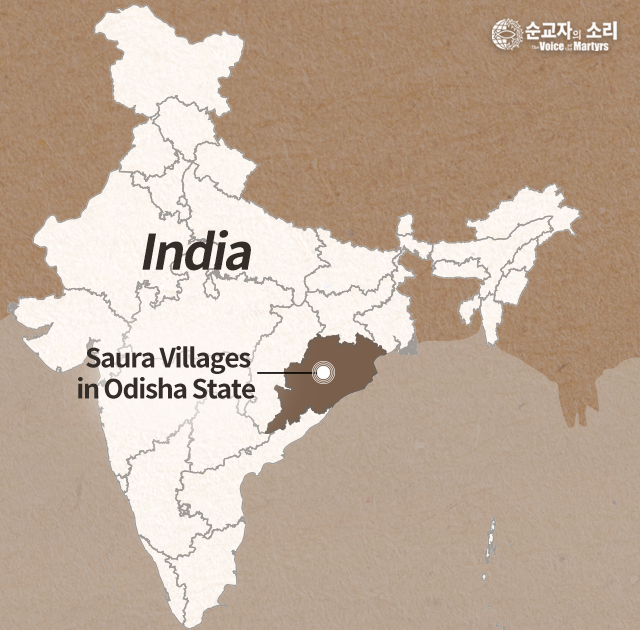
That growth has led to resentment and violence against the Saura pastors who live in the majority-Hindu Saura villages in India’s Odisha State. That’s why Voice of the Martyrs Korea is “adopting” 18 of these pastors in partnership with our sister mission, VOM Poland. It’s a project designed to help meet their basic needs while also training them to face potentially worse persecution in the future.

While many of the Saura villages in eastern India are Christian, there are Saura Christians who live as a very small minority of the population in Hindu villages. It’s the Christians living in these villages who face persecution on a daily basis. Pastors are typically the most persecuted, since the Hindu villagers see them as the cause of the spread of Christianity.

Persecution of the Saura Christians and pastors includes rejection by their families, being barred from common wells and local shops, beatings, and the burning of church buildings. Among the persecuted pastors in the majority Hindu villages, only three have had any formal bible training. Bible training is needed even among pastors in the majority Christian areas, where whole Saura villages were converted in the early 1900s by Canadian Baptist missionaries.
Generations have passed and some of these Christian villages have become quite nominal in their faith, so they are in great need for sound Christian teaching, In many ways, it’s as serious a problem as the persecution being experienced in the Hindu villages.  

Accessing the villages is a challenge, which means a customized educational model is needed.

The Saura villages are spread out across many hills, and it can take hours to get from one village to the next, even in a 4-wheel drive. The 18 pastors we are adopting are all married, each with 2 to 4 children. It can be dangerous for them to leave their families and church buildings unattended. When you add in the time it takes them to make a living to feed their families, you can see why taking time away for bible training can seem like an impossible luxury.
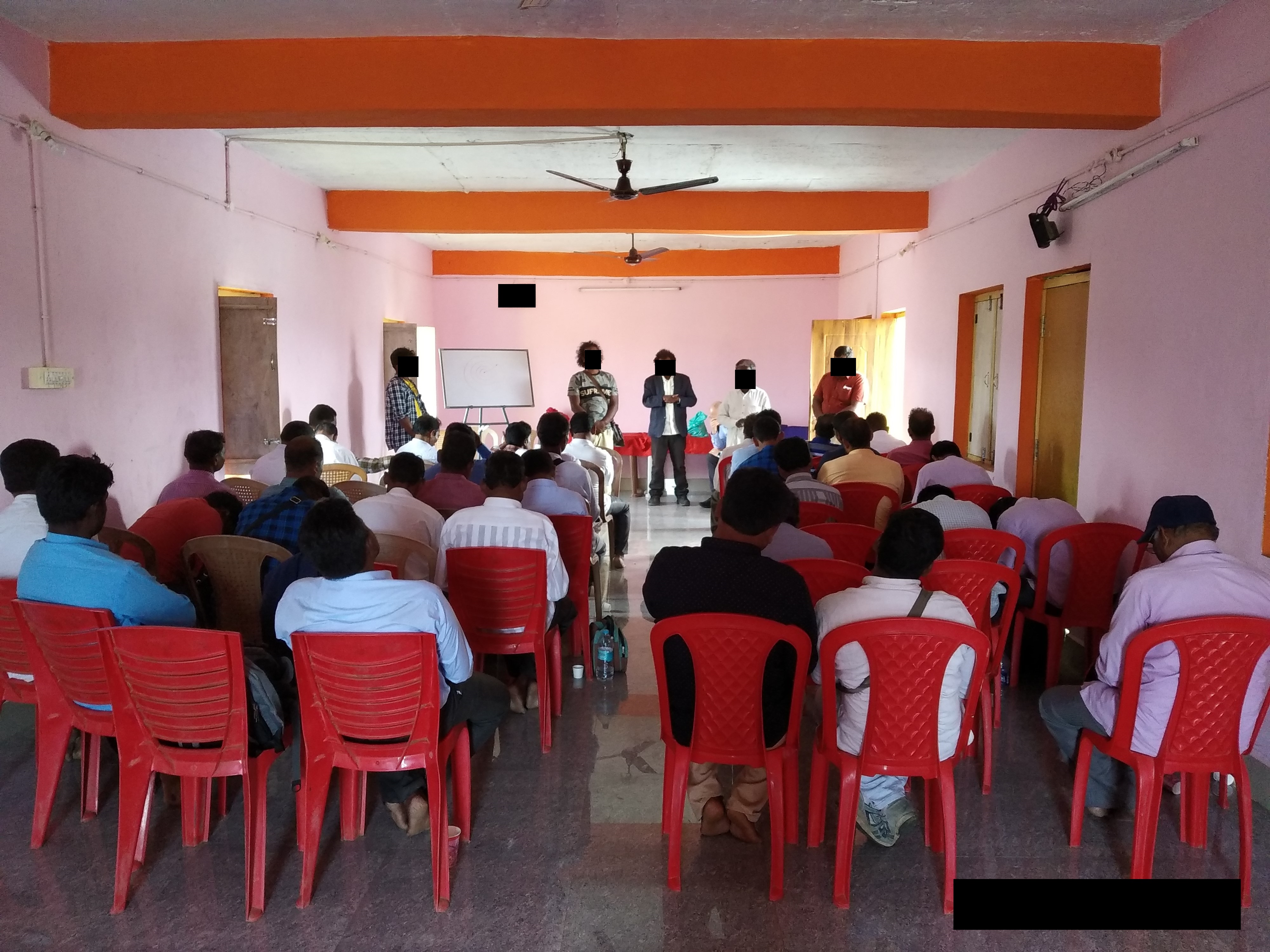
Christians living in the Saura villages of eastern India face persecution on a daily basis.

Arrangements have been made with the closest Bible college, in Raighar, northwest of Odisha state, to provide a six-month training program to the pastors which will enable them to continue to care for their families and churches while enrolled. In order to enable the pastors’ participation, Voice of the Martyrs Korea will be covering their family living expenses for a year.

The financial assistance is a way that Christians outside of India can “share the cost of persecution”.

So far, these pastors have been “paying the price” personally for the rapid spread of Christianity among their whole tribe over the past 30 years. Radical Hindus are angry that Christianity is spreading, and they are making these pastors suffer for that.

Voice of the Martyrs Korea helps Christians who have decided to stay and make a faithful witness to Christ in the face of persecution. There are many organizations who help Christians flee, and we appreciate that important ministry. But our own purpose is to stand with those whom God has called to stay, like these 18 pastors and their families and congregations.

Donations toward this effort can be made until October 31, at www.vomkorea.com/en/donation or via electronic transfer to:

국민은행 463501-01-243303

예금주: (사)순교자의소리 

Please include the phrase “India” on the donation. 
Posted in India, persecution | Tagged , , , , , , , , | Leave a comment

North Korea: Going low-tech to evade state surveillance

As the North Korean government implements its new anti-reactionary thought law, which promises even harsher punishments for anyone found accessing foreign content, a return to low-tech methods of information distribution is essential to protecting those who are distributing and receiving gospel outreach inside North Korea.

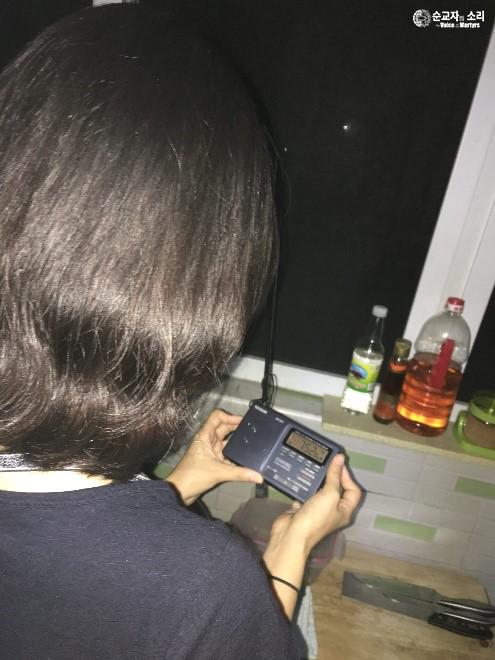
A listener tunes in to a Voice of the Martyrs Korea shortwave radio broadcast, one of five daily broadcasts the ministry does on shortwave and medium wave into North Korea each day.

Technology always leaves a trail, and often the more advanced the technology, the more obvious the trail. As North Koreans increasingly access information from the outside world on SD cards, USBs, cell phones, and computers, it actually becomes easier for the North Korean government to apprehend those who are accessing foreign content. That’s true not only of those who are watching Korean dramas and KPOP but also those who are accessing Christian content electronically.

The strategy of the North Korean government is not always to stop the spread of electronic devices but instead to let the devices themselves do the spying work.

Several years ago, software was installed on phones and computers which made non-state approved files un-playable or deleted them. But now, programs like ‘Trace Viewer’ record user activity and even take screenshots every few minutes that are then accessible to the authorities. USBs are automatically infected with government software that records every device they are plugged into and what files get uploaded or downloaded. It is a very efficient way to spy, and ordinary North Koreans have less options for identifying and getting rid of malware from their electronic devices than users in the rest of the world do.

International human rights organizations inadvertently aid the North Korean government’s surveillance efforts by relying increasingly on high tech methods for information transmission into North Korea.

We see outside groups focused on getting as many SD cards or USB devices as possible inside North Korea. This doesn’t mean SD cards and USBs are bad. Certainly they’re helpful, and we use a lot of them, too. But high tech devices should only ever be a supplement to low tech strategies, because generally speaking, the lower the tech, the more manpower it takes for the government to search and the harder it is for them to trace and apprehend the users.

This is why Voice of the Martyrs Korea continues to use technology that may at first appear to be outdated.

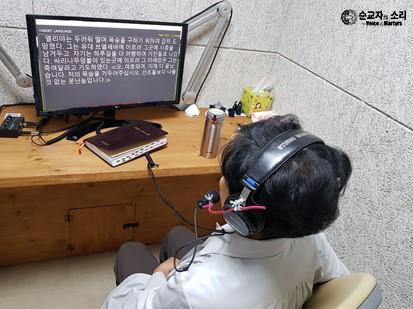
A North Korean defector announcer records the Bible for use on Voice of the Martyrs Korea’s daily radio broadcasts and electronic media.

People may think, “Who listens to shortwave radio anymore? The sound quality of an MP3 player is so much better.” But the reason why we do five shortwave and medium wave radio broadcasts into North Korea every day is because radios are a great example of a ‘non-networked device’—that is, a device that doesn’t transmit information about its use the way a computer or phone does. It’s also why we continue to use printed Bibles wherever possible. They can be made as small as many networked devices, and these days with the North Korean government emphasizing electronic surveillance, the use of printed materials is often easier to conceal.

Christians are especially well equipped to evade high tech surveillance because traditional methods of evangelism and discipleship don’t rely on physical materials at all.

Long before individual Christian believers had their own printed Bibles, they accessed scripture through memorization. And they shared it through discrete one-on-one conversations. For underground Christians in North Korea and around the world, scripture memorization and personal evangelism remain the most important ‘technology’ for the transmission of gospel content.

Voice of the Martyrs Korea’s strategy is always to use the lowest-tech strategy available and to convert information to memorization as quickly as possible.

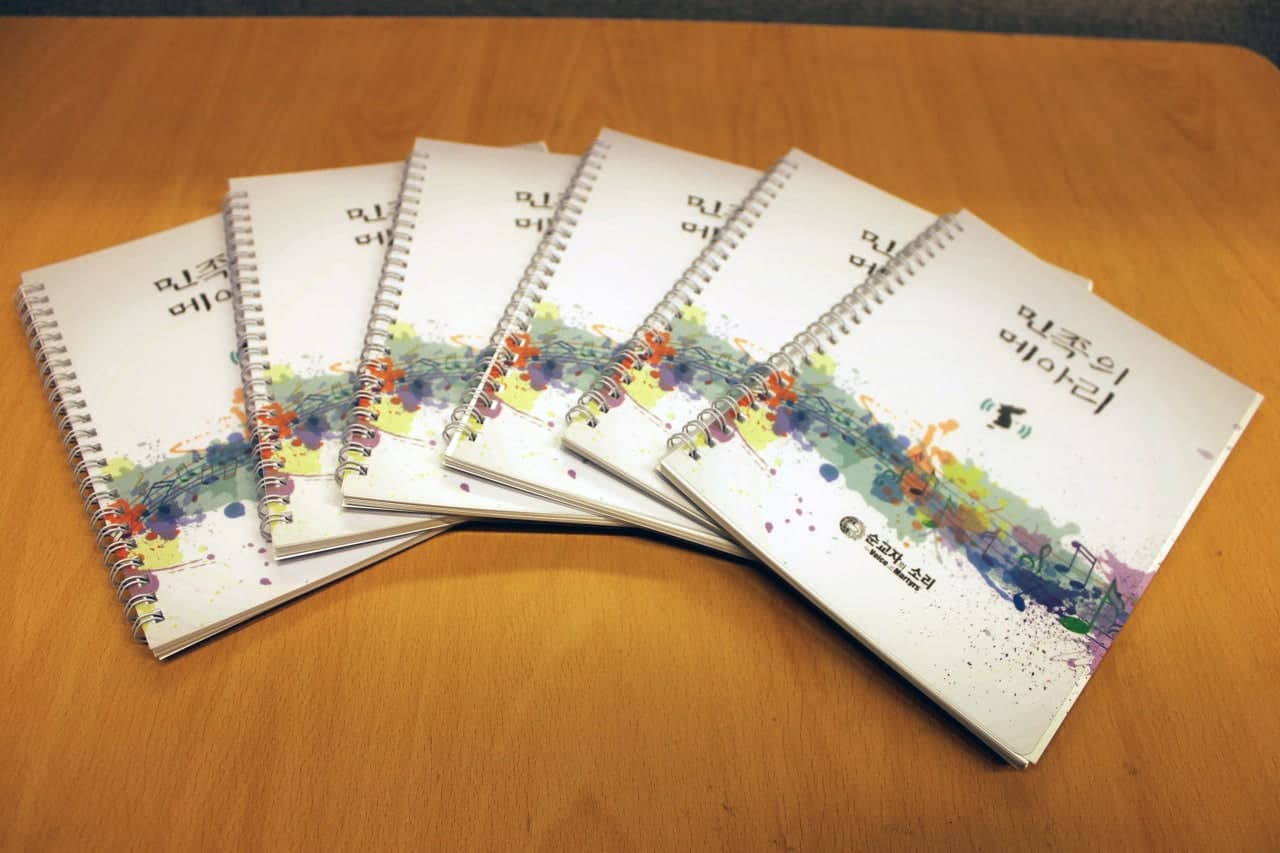
Our most strategic technology is not SD cards or USBs, though we use those. Our most strategic technology is our North Korean underground church hymnal. Several years ago we worked with underground Christians to select and record hymns that contained a lot of good theology and were easy for North Koreans to sing. Most South Korean worship songs are not done in a musical style which North Koreans can learn easily, and they generally feature one or two simple lines sung over and over, without much doctrine. But hymns can carry a lot of doctrinal information, and when they are sung in the musical style North Koreans are accustomed to hearing, they can be easily learned by the people who tune into our daily radio broadcasts. The North Korean hymnal is also frequently requested by North Korean defector churches and individual North Korean defectors in South Korea.

Voice of the Martyrs Korea produced a North Korean underground church hymnal using North Korean style harmonies and instruments and songs designed to convey theology. The hymnal has become popular among North Korean defectors in South Korea as well.

Evidence of the success of low-tech methods of information transmission into North Korea can be seen through government efforts to restrict them. Balloon launches are the best example of low-tech information transmission, and they were the first technology to be criminalized. At that time, the South Korean government also said that in the future it might look into the question of whether radio broadcasts into North Korea should be restricted. The lower the tech, the greater the likelihood of a ban. This is one reason why we must use the widest variety of technologies possible—both low-tech and high-tech: Because restrictions on sharing the gospel in North Korea aren’t likely to go away anytime soon.

More information about Voice of the Martyrs Korea’s North Korea radio ministry and Bible distribution efforts is available at https://vomkorea.com/en/project/northkorea/.

Posted in North Korea, radio | Tagged , , , , , , , , , | Leave a comment

Voice of the Martyrs Korea receives certification of financial transparency

The Christian Council for Financial Transparency Korea (CCFK) renewed its certification of Voice of the Martyrs Korea this month.

“Voice of the Martyrs Korea received initial accreditation from the Evangelical Council for Financial Accountability (ECFA), CCFK’s parent organization in 2014,” said CCFK President Hwang Ho Chan. “Upon the formation in 2015 of a Korean affiliate of the ECFA, the CCFK, Voice of the Martyrs Korea has since then pursued and received its accreditation in Korea. That accreditation has been renewed continually by CCFK, including the present year.”

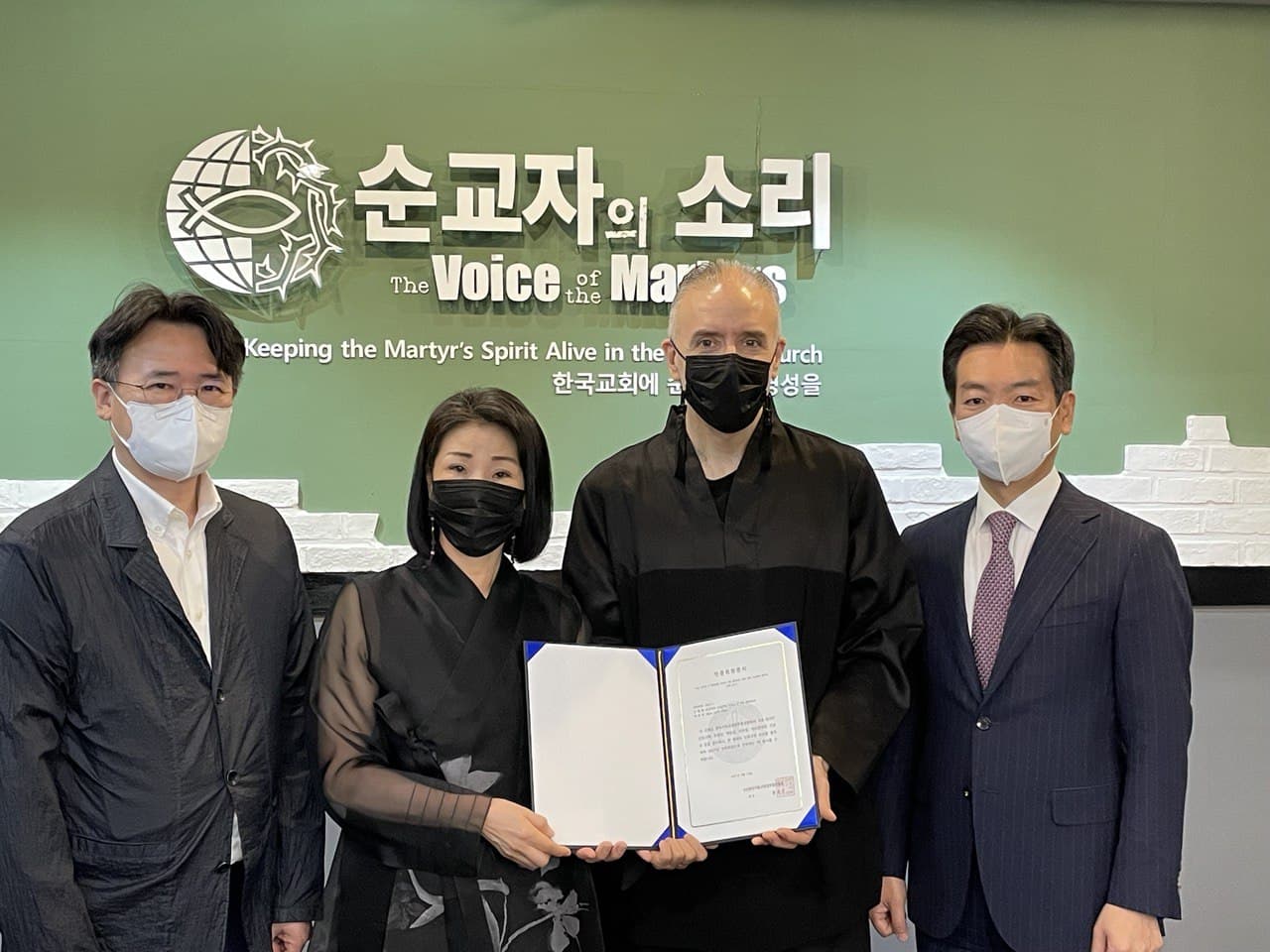
Officials from the Christian Council for Financial Transparency Korea (CCFK) confirmed Voice of the Martyrs Korea’s financial transparency by renewing its certification again this month. From L to R: Choi Soo Nam (General manager, CCFK), Hyun Sook Foley (Representative, VOMK), Eric Foley (CEO, VOMK), Lee Yoon (Vice-President, CCFK)

Dr. Foley and I have always maintained that financial accountability should be every ministry’s highest priority. Now more than ever, donors want to be certain that when they give a donation, the money will be used exactly as the donor intends and as efficiently as possible.

We sought accreditation with ECFA and CCFK as part of our overall commitment to meeting the highest international standards for financial accountability and transparency. Since the beginning of VOMK 20 years ago, we have felt that Christian organizations must do more than obey the local laws. We must obey the higher standard laid out in scripture.

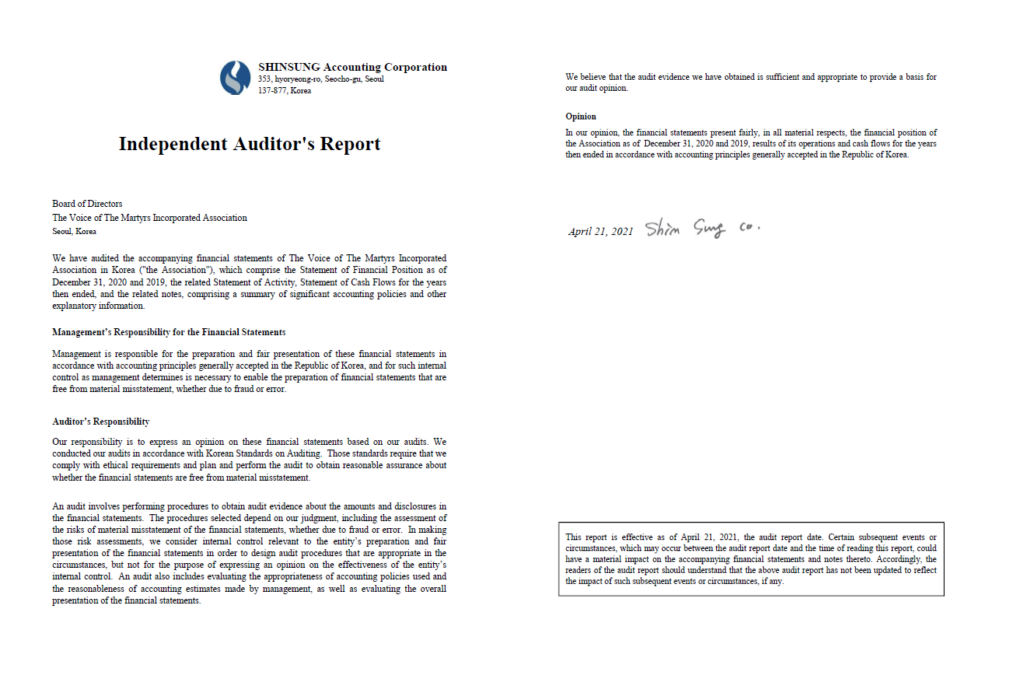
In accordance with CCFK guidelines, Voice of the Martyrs Korea submits annually to a full financial audit and certification of financial statements by an independent auditor. We also post our annual audit on our website so that our donors and the general public can see exactly where money goes when it is donated to Voice of the Martyrs Korea. Our administrative costs area under 5%, in accordance with NGO best practices advocated by CCFK and other independent financial accountability agencies.

There is a growing trend toward donors holding ministries accountable for how their donations are spent. Voice of the Martyrs Korea welcomes that trend. We believe donors should always be able to call and check on a ministry before they make a gift, to know what they can expect in terms of receipts and reports on the projects they are considering funding. Dr Foley spends one day each week traveling throughout Korea to update Voice of the Martyrs Korea donors individually and in small groups on the progress of ministry campaigns and the ministry’s financial expenditures. To Dr. Foley and me, it doesn’t matter if a person gives us 1,000 KRW (approx. $1 USD) or 100,000,000 KRW (approx. $100). God will hold us accountable for all the funds he directs to us. We should keep donors updated on how their money was spent rather than just asking them for more money.

Dr. Foley and I hope that more churches and ministries consult with CCFK on how to be more financially transparent. We hear missionaries and ministries saying, “Oh, we can’t show any receipts or financial reports about how we spent donations because our work is secret.” But at Voice of the Martyrs Korea we have been working with underground Christians for 20 years, and we have always found a way to receipt and report on our expenses while keeping our field work confidential. Our experience is that if a ministry consults with groups like ECFA and CCFK, they can always find a way to receipt and report on expenses. What is required is simply to place a high priority on donor accountability. The truth is, many ministries don’t do more receipting and reporting simply because the public hasn’t yet demanded it. But that is changing. Donors are demanding greater accountability when they donate. Hopefully VOMK and CCFK can help other Christian ministries increase their financial transparency by sharing what we have learned.

For more information on Voice of the Martyrs’ financial accountability practices and to see its most recent audited financial statements, please visit https://vomkorea.com/about/financial-accountability/.

Posted in accreditation, financial transparency | Tagged , , , , , , , , | Leave a comment