VOMK partners with NK defectors to prepare “Readers Edition” of Korea’s first Bible

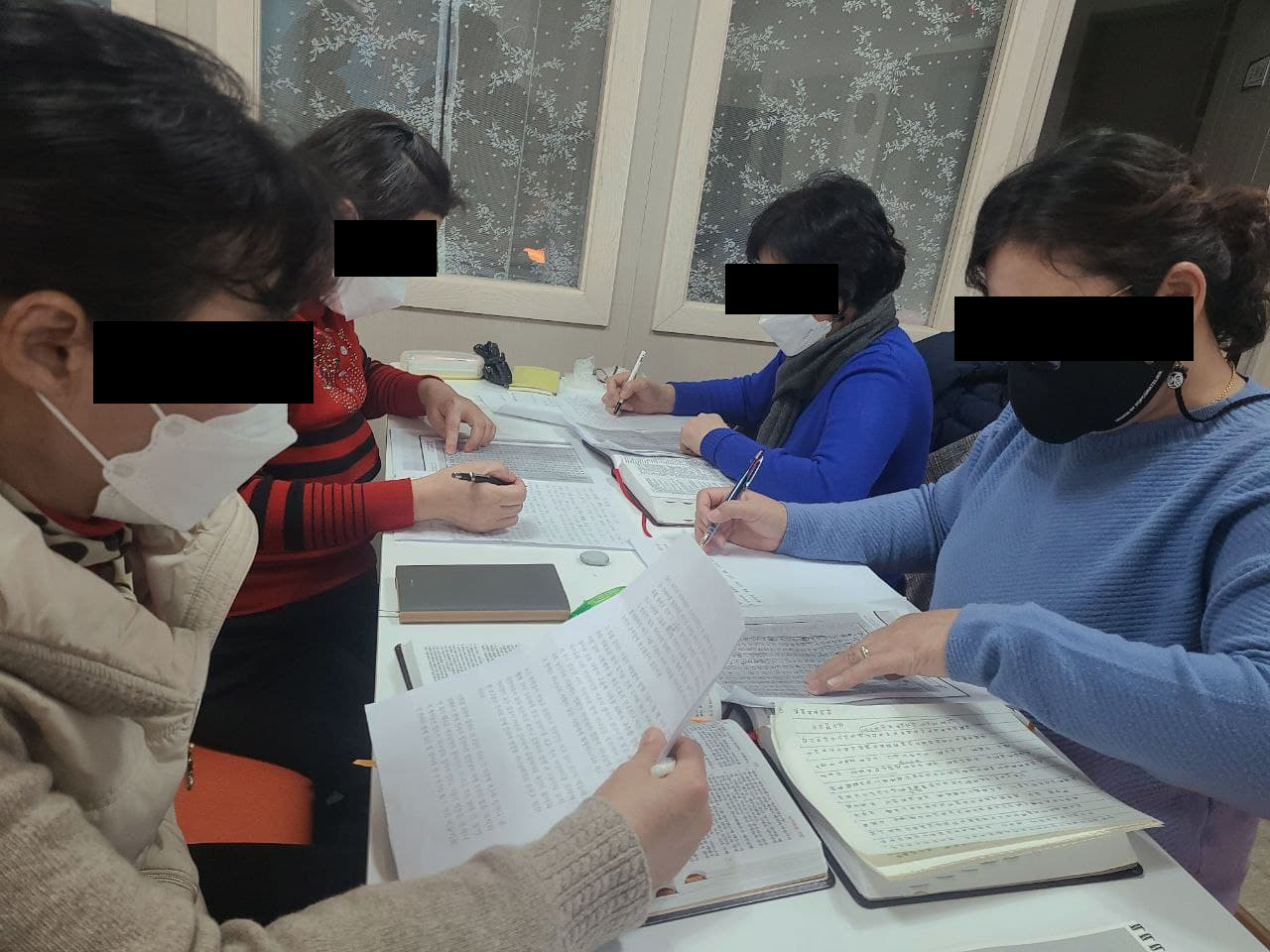
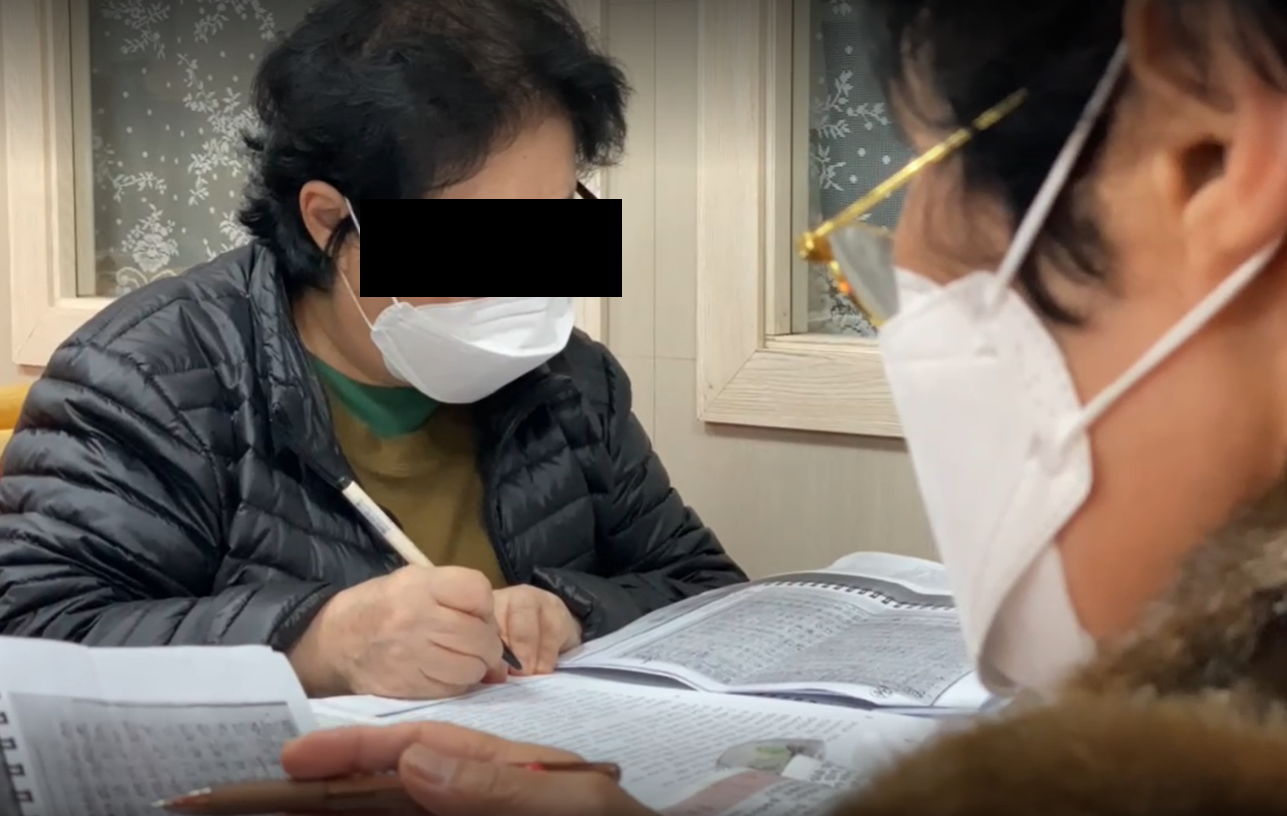
North Korean defector students at Voice of the Martyrs Korea’s Underground University work to update the Ross Bible as part of a “Contemporary Reader’s Edition” marking the 140th anniversary of the first appearance of scripture in Hangul.

2022 marks the 140-year anniversary of the release of the first portion of scripture ever translated into the Korean language: Missionary John Ross’ Gospel of Luke, first published in 1882 and smuggled into Korea from Moukden, China (today’s Shenyang). We at Voice of the Martyrs Korea are currently preparing a “Contemporary Reader’s Edition” of the Ross New Testament with the aid of our North Korean students and constituents. We will be releasing the Gospel of Luke in fall 2022, followed by a Luke/John/Acts trilogy in 2023 and a full Ross New Testament “Contemporary Reader’s Edition” in 2024.

Today, Korean Christians are able to read the Bible in a large number and variety of translations. Sadly, the one Bible that is not available for them to read is the Bible that has been called the foundation of the Korean Church. The Ross Bible was for two decades the only Hangul New Testament available to Koreans, until in 1900 the first edition of the Korean Authorized Version New Testament was published. The Ross Bible was the Bible of the Korean church during its formative period, and it left a permanent imprint on the Korean church in the form of a church that is Bible-centered and lay-driven. God used the Ross Bible powerfully to impart the saving knowledge of Jesus Christ to the first generation of Korean Christians even before missionaries arrived in Korea.

An estimated 15,000 copies of the Ross New Testament were distributed throughout Korea and Northeast China by Korean colporteurs and Bible smugglers before foreign missionaries became established in Korea and decided to develop their own Bible translation. The pioneering missionaries were amazed at the fruit that the Ross Bible produced. In 1889, just four years after he first arrived in Korea, H.G. Underwood wrote, “Applications for baptism are coming to Seoul to-day by the hundreds from all parts of the land where copies of the [John Ross] gospel have been distributed.” That was just one of countless reports the missionaries received as churches sprung up wherever the Ross Bible was distributed, in places the missionaries had not yet visited.

While the official translation committee ultimately decided to create their own translation rather than to revise and continue to use the Ross version, respect for the Ross translation has grown over the years.

The translation committee raised various concerns about the Ross translation, including the possible difficulty of adapting the Pyongan dialect, as well as issues about the use and non-use of Chinese, the spelling, the new Korean words the translators created, and even some questions of translation philosophy. But in 1960 when the translation committee was working on the new translation of the New Testament, a liaison to the committee from the British and Foreign Bible Society, Richard Rutt wrote, “The best piece of [Bible] translation work so far done in Korean was Ross’s”, because of how easy to understand that it was for ordinary Korean people.

Some scholars have even suggested that the reason why the Ross Bible was not adopted by the translation committee was precisely because it was primarily the work of ordinary Koreans, written for other ordinary Koreans. After all, these were not professional Bible translators. Missionary Ross and Missionary McIntyre were still learning Korean. The many Koreans who were involved in the translation were still learning Christianity. In fact, the reason why they came to Ross and McIntyre was to be discipled. And the way that Ross and McIntyre discipled them was to have them help to translate the Bible.
VOMK’s work in creating a “Contemporary Reader’s Version” of the Ross Bible has given all of us who are participating in the project a deep appreciation for how sophisticated Ross’ translation process was. Missionary Ross and his team may not have been professional Bible translators. But when you read the detailed documentation of the steps they went through to ensure both the accuracy and the understandability of the translation, it’s clear that they had a professional process. And when you look at how the Ross translation fundamentally shaped the character of the Korean church, it’s clear that the process was guided by the Holy Spirit.

My own motivation for participating in the project comes from a desire to see that spirit return to the Korean church. Missionary Ross had absolute trust in the sufficiency of scripture to reveal Christ fully. There’s a great story about Yi Song Ha, one of the earliest colporteurs, when he was trying to smuggle Bibles into Korea. He was staying at an inn on the border, and the innkeeper reported to the authorities that he had these books. So Yi had to quickly burn some of the books and then throw the rest in the Yalu River. He was sad and embarrassed to tell this to Missionary Ross. But Missionary Ross responded, “Whoever then drinks the waters of the Yalu or lives in the houses on which fall the ashes of burning Bibles will believe in Christ!” And Ross was right: Christianity spread up and down the banks of the Yalu. Now, with Korean Christianity in sharp decline, we need to recover Missionary Ross’ trust in the word of God. We hope the publication of the “Contemporary Reader’s Edition” can accomplish that goal.

Dr Foley and I have had the goal of publishing a reader’s edition since we started Voice of the Martyrs Korea nearly twenty years ago, but over the years we discovered that it was a project that professional translators and publishers were reluctant to undertake. Some told us there would be little popular interest in the book. Others told us that it might be too controversial to publish it. But to me, when I see Korean Christians reading the Message Bible or the Living Bible or some of the other popular new translations, how can it be that the only place to see a Ross Bible is in a museum and the only people who can read it are scholars of early Korean writings? The Ross Bible is how the voice of Christ first came to ordinary Korean people. Ordinary Korean people deserve to hear that voice again today, exactly as it first sounded—or as close to how it first sounded as possible.
Undertaking the project has required assembling a team and process similar to Ross’. We have foreign missionaries and bilingual staff who are able to read Ross and McIntyre’s English language notes in order to help track down why certain words or phrases were used. We have people who can look at the Chinese versions that Ross’ team used, which is necessary for solving certain translation puzzles.

But the core members of our team are Voice of the Martyrs Korea’s North Korean students and constituents. Since the Ross translation was originally done by Koreans from the north and west parts of the country, ordinary North Koreans of today actually can better understand some of the dialect and vocabulary than professional South Korean translators can.

The Ross Bible project has become the entire curriculum of both of Voice of the Martyrs Korea’s schools for North Korean defectors this year, just as it was for the North Koreans who came to Ross and McIntyre. Now that we’ve been doing the project for a while, it’s easy to see why Missionary Ross discipled North Koreans by having them translate. Many of our North Korean students get completely absorbed in the work of updating the translation. They will work intensely all day and into the evening without taking a break. It’s been the most effective form of ministry we’ve ever done with North Koreans. Missionary McIntyre wrote that during the translation process, his role was mainly to sit back and listen. That’s been our experience, too.

I believe God has given North Koreans a particular anointing or gift or connection related to the Ross Bible. One of our North Korean students attends a North Korean defector congregation at a South Korean church. Some of the church members were skeptical about the project. So she stood up in front of the leaders and passionately shared with them how she encountered God in translating the Bible, and how important the project is to both North Koreans and South Koreans. There were South Koreans there who heard her, and they clapped enthusiastically. One said, “I have never heard any testimonies like this one before.”

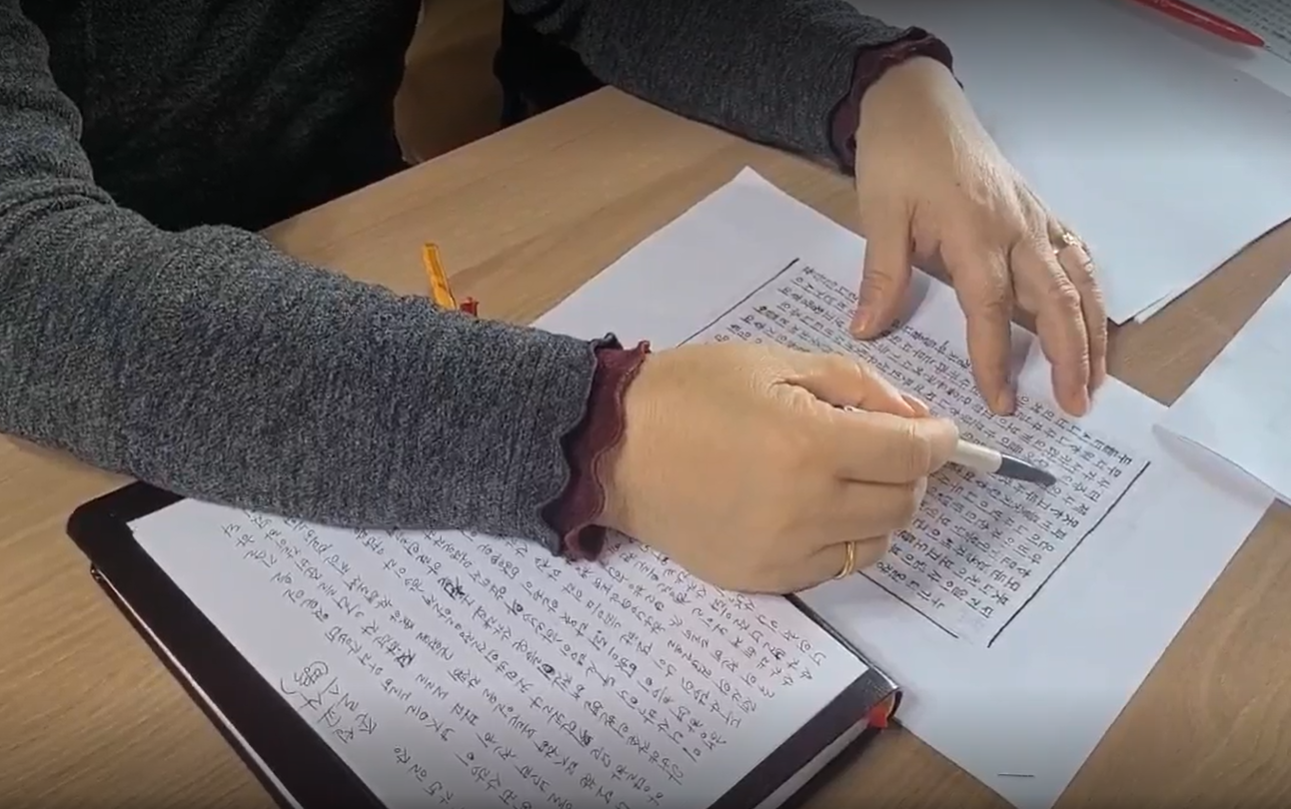
Creating a “Contemporary Reader’s Version” of the Ross Bible is hard work. It’s difficult to explain how long it takes, and how challenging it is for the participants. The Ross Bible was done before the standardization of the Korean language, so the text represents every word phonetically. You have to sound out the word, figure out what it is, write it out, figure out how it is written today, figure out what the whole sentence is, figure out what words are obsolete, research those—literally every sentence is a challenge. But it drives all of us further into the text, and like our North Korean student said, that’s where you meet God.

The goal of our project is to put the Ross Bible back in the hands of ordinary Koreans. There was a previous effort by a South Korean scholar to update the Ross Bible. It was well done, but the end product was a limited edition hardback book for other scholars, with many footnotes. Our project is designed to more closely mirror the original one: Ordinary North Koreans, assisted by missionaries, putting the New Testament in an inexpensive paperback book format that ordinary Koreans all over the world can read. No footnotes, no scholarly comments, no fancy printing or binding. Just the words of life, expressed in ordinary Korean words through the work of ordinary North Korean people who are learning to follow Christ.

Voice of the Martyrs Korea is scheduled to release the first installment of the project, the “Contemporary Reader’s Version” of the Ross Bible Gospel of Luke, in fall 2022. Distribution is planned for both North and South Korea.

More information about Voice of the Martyrs Korea’s schools for North Korean defectors is available at https://vomkorea.com/en/project/northkorea/uu-school/.

That those who are interested in donating to the Ross Bible project can make their donation at www.vomkorea.com/en/donation  or give via electronic transfer to:  

국민은행 (KB Bank) 463501-01-243303 

예금주 (Account holder): (사)순교자의소리  

Please include the phrase “NK Bible” on the donation
Posted in Bible, John Ross, North Korean defector | Tagged , , , | Leave a comment

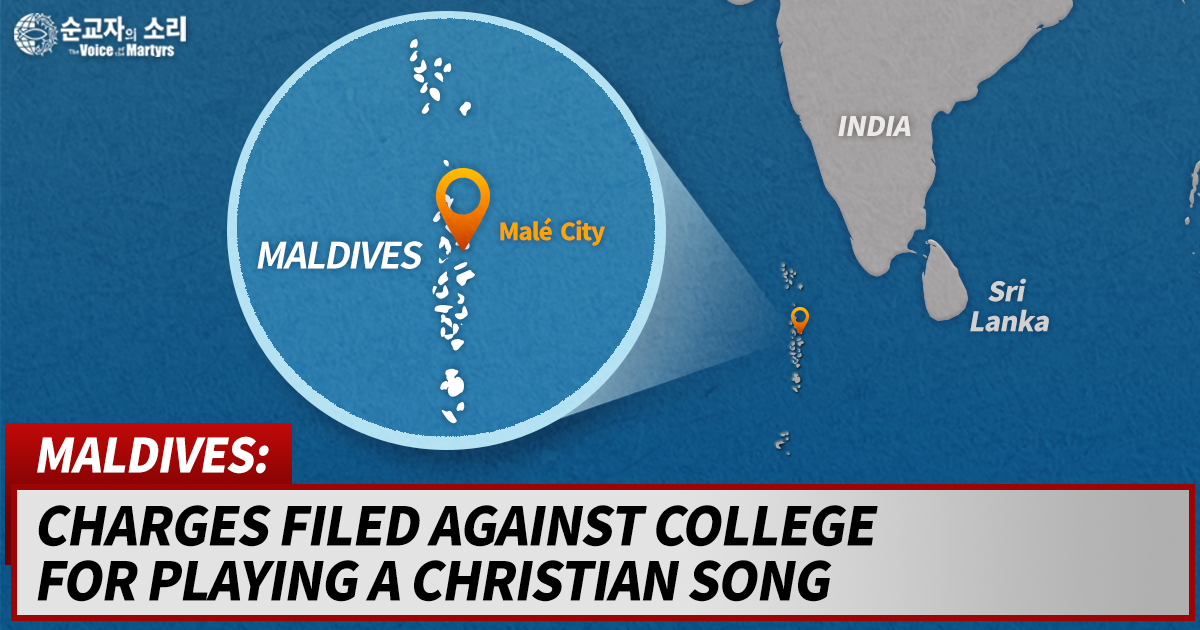
Maldives: Charges filed against college for playing a Christian song

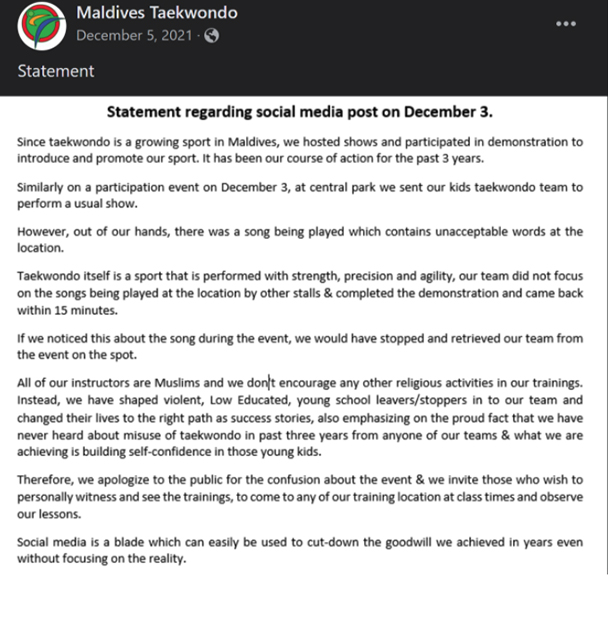
A college in the Maldives which claims it played a Christian song by accident during a children’s sports festival is now facing a police investigation.

According to the Times of Addu, the Maldives media source which first reported the incident, Clique College says it had no desire to promote Christianity and no intention to play the Christian song, which they say auto-played from a playlist during a Taekwondo exhibition. The song’s lyrics reportedly included the words, “We believe in Jesus. We believe in Holy Spirit.” College officials say the song was changed as soon as the mistake was detected. The Taekwondo academy responsible for the exhibition similarly disclaimed responsibility on a Facebook post, saying that the music that was played was “out of their hands”.

The Times of Addu quotes an unnamed representative from the Maldives Islamic Ministry of Culture as saying, “[The Islamic Ministry has] filed the case of a Christian religious song played at an event held at the Hulhumalé Central Park at the police as a very serious matter. [We will] take legal action against organizers for such activities.”

The Times report added, “The Religious Unity Act (Act No. 6/94) prohibits the practice by citizens of any religion other than Islam.”

The U.S. State Department has previously raised concerns about restrictions on religious freedom in the Maldives, noting in its 2020 religious freedom report on the country that “Propagation of any religion other than Islam is a criminal offense, punishable by two to five years in prison or house arrest” and that the Maldives constitution “designates Islam as the state religion, which it defines in terms of Sunni teachings. It states citizens have a ‘duty’ to preserve and protect Islam.” The State Department report also notes that the legal code of the Maldives “prohibits the establishment of places of worship for non-Islamic religious groups.”

A Facebook post from a Taekwondo academy in the Maldives disclaimed responsibility for a Christian song being played at a children’s sports exhibit in the officially Muslim country.

Voice of the Martyrs Korea Representative Dr Hyun Sook Foley says her organization is currently monitoring the case against Clique College, as well as reports of an increased crackdown by Maldives authorities on Christian Internet and social media content in December 2021. “There have always been restrictions on Christian activity in the Maldives, but local media sources in the Maldives are reporting on a new criminal court order that was requested by police to ban online non-Muslim religious content, including Christian content, that is in the Dhivehi language of the Maldives,” says Representative Foley. She says the government’s action against Clique College does not surprise her. “We first learned about Clique College and the investigation into the Christian song simply from our organization’s regular daily global monitoring of news reports about Christian persecution. But as we have monitored the Maldives for years, we have seen time and time again how officials there have resisted and reacted against even the smallest signs of possible Christian activity. A group that recently wanted to do Christian radio broadcasting into the Maldives told us that they were dissuaded from their plans by the possibility of the Maldives taking diplomatic action against the country where the group was planning to originate the broadcast.”

But Representative Foley says that such crackdowns against Christianity often spread Christianity rather than eliminating it. “God never leaves himself without a witness,” says Representative Foley. “It doesn’t even have to be a person. When there are no people to make a faithful witness, God can raise up rocks to cry out, as Jesus says in Luke 19:40. He can use a song that somehow plays by accident, like in this incident in the Maldives. Then a government files a complaint, a newspaper reports about it, and then God gives the readers of the newspaper report a curiosity in their heart to learn more. They ask, ‘Why is our government banning this? Why is it so dangerous?’ It’s human nature to seek out what is banned.”

A photo from the Clique College website. The College said it had no desire to promote Christianity and no intention to play Christian music at its event.

Representative Foley says that her organization has seen a similar phenomenon at work in North Korea. She pointed to the example of workers sent abroad by the North Korean government. “North Korean Workers have told us that they received a briefing from the government before they were sent abroad in which they were shown a Bible and told, ‘This is a Bible. Do not read this book.’ And then they were showing a picture of a church building and told, ‘This is a church building. Do not go here.’ The workers tell us that the first thing they want to do when they arrive in the new country is to find a Bible and a church building.”

Representative Foleys says she expects a similar outcome in the Maldives. “Our experience at Voice of the Martyrs Korea is that when we see a government institute a new wave of crackdowns on Christianity, it’s frequently because they are responding to a new wave of Christian growth, and they panic and are afraid. Christians should rejoice when we hear about these crackdowns, because when God opens the hearts of people in a particular country to the gospel, no government can shut them.”

Representative Foley says that more information on Christian persecution in the Maldives is available from Voice of the Martyrs Korea at www.vomkorea.com/en/maldives.

Posted in Maldives | Tagged , , , | Leave a comment

BREAKING NEWS: Jeju “Mayflower Church” final asylum appeal denied

Pastor Pan’s “Mayflower Church” final asylum appeal has been denied by the Gwangju High Court. The court denied the appeal without additional comment, referring to the previous judgment. The decision could mean the group is required to leave Korea in as little as two weeks, according to Voice of the Martyrs Korea Representative Dr Hyun Sook Foley, whose organization has provided ongoing persecution-related training to the members of the church since their arrival.

May be an image of 2 people, people standing, people sitting, indoor and text that says '순교자의 소리 Voice Martyrs 一'

The 60 members of Shenzen Holy Reformed Church, including its Pastor Pan Yongguang, have been dubbed the “Mayflower Church” by global religious freedom advocates. The group fled China in 2019 for Jeju Island, where they have been supporting themselves by doing menial labor during their asylum process.

May be an image of 1 person, standing, outdoors and text that says '순교자의 소리 The oice Martyrs'

According to Voice of the Martyrs Korea Representative Dr. Hyun Sook Foley, the group’s plans remain unclear. “Some difficult decisions lay ahead for Pastor Pan and the congregation members,” says Representative Foley. She says the church members continue to trust God despite the denial of their asylum request. “They are a well-trained congregation, not only by us through our persecution training but also by Pan Yongguang, their pastor. The pastor and church members continue to pray that God may yet open a door for asylum in another country like the U.S., but they are fully prepared to be faithful witnesses to Christ no matter what the cost if the Lord sends them back to China.”

Representative Foley says that Pastor Pan founded the church in 2012 under the oversight of Philadelphia Bible Reformed Church in the United States. Because of his connection to the foreign religious group, Pastor Pan began to be interrogated by authorities at least twice a week beginning in 2014. “When Pastor Pan refused to affiliate the church with the Chinese Communist Party-approved Three-Self Patriotic Movement (TPSM), authorities pressured the landlord of the building where the church-run elementary school was located to evict them. Church members didn’t want to send their children to state-run schools to be indoctrinated into atheism and communism, so they voted to flee China as a whole church in 2019.”

Representative Foley says that the group, which consists of twenty-eight adults and thirty-two children, posed as tourists and arrived on Jeju Island with almost nothing. “In order to avoid being detained during their departure, they had not communicated their plan to anyone, including us,” says Representative Foley. “We learned about them and met them for the first time after they arrived. Along with China Aid and other international organizations which help persecuted Christians, we’ve done what we can to help them. Churches in Jeju have also done a lot. Everyone who meets this group loves them, because they are completely non-political and they are all hard-working. They really just want to worship God freely and educate their children to love and serve the Lord.”

Representative Foley says that in June, the South Korean government denied their original asylum request. They filed an appeal shortly afterward, but according to Representative Foley they were denied a second time on October 5th. Facing a deportation to China on October 19th, they filed yet another appeal, in order not be sent back to China. “That appeal was rejected today,” says Representative Foley, noting that South Korea only accepted an estimated 0.4% of refugees in 2020.

Representative Foley says Voice of the Martyrs Korea concurs with other China persecution watchdog groups China Aid and Christian Solidarity Worldwide that if the “Mayflower Church” returns to China, they will be subject to extreme punishments including imprisonments, forced disappearances, and torture. “Recently, the CCP has questioned three of the church’s members who remained in China when the group fled, demanding information about the group and also demanding that the members break off all contact with them.”

Representative Foley says Voice of the Martyrs Korea will continue to stand with the church and share their story, no matter where they are sent. “We’ve come to deeply love and respect Pastor Pan and each of the church members since we first met them and learned of their story when they arrived here in 2019. We’ve trained not only the adults but even the young children again and again what the Bible teaches about persecution in the life of the believer. We know that even if God sends them back to China, it is only because he has an even bigger plan and purpose for them, and they will be faithful. Four hundred years after the original Mayflower Pilgrims, Christians still remember and are inspired by their story. We will do our best to continue to tell the story of these ‘modern Mayflower Christians’ to inspire and challenge people here in our country and around the world.”

May be an image of 13 people, people standing and people sitting
Dr Foley and the Voice of the Martyrs Korea team has provided ongoing persecution-related training to the Mayflower Church since they arrived in Jeju Island, South Korea.

Individuals interested in donating to Voice of the Martyrs Korea’s work in partnership with the house church Christians of China can visit www.vomkorea.com/en/donate .

Please note “China” on all donations 

Posted in Uncategorized | Tagged , , , , , , , , | 4 Comments