Healing Points Toward Something

Part II of our series on Healing and Comforting

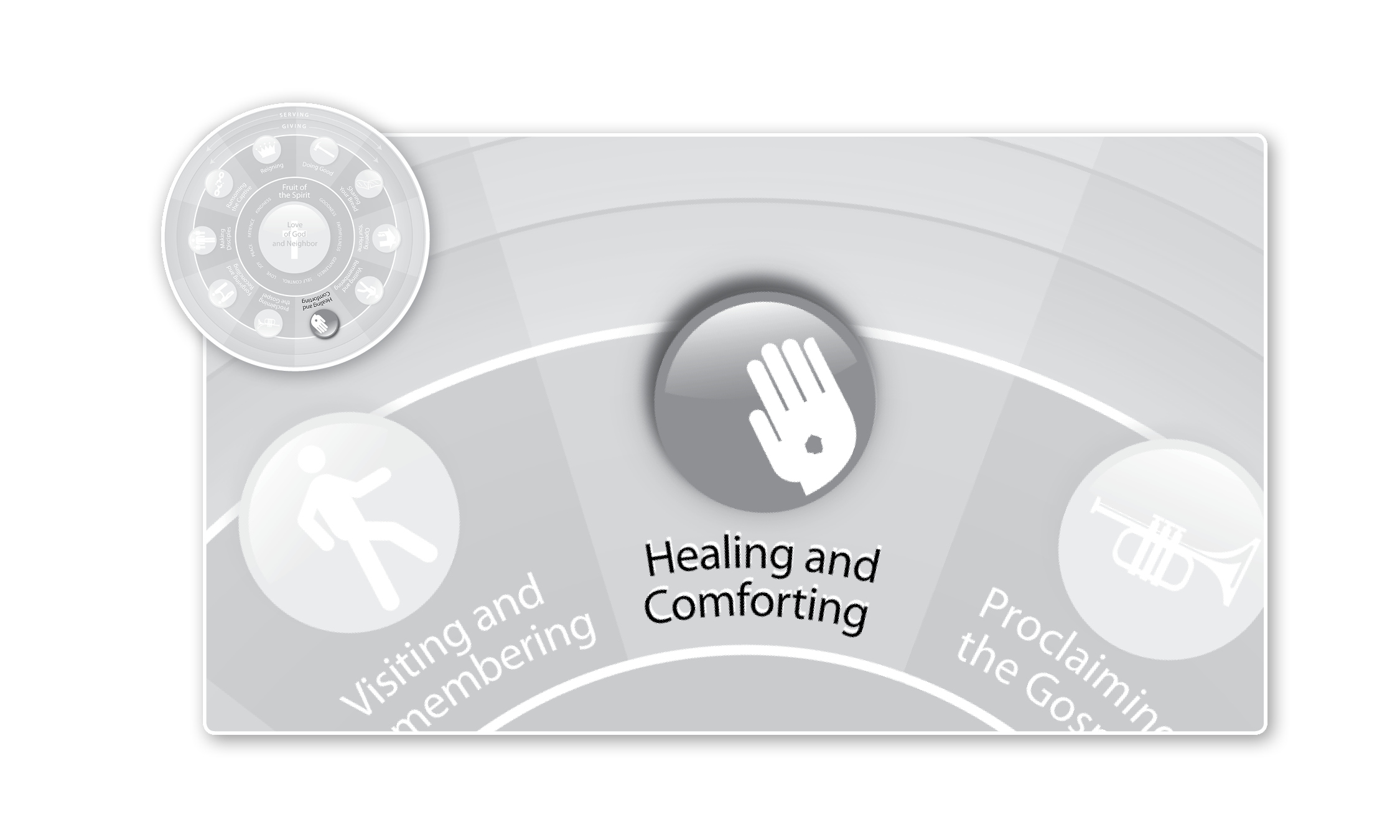
We kicked off this series by noting how deep the connection between salvation and hospitality is, ending with the question: How do salvation and hospitality relate to healing and comforting?

The answer is found in the beginning. Or a few chapters after it, to be more precise.

Sin entered the world through Adam. Or, put differently, Adam hosted sin. And as a result of that hospitality—which we call “original sin”—all human beings throughout all of history have hosted things we were never designed or intended to host.

There’s a word—and a cost—for hosting what one is never designed to host: disease.

Disease, sickness, illness: we don’t typically think of these as hospitality problems.  That’s why it’s hard for us to understand Jesus expelling them, often with explicit reference to demons. But we need to come to grips with this important biblical truth: Humans host illness and death involuntarily. It’s not a natural process. It’s a forced occupation that gradually incapacitates us physically, socially, and spiritually.

And ultimately it’s fatal: we all die. As playwright Noel Coward puts it, we live on a “death-sentenced planet.” So remember these two principles about illness and death, because you’ll see them in Scripture in every story about illness:

  • First, illness and death are forms of involuntary hosting due to original sin. They’re not natural parts of what it means to be human.
  • Second, illness and death are involuntarily hosted in every part of the human frame. Illness is physical (i.e., it infects the body), social (i.e., it infects the soul) and spiritual (i.e., it infects the spirit).

But here is the Good News: Christ’s death and resurrection signal the eviction of sin and death!

Christ is the true host and the true guest of every human being. Human beings are created in order to be hosted by him on earth and in heaven–and we are created to host him, too: in our spirits, which will manifest his presence in our souls and in our bodies.

We bear his image to the world: that’s our purpose in creation.

So for Christians, the basic category of healing is not miracle. It’s sign.

Healing points toward something: hospitality set right.  Human beings hosting God, bearing his image—all made possible because Christ first hosted us. If you miss that each healing is a signal of Christ’s eviction of sin and death, you end up with the idea that each healing is an end in itself–a miracle, a kindness that Christ grants against the backdrop of a cruel, evil world. But Christ isn’t about granting kindnesses. He’s about making all things new.

So with these thoughts in mind, let’s return to the story we started with in John 9:1-7. It begins with the disciples asking Jesus a question: Is this man blind because of his own sin or that of his parents?

It’s a fair question, because as we’ve talked about so far, illness is joined at the hip to sin. And certainly some illnesses are caused directly by our own sins, whether those be smoking or drinking or overeating.

But interestingly, absent from the Bible is a division of illness into ones we’re directly responsible for through our own sin and ones that we host as a result of Adam’s original sin. And this is consistent with how God views sin, too: Humans go to hell for sin—separation from God–whether it’s original sin from Adam or our own name brand sin that we pile on top of what we’ve inherited. So differentiating between the two is pointless, whether we’re talking about being healed of sin or illness.

Further, as Jesus makes clear, illness is not intended to point toward sin and death but rather to the power and presence of God, to which it must ultimately yield.

In the case of the man born blind, Jesus says, “It was not that this man sinned, or his parents, but that the works of God might be displayed in him.”

And think of Jesus’ similar words in John 11:1-4 when he heard that his friend Lazarus was ill:

“Now a certain man was ill, Lazarus of Bethany, the village of Mary and her sister Martha. It was Mary who anointed the Lord with ointment and wiped his feet with her hair, whose brother Lazarus was ill. So the sisters sent to him, saying, “Lord, he whom you love is ill.”

But when Jesus heard it he said, “This illness does not lead to death. It is for the glory of God, so that the Son of God may be glorified through it.”

Illness is always the platform for the revealing of the glory of God, the restoration of God’s image in every part of the human being—spirit, soul, and body.

That’s what the Work of Mercy of healing is all about.  I know what you’re wondering: if that’s true, then why are some healed and others not?

Tune into our next post and find out!

How might thinking of healing as a sign, rather than a miracle, change the way we pray for those who are sick (including ourselves)?

Posted in Uncategorized | Tagged , , , , , , , | 4 Comments

The Deep Connection Between Salvation and Hospitality

Part I of our series on Healing and Comforting

There’s a fascinating story about illness and healing in John 9:1-7.  This story is dripping with insight about how God views illness and what he has in mind through the Work of Mercy called healing and comforting:

As he passed by, he saw a man blind from birth. And his disciples asked him,“Rabbi, who sinned, this man or his parents, that he was born blind?” 

Jesus answered, “It was not that this man sinned, or his parents, but that the works of God might be displayed in him. We must work the works of him who sent me while it is day; night is coming, when no one can work. As long as I am in the world, I am the light of the world.” 

Having said these things, he spat on the ground and made mud with the saliva. Then he anointed the man’s eyes with the mud and said to him,”Go, wash in the pool of Siloam” (which means Sent). So he went and washed and came back seeing.

Before we dive into this amazing story, we need to get a few other Scriptures on the table to orient us. The first one comes from Paul in Galatians 4:9-10. Though the Galatians “have come to know God, or rather to be known by God,” Paul says, they have “turn(ed) back again to the weak and worthless elementary principles of the world” and they “observe days and months and seasons and years.” 

Their discipleship, in other words, has gone off track.

Certain practices—which Paul calls “weak and worthless”—have turned them to a “different gospel” (Gal. 1:6). So in this moment, in Galatians 4:19, Paul gives us a crystal clear picture of the purpose of discipleship when he says:

“…my little children, for whom I am again in the anguish of childbirth until Christ is formed in you!”

The goal of discipleship? “Christ in you, the hope of glory”—that’s what Paul calls it in Colossians 1:27.

It’s the principle we come back to again and again: God creates human beings to bear his image. When sin and death enter the world through Adam, that vocation is lost because the image of God is distorted. Christ, the second Adam, comes to restore that vocation by living a sinless life and offering himself as what John in 1 John 2:2 calls “the propitiation for our sins, and not for ours only but also for the sins of the whole world.”

Through Christ’s death and resurrection, he creates a way for God to dwell in the human spirit.  As he says in Revelation 3:20,

“Behold, I stand at the door and knock. If anyone hears my voice and opens the door, I will come in to him and eat with him, and he with me.”

Christ opens his home to us, on earth and in heaven. And he comes to us through his messengers, seeking hospitality. Those who receive him and those who don’t are repaid accordingly.

Oh, the deep, deep connection between salvation and hospitality! 

It may not be obvious yet–this deep, deep connection. But hang with me through the next two posts while we examine the theme together. What we’ll see is that one of the reasons we Christians have such confused theologies of healing…is because we don’t understand hospitality very well either, and the two (as we’ll see this week) are joined at the hip.

Posted in Uncategorized | Tagged , , , , , | 3 Comments

A Work of Mercy Properly Done Never Ends. It Only Deepens.

Part X of our series on Ransoming the Captive

As we bring to a close our series on Ransoming the Captive, I want to challenge you now to go and do the word that you’ve heard over the course of these last few weeks.

To do that, I want you to think about all the people for whom you performed a Work of Mercy in Jesus’ name in this last year.  Think of someone to whom you’ve done good, shared your bread with, opened your home to, visited and remembered, healed and comforted, proclaimed the Gospel to, forgiven and been reconciled with, or made a disciple of.  As you do, prayerfully consider what we shared this entire month about the lifelong, whole life love that is called for in ransoming captives in Jesus’ name.

Pray for God to transform your heart to “go the distance” in loving that person with God’s own love for the rest of yours and their days, should Christ permit.

Share with someone in your church or small group about the person whom God has put on your heart. And then work together with other believers to lay out a wise plan for moving forward. Remember: Scripture commends mission work to be done in twos. It was Peter and John who healed the man at the Temple gate; Peter and John who went to prison; Peter and John who got beaten for it; Peter and John who rejoiced with the church over being counted worthy to suffer in his name.

What should be your next step with this person? What should you do now?

Then, go back and begin to “finish the job,” (to use the image of Jesus the Businessman in Revelation 5:8–10): regularly update the group on your progress and how God is developing the relationship. Share what you’re learning about what it means to lay down your life in Jesus’ name to ransom captives with him.

As always, I commend to you an “After Action Review” so that your doing of this word might serve as a continual learning process.  Here are the questions to process through as you do the word of ransoming captives in Jesus’ name:

  • Step 1: What was the intent?
  • Step 2: What happened? Why? What are the implications?
  • Step 3: What lessons did we learn?
  • Step 4: Now what?


Posted in Uncategorized | Tagged , , , | 1 Comment