Why Are Hearing and Doing the Word So Important?

Part V of our series on Preparation
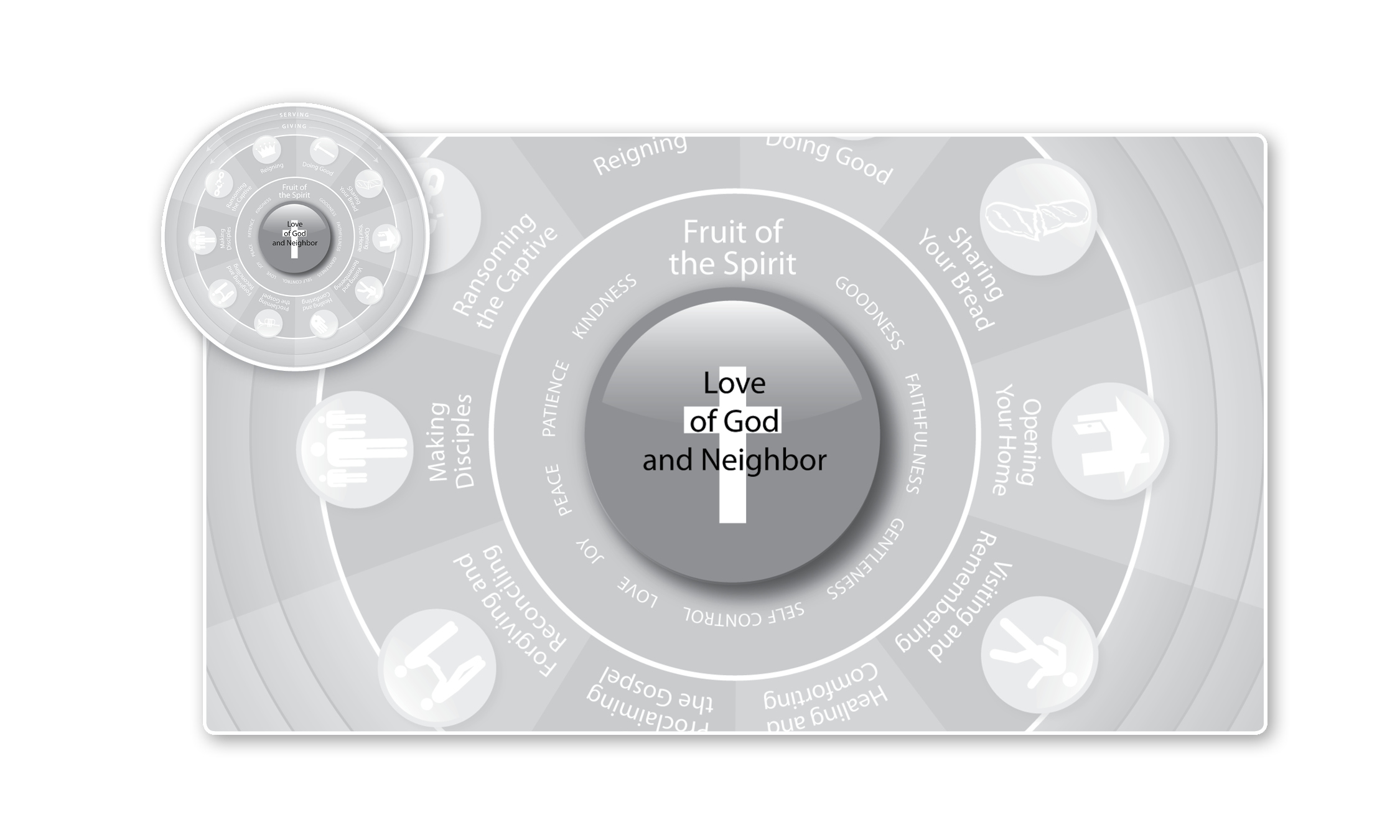
Today, I want to give to you a strategy for discipling Christians in order to help them be generalists so they can mirror Christ.  Let’s look at Matthew 22:34-40:

34 Hearing that Jesus had silenced the Sadducees, the Pharisees got together. 35 One of them, an expert in the law, tested him with this question: 36 “Teacher, which is the greatest commandment in the Law?”

37 Jesus replied: “‘Love the Lord your God with all your heart and with all your soul and with all your mind.’[a] 38 This is the first and greatest commandment. 39 And the second is like it: ‘Love your neighbor as yourself.’[b] 40 All the Law and the Prophets hang on these two commandments.”

Here, Jesus talks about 2 commandments: love God and love neighbor. Now I want to show you another Scripture which is very similar but which many don’t think of as being related.

Matthew 7:24-27:

24 “Therefore everyone who hears these words of mine and puts them into practice is like a wise man who built his house on the rock. 25 The rain came down, the streams rose, and the winds blew and beat against that house; yet it did not fall, because it had its foundation on the rock. 26 But everyone who hears these words of mine and does not put them into practice is like a foolish man who built his house on sand. 27 The rain came down, the streams rose, and the winds blew and beat against that house, and it fell with a great crash.”

In verse 24, Jesus talks about two commandments, and even though it doesn’t seem like it, these are the same two commandments he talked about in Matthew 22.

Love God = hear the word.  Love neighbor = do the word. 

Hearing the word – loving God – is about our own internal spiritual development.

Doing the word – loving neighbor – is about our external ministry or the ways we act in the world.

When we disciple people and help them grow to fullness in Christ we need to keep both of these in focus: their internal spiritual development and their external ministry. And we need to understand that these two are intertwined. Because as Jesus says in Matthew 7, “Whoever hears my words and does them is like a man who builds his house upon the rock; when the rains and the floods and the winds come the house still stands.”  He goes on to say that when this link is broken, the house will fall. “Whoever hears my word but does not do them is like a man that builds his house upon the sand.”

And one of the most common discipleship problems today is related to splitting these two areas of development.

Many churches are very good at hear-the-word discipleship, which they consider to be very important, but they neglect the kind of do-the-word discipleship that God intends to flow from hearing the word. They might consider feeding the hungry to be less important than one’s prayer life, for example.

What happens when we do this; when we focus on internal spiritual development but we fail to do external ministry?  We lack impact.  Christ wants us to impact the world but when we separate the hearing and the doing of the word, we can’t.  We can’t just swing the other way, either.  If we focus on external ministry and not spiritual development, we lack power.

In order to have power and impact in ministry we must have link together the hearing and doing of the word.

But I want to make sure we don’t come away today thinking that linking them together means just being sure to do both.  What we’re discussing here isn’t a matter of merely doing some internal development and some external ministry.

Linking our hearing and doing – loving God and loving neighbor – means seeing them as a singular whole.  They are inseparable.  The only way we can come to know God fully is through the linking together of the hearing and the doing of the word.

The doing of the word illuminates the hearing of the word.

In a very real sense, we won’t understand—or appreciate—what Christ has done for us until we do it for others in his name and by his power. And when we separate hearing and doing the word, we end up with one of two spiritual problems: legalism and works righteousness.

Legalism is an ungodly focus on internal spiritual growth. Jesus talks about how people in his days would tithe even their spices – the problem is, they neglected the weightier matters of the law.  In Isaiah 58, for example, the Israelites say they cry out to God. They say, “We have been fasting but you don’t notice. Why are you not paying attention to us?” And God answers by saying, “Because the kind of fast I have chosen is for you to share your bread with the poor and open your home to the homeless.”

When we focus on internal spiritual development alone, we end up with legalism.

The other spiritual problem we can end up with by separating the hearing and doing of the word is works righteousness.  This is the belief that we must do certain things in order to go to heaven or earn God’s love. It flows out of trying to do the word without first having heard it.

So, terrible things happen every time we separate the hearing and doing of the word. Heresy happens. And great things happen every time we link the two. The goodness of God is made real to us and visible to others! And none of this happens just because we want it to.

It requires a comprehensive system that is rooted in the Holy Spirit and circumscribed and guided by the love of Christ.

Fortunately, Scripture and church history have bequeathed to us everything we need. It’s to these tools that we’ll turn in subsequent posts as we begin to install our plan for growing to fullness in Christ through the hearing and doing of the word.

Posted in Uncategorized | Tagged , , , , , , | 7 Comments

Generalist Discipleship

Part IV of our series on Preparation

We’ve all heard that the word “Christian” means “little Christ.” But seldom have we ever considered the impact this should have on our discipleship strategy. 


The Christian is (supposed to be )a small picture of Christ.  Of course, that picture is not perfect – it’s still developing – but from the very beginning of the creation of the human race, we were designed to be pictures of Christ. Adam and Eve miss that, of course, and plunge the race into sin.

But when Christ comes, one of the vital and overlooked aspects of his ministry is to reclaim for humanity – through his followers in whom the Holy Spirit lives – the vocation of being little pictures of Christ to the world. Little mirrors reflecting to the world the grace and goodness they have abundantly received from God.

Christ was and is a generalist. So pictures of Christ must be pictures of a generalist.

If, in the church, we only have specialists, then it is not Christ whom people are seeing.

Because if someone says, “Oh my ministry is to cook the meal after service,” they will focus only on the ministry that they like to do and that they feel comfortable doing and that they are skilled to do. Sometimes people say, “Yes, but if everyone in the church does their speciality, won’t the world see Christ in the church as a whole?”

Answer: No.

They will see a bunch of people doing what they are comfortable doing and what they are skilled to do. But each one of us is designed to be able to mirror him fully. He didn’t give us only the portion of the Holy Spirit we needed to specialize in one particular ministry. The fullness of the Holy Spirit dwells in each of us.  Just as we resemble our parents with our overall appearance, we are designed to resemble him—not just his ear or his toe, for goodness’ sakes.

Instead, Christ wants us to rely upon him as we grow to become like him in every way, not just the one or two ways that we like or understand or are good at.  And the best way to do this is to be comprehensively, systematically trained in ministries that are different from what we like to do or that we’re skilled in.

Whenever we do something that is outside of our natural gifting or interest we are demonstrating our reliance on Christ.

And God’s vision is that we would train disciples the same way Jesus trained disciples. He trained them to be generalists, not specialists. The goal wasn’t that they would find an area and focus on that, but that they would grow to fullness and would reflect Him by learning to do “all things well,” by the power of the indwelling Holy Spirit. Even though Jesus’ disciples might focus on one ministry at a specific point in time, they still will know how to do other ministries and, in this way, be “little Christs”—or, more accurately—little mirrors of Christ to the world.

This has been the vision of the Church for more than 2000 years (read: always). But in our modern times we have lost that vision because in business, specialists are king.

The Church has a habit of taking our thinking from business and applying it to Christianity. 

We think about the church like we might think about building a car, where everyone has a special role that they do to make the car run. But when Jesus was on earth that is not the vision that he had.  Someone who was a farmer, for example, would have to know how to do many kinds of jobs; specialization wasn’t an option. And a normal family would have to know how to sew their own clothing.  They would have to know how to grow their own food.

Of course it is still this way in many parts of the world—and it’s still how we need to approach discipleship.

Why do you think generalist discipleship gets overlooked in favor of specialist discipleship?

Posted in Uncategorized | Tagged , , , , , , , , , | 5 Comments

Specialist Discipleship

Part III of our series on Preparation

We kicked off this series on Monday talking a bit about discipleship and how Christian teachers are primarily servants before addressing the “hot mess discipleship” method of a lot of churches.

Today, we’re going to take a look at another major misunderstanding of discipleship in the church today: the idea that discipleship is about finding your calling and filling your own little niche.

Or, in other words,  that discipleship is about becoming a specialist.

A common misunderstanding in the church today is that in the body everyone is broken out into different specialties; so one Christian does one kind of ministry, another Christian does another kind of ministry, another Christian does another kind of ministry.

Too often that’s the church’s way of thinking these days, but it is wrong.

This misunderstanding often comes from a wrong reading of 1 Corinthians 12 beginning at verse 12.  Here, Paul talks about the Body of Christ as being composed of many parts. He says that in the body of Christ there is a foot, there is an ear, there is an eye, etc.  Some Christians say, “Well then I will be the foot and we will make you the ear and we will make you the eye.” But this is faulty thinking.

That’s why Ephesians 4:13 says that all Christians that are called to grow to full maturity in Christ.  St. John Chrysostom’s rhetorical question serves us well in this regard, “If another man prays, does it follow that you are not bound to pray?” Neither, then, does it follow that if another man does good, opens his home, proclaims the gospel, etc., we are no longer bound to the same.

A specialist knows how to do one kind of ministry and really wants to be left to do that one ministry. 

They might say, for example, “I am the drummer in the band. My ministry is to focus on drumming.” Or sometimes you’ll hear, “My ministry is preparing the meal after the service.  That’s my ministry.”

This is very common in the church today, but it is not biblical because Christ is not a specialist. Christ is a generalist and he trains his disciples to be generalists, too.

Jesus had 12 disciples, but guess what he never did?

He never divided them up into specialties. He does not say, “Andrew, you will cook the meal and John will do the evangelism and Peter will do the healing.” He trains them all to do evangelism and healing and each of the other works of mercy. And the reason why he trains them this way is so that each of them can serve as a picture or an image of Him.

Today, in science, we understand that the cells from any part of the body possess what is necessary to reproduce the whole body; from the cells of the ear we can reproduce the whole person.  So if we say that one Christian is only trained to be an eye and all they know is how to be an eye, that’s not biblical. Because even if I am serving in the church as an eye I need to know also how to be a foot or a hand or an eye depending on the needs of the body.

What negative results have you seen “specialist discipleship” produce in the Church?  What positive results have you seen?

Posted in Uncategorized | Tagged , , , , , , , , | Leave a comment