
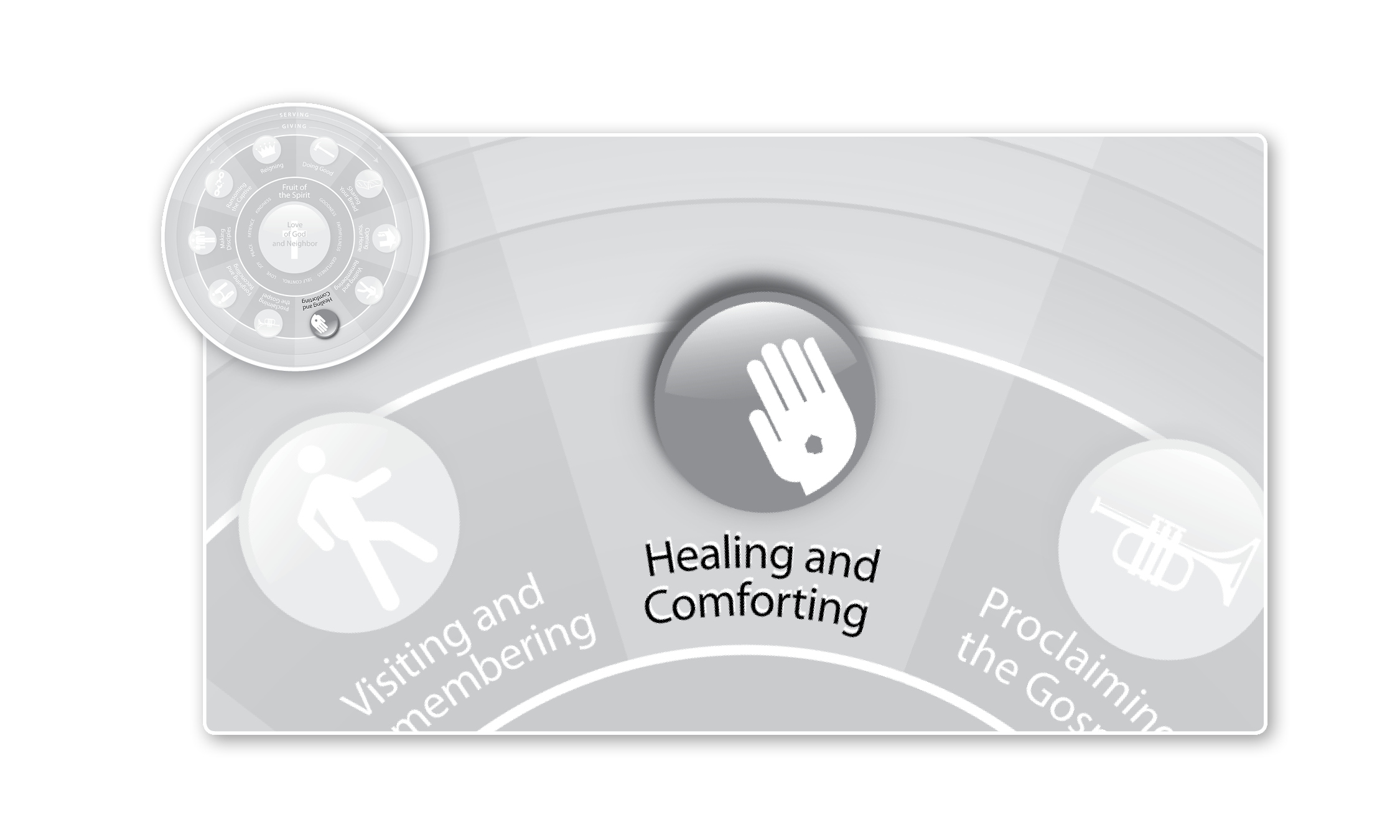
How Do the Ten Commandments Inform Our Confession and Healing?

The following is a written preview of our new Q&A style podcast where Pastor Foley takes questions related to the Whole Life Offering discipleship training model. Subscribe now!

Q: You blogged recently about healing and comforting and its relation to confession.  How would you tie the Ten Commandments and self-examination together as the prelude to the public confession we do during our liturgy at .W church?

A: As Protestants it is sometimes implied that we “don’t do confession, i.e., “The Catholics are the folks who confess.”  But that’s just historically and theologically wrong. Of course we confess our sins.  The difference is that as Protestants, we believe the mediator for our sins is Christ Jesus, not an earthly cleric like a priest or pastor. But we confess our sins in the presence of others in order to be held accountable and to be encouraged by the Gospel.

So, what’s the connection, then in our .W order of worship where we hold ourselves up to the Ten Commandments before entering into confession? Well, the Ten Commandments aren’t designed to make us say, “Wow! Have I messed all this up!  It’s hopeless.”  No, the Ten Commandments describe how God runs his household. They are given to the Israelites as an act of grace. God brings the Israelites out of Egypt not because of anything they’ve done to deserve that, but because as their God, he is full of grace. And then he says, “Now let me tell you how we live by grace in my household.”

We go into the Ten Commandments always knowing that we are going to fall short because  ultimately they are about us surrendering to God and learning how to allow the Holy Spirit to guide us to be able to live according to the way that things work in God’s household.

Our response to these rules of God’s household is to say, “Yeah, I see where it is I’m not living according to the rules of God’s house, I’m living according to the rules of the world.” So when we confess it’s specific. It’s not just a general, “Wow, I really messed up, I’m no good, I’m a sinner, I’ve fallen short.” Those things are all true, but they’re not helpful. The most helpful thing is to say, “When I listen to the Ten Commandments, what it reminds me of this week is that I treated my house as if it were my own possession.” That’s the kind of response we’re after and that, as Protestants, is what we do. We confess those things in the company of the congregation so that they can hold us accountable and, as a response to that confession, to share with us the Gospel.

If we confess our sins, he who is faithful and just will forgive us our sins and cleanse us from all unrighteousness.

Q: Why is it that in a lot of evangelical churches they teach the summary of the Ten Commandments – love God and love others – as if that’s an easier thing to do?

A: Keep in mind that the Ten Commandments are not only given in grace, they can only be kept through grace, too. When God delivers the Israelites from Egypt, it’s clear that this deliverance doesn’t come from the Israelites’ own action or as a reward for their own behavior. The story of God’s people is the same all the way through the Old Testament and New Testament; in God’s household, what do we do?  We rely on God. We rely on the living Christ who comes to make his home in us.  We rely upon the Holy Spirit who is counselor and comforter. We rely upon the grace and goodness of the Father.

It’s not about God saying, “Now that you’re in, this is what you have to do to stay in.” He is saying, “This is the life that you were born for. This is the way that human beings are intended to relate to each other.”

Those Ten Commandments we ought to treat the same way we do the rules of our own households. Anyone with kids would say of their own household rules, “These rules aren’t supposed to be punitive or impossible, or to define who is acceptable in the family and who’s not. They’re supposed to lead you in the way you are designed to live.” Of course our kids rely on us completely to be the kind of parents that enable them to thrive in that house. The same is true with God and we are eternally his children. We never grow to a point where we’re able to  do these things on our own without him.

Submit your questions to Pastor Foley by posting a comment or emailing us at [email protected].

Posted in Uncategorized | Tagged , , , , , , | Leave a comment

How Do You Know if Someone is Suffering Because of Their Own Sins?

The following is a written preview of our new Q&A style podcast where Pastor Foley takes questions related to the Whole Life Offering discipleship training model. Subscribe now!

Q: In the story of the man who was born blind in John 9:1-7, Jesus’ disciples ask him why it is the man is blind – was it his own sin or the sin of his parents? In The Message Bible, Jesus’ response is “You’re asking the wrong question.” Is that a good paraphrase?  Is it ever the wrong question to ask if someone is suffering because of their own sins?

A: It’s a great question!  It’s one that has been asked for more than twenty centuries, across all different contexts, regardless of culture or time period.  Jesus’ response to the question doesn’t de-legitimize the question, but instead introduces “Option C” into the mix.

Option A is that this happened because the person sinned. Option B is that this happened because of an environmental condition, related to a sin that came from that person’s family. Jesus says, “No, it’s Option C. The whole world is set up in such a way that my acting through it brings everything to completion.”

So, it’s never wrong to ask that question. In fact, it’s very much the right question and we should expect that it is the kind of question that much of the world is setup in order to be able to ask.

Q: So we’ve got the three options, but how would we know the right answer?  When we look at somebody who is suffering, how would we know when the answer is, “Because of their sin”?

A: One way to look at the question is to ask, “how would we respond differently depending on what we found out?” In other words, maybe knowledge is not the overriding criteria.

One of the themes we developed this month was that regardless of whether we’re healed or not, we enter into a time of whole-body prayer that is focused not only on our physical illness, but our reliance upon God. We don’t just pray for the sick person, but the sick person is praying with us; and not only for themselves, but the for the needs of other people.

Well, part of any kind of whole-body prayer is going to be the process of confession and as it says in 1 John, if we say that we have no sin, then the truth is not in us. So, Jesus uncouples that automatic  connection between illness and sin.  There’s a connection between  illness, sin and death, but Jesus removes the volitional part of that which says, “I’m the root cause of this,” which gives us far too much credit.

Submit your questions to Pastor Foley by posting a comment or emailing us at [email protected].

Posted in Uncategorized | Tagged , , , , , | Leave a comment

We Do Not Pray In Order to Be Healed

Part XIII of our series on Healing and Comforting

In Friday’s post, we came to an important realization about the relationship between prayer and Healing and Comforting: healing comes to the sick as much as it comes through the sick.  That means we should all be praying together – healthy and sick – about all that God wants us to – our illness and everything else. This realization gives special insight into the James 5:13-16 passage we discussed earlier this month. Recall that the elders—representing the church—are summoned to the home of the sick to pray. When they arrive, they are to anoint the sick person with oil.

Why? Does the oil heal?

As Pastor Brian Croft notes in his blog post, “Should Pastors Still Anoint with Oil When Praying for the Sick?”, the oil serves a spiritual purpose, not simply a medicinal one:

There is a New Testament connection with the Old Testament anointing of oil as a setting apart of someone for God’s blessing and spirit to come.

This ought to remind you of what we talked about in our first week discussion about illness and the Christian: For the Christian, one is either healed for God’s glory (i.e., to mirror the redeemed physical body to all creation as a sign of God’s intention that the physical creation be freed from sin, illness, and death) or one bears illness for God’s glory (i.e., to mirror the fellowship of his suffering to all creation—Christ’s bearing of sin, illness, and death for our redemption). Either way, there is a calling involved. And that calling is signified by the anointing with oil.

Sickness, in other words, doesn’t turn you into an object of pity. It sets you apart for special purpose—mirroring into the world Christ’s sufferings and his bearing up under them in love, focusing on God in the midst of one’s own misery, and saying hour after hour, day after day, as Jesus did on the Cross in Luke 23:46, “Into your hands I commend my spirit.”

Doing that when you’re sick is hard—impossible, really, by human standards. That’s why the church created hospitals and why the church sent elders to the bedsides of the sick. They prayed the hours together.

That’s something that we need to stress about James 5:13-16: It doesn’t describe a one-time process, i.e., “If any of you is sick, pray one time. Let the elders pray one time.”  That’s why it’s important to keep James 5:17-18 in view as well:

17Elijah was a man(AE) with a nature like ours, and(AF) he prayed fervently that it might not rain, and for(AG) three years and six months it did not rain on the earth. 18(AH) Then he prayed again, and heaven gave rain, and the earth bore its fruit.

It might sound like Elijah prayed one time and the rain stopped and then prayed one time and it started. But if you read 1 Kings 18:41-45, you’ll see that James is commending persistence in prayer.

Elijah prayed seven times! Hopefully that reminds you of the Psalm 119 which says, “Seven times a day do I praise you.”

You see, the point of James 5:13-18 is not “Pray hard when you’re sick. If you’re righteous, God will heal you.”

It is “Are you suffering? Keep praying the hours. Are you joyful? Keep praying the hours. Are you sick? Keep praying the hours, and call the elders of the church to come pray with you and anoint you for the special calling that comes with illness: either the calling of mirroring God’s healing to the world, or the calling of mirroring the fellowship of his suffering. Pray the hours like Elijah did, throughout the day. Prayer that is bigger than your suffering and your joy and your needs will bring healing and transformation and righteousness. So keep praying!”

Sum it up and say: Biblically, we don’t pray in order to be healed. We pray because we are healed—in the most fundamental healing of all, which is salvation from sin and death.

Illness threatens to derail our prayerfulness, so we treat it with special care, supporting one another by praying with—not just for—each other when one of us is sick. And we pray not only for our bodily healing, but we also pray the Psalms and Scriptures, and in this way we are healed—of our own propensity to fold in on ourselves and to live life—including the suffering of illness—separate from God: The original sin.

So how do you need to change your prayers – for yourself or a loved one – in light of this?

Posted in Uncategorized | Tagged , , , , , | Leave a comment

