
The Biblical Way to Suffer Through Illness

The following is a written preview of our new Q&A style podcast where Pastor Foley takes questions related to the Whole Life Offering discipleship training model. Subscribe now!
Q: I know of ministries that have told people who are sick or dying that they don’t have enough faith or they would be healed. Can you expound on why, even in weakness and illness, we are able to bear the image of God?

A: First of all, when we think about the Savior, we think about someone who willingly went to the cross and bore our sins. That’s the best picture we ever get of God. It is at that moment that he reveals his glory. And even after he is resurrected, he bears the marks of his crucifixion. So, we have to wonder whether we’ve misunderstood what perfection in God means. We think about perfection in a human sense where it’s like getting a perfect score on a test. But that kind of perfect love that willingly bears all things and praises God in the midst of that without needing to have full, complete knowledge of the outcome – that’s how Christ is shaping us in his image.

We trust God when we don’t understand everything. He doesn’t have to earn our trust in every single situation because he’s been faithful to us thus far, so we know that he’s being faithful to us even now. So when someone says, “You’re not being healed because you don’t have enough faith” the implication is that perfection in that case is healing.

But it’s interesting how, when we think about our own spiritual lives, there are things we come to understand about God that we could only have understood by going through and bearing illness. There are things that we can only understand having gone through pain. That’s particularly true when we do it willingly.  That doesn’t mean that we get sick on purpose, but it does mean we have a choice every time we encounter illness to choose how we are going to experience it. Are we going to experience it as something that comes counter to the will of God? Or are we going to experience it by saying, “I believe  that God’s grace is still present to me in the midst of this and that neither height nor depth, neither principality nor power, nor things in the past nor things to come, can separate me from the love of God in Christ Jesus. I believe that in this illness I can still experience the fullness of God’s grace!”

That’s our proclamation as Christians and it is absolutely Scriptural. We praise God when healing happens when it doesn’t because nothing can separate us from the love of God in Christ Jesus.

Submit your questions to Pastor Foley by posting a comment or emailing us at [email protected].

Posted in Uncategorized | Tagged , , , , , | Leave a comment

The Challenge of Protestant Confession

The following is a written preview of our new Q&A style podcast where Pastor Foley takes questions related to the Whole Life Offering discipleship training model. Subscribe now!

Q: We sing “O Sacred Heart Now Wounded” as part of our learning on Healing and Comforting. This is not going to be a popular one with mainstream America. It’s not an issue with style of music but because there are phrases in it like, “For it was my transgression which brought this woe on me.” Words like this get to our sin and how Christ had to pay for that and propitiate God’s wrath. Isn’t that the opposite of what is typically sung, and even taught, in churches today?

A: Today, the popular evangelical saying is, “If you were the only  person on earth, Christ would have died for you.” That is the wonderful, loving part. The other part, which I think is equally wonderful and loving is, “If you were the only human on earth, Christ still would have had to die for you.”

We talked about confession and it’s an area that is sorely lacking, especially among Protestants. We commit specific, intentional acts against God, his purpose, his laws, and the way that he intended us to act. We need to have a point where we can intentionally own up to that and to recognize that as a gift. Confession isn’t just the uncomfortable, awkward prelude to a time of grace.

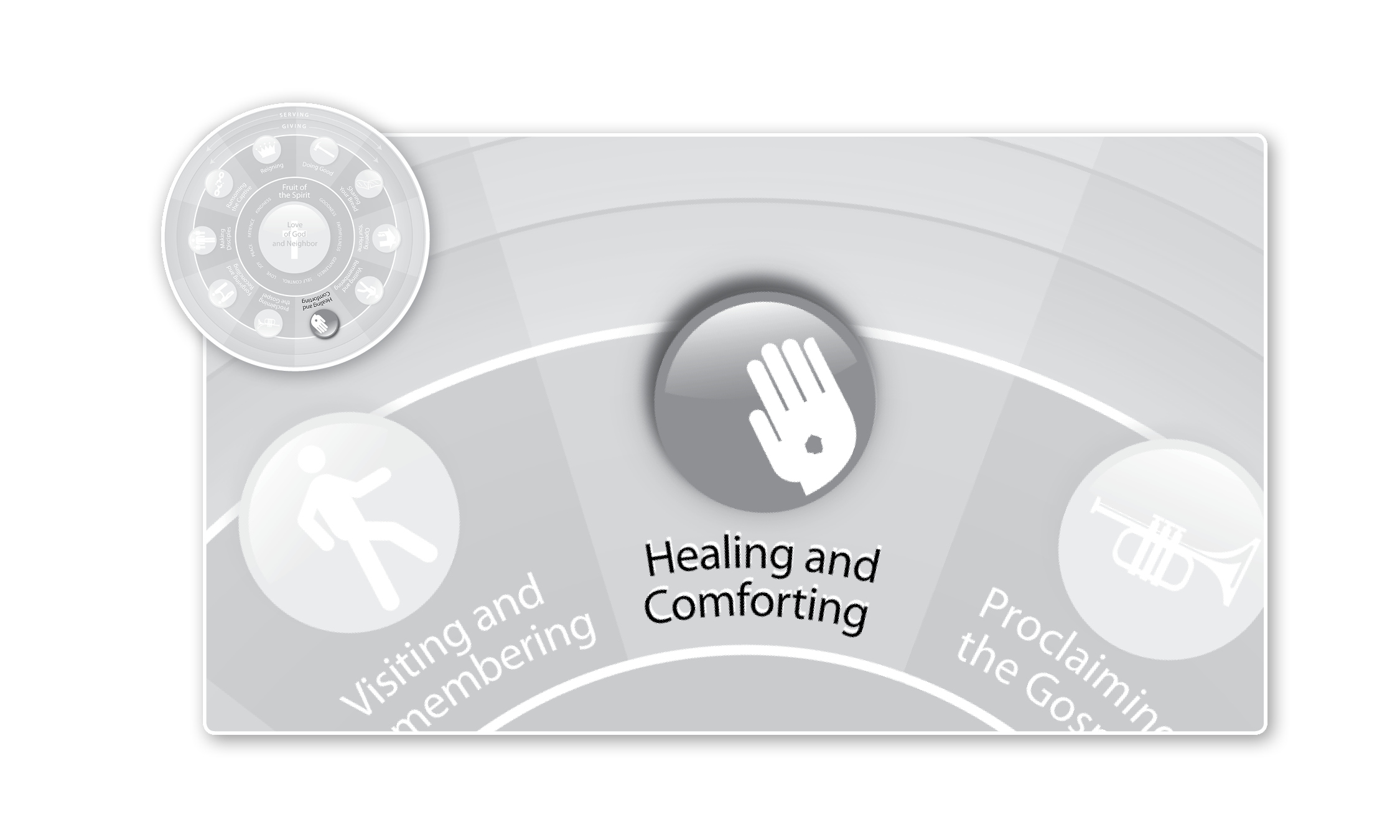
If you could summarize all the healing and comforting posts into one point, it would be that God gives us these tools of prayer and confession as a means for us to experience healing. Healing isn’t simply a facet of bodily health. The body, soul, and spirit are connected together and when we become ill, we don’t give up our calling to be members of the household. We still act as members of God’s house and whether he heals us or not, we have an important role to play – both in holding others accountable and being held accountable – for demonstrating the grace of God.

So, confession and healing are both integral aspects of the grace of God.

Submit your questions to Pastor Foley by posting a comment or emailing us at [email protected].

Posted in Uncategorized | Tagged , , , , | 2 Comments

How Do the Ten Commandments Inform Our Confession and Healing?

The following is a written preview of our new Q&A style podcast where Pastor Foley takes questions related to the Whole Life Offering discipleship training model. Subscribe now!

Q: You blogged recently about healing and comforting and its relation to confession.  How would you tie the Ten Commandments and self-examination together as the prelude to the public confession we do during our liturgy at .W church?

A: As Protestants it is sometimes implied that we “don’t do confession, i.e., “The Catholics are the folks who confess.”  But that’s just historically and theologically wrong. Of course we confess our sins.  The difference is that as Protestants, we believe the mediator for our sins is Christ Jesus, not an earthly cleric like a priest or pastor. But we confess our sins in the presence of others in order to be held accountable and to be encouraged by the Gospel.

So, what’s the connection, then in our .W order of worship where we hold ourselves up to the Ten Commandments before entering into confession? Well, the Ten Commandments aren’t designed to make us say, “Wow! Have I messed all this up!  It’s hopeless.”  No, the Ten Commandments describe how God runs his household. They are given to the Israelites as an act of grace. God brings the Israelites out of Egypt not because of anything they’ve done to deserve that, but because as their God, he is full of grace. And then he says, “Now let me tell you how we live by grace in my household.”

We go into the Ten Commandments always knowing that we are going to fall short because  ultimately they are about us surrendering to God and learning how to allow the Holy Spirit to guide us to be able to live according to the way that things work in God’s household.

Our response to these rules of God’s household is to say, “Yeah, I see where it is I’m not living according to the rules of God’s house, I’m living according to the rules of the world.” So when we confess it’s specific. It’s not just a general, “Wow, I really messed up, I’m no good, I’m a sinner, I’ve fallen short.” Those things are all true, but they’re not helpful. The most helpful thing is to say, “When I listen to the Ten Commandments, what it reminds me of this week is that I treated my house as if it were my own possession.” That’s the kind of response we’re after and that, as Protestants, is what we do. We confess those things in the company of the congregation so that they can hold us accountable and, as a response to that confession, to share with us the Gospel.

If we confess our sins, he who is faithful and just will forgive us our sins and cleanse us from all unrighteousness.

Q: Why is it that in a lot of evangelical churches they teach the summary of the Ten Commandments – love God and love others – as if that’s an easier thing to do?

A: Keep in mind that the Ten Commandments are not only given in grace, they can only be kept through grace, too. When God delivers the Israelites from Egypt, it’s clear that this deliverance doesn’t come from the Israelites’ own action or as a reward for their own behavior. The story of God’s people is the same all the way through the Old Testament and New Testament; in God’s household, what do we do?  We rely on God. We rely on the living Christ who comes to make his home in us.  We rely upon the Holy Spirit who is counselor and comforter. We rely upon the grace and goodness of the Father.

It’s not about God saying, “Now that you’re in, this is what you have to do to stay in.” He is saying, “This is the life that you were born for. This is the way that human beings are intended to relate to each other.”

Those Ten Commandments we ought to treat the same way we do the rules of our own households. Anyone with kids would say of their own household rules, “These rules aren’t supposed to be punitive or impossible, or to define who is acceptable in the family and who’s not. They’re supposed to lead you in the way you are designed to live.” Of course our kids rely on us completely to be the kind of parents that enable them to thrive in that house. The same is true with God and we are eternally his children. We never grow to a point where we’re able to  do these things on our own without him.

Submit your questions to Pastor Foley by posting a comment or emailing us at [email protected].

Posted in Uncategorized | Tagged , , , , , , | Leave a comment

