
Are New Year’s Resolutions Biblical?

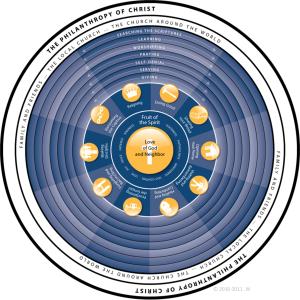
WLO_Blog_WheelPost by Pastor Tim – New Year’s Resolutions are taking a beating from both the secular and the religious realms alike.  In fact, it’s almost “in-vogue” to be against resolutions.

A friend on Facebook wrote how she is purposing to eat healthier this year, but that she isn’t going to make a resolution as those are set-up for failure.  And a number of news articles have come across my laptop with exactly the same theme.

One famous Christian preacher called resolutions “dreadful”, while another common theme among the evangelical community focused on the thought that God doesn’t want us to plan, because ultimately the Lord directs our steps (Proverbs 20:24, Jeremiah 10:23, James 4:13-15).

From a Christian standpoint though, resolutions are simply recognition of the fact that there are sinful things in our lives that need changing.  For example, if we don’t properly take care of our bodies, then we should resolve to eat better foods and exercise more.  If we don’t properly take care of our finances, then we should resolve to spend less and save more.

So, the simple answer to the question asked in the title is, yes.  Of course New Year’s resolutions are Biblical.  You don’t have to look any further than Ephesians 4:22-24, where Paul tells the Ephesians to put off their old self and put on their new self, which was created to be like God in true righteousness and holiness!

To be sure, there is a difference between secular and sacred resolutions.  In contrast to secular resolutions, sacred resolutions are ones in which we resolve to walk in the works that God has prepared for us from before the foundation of the world.  But even with the sacred, we can try to do it in our own strength, make excuses or even over spiritualize the resolutions that we make.  But let’s take the plain example of David in Psalm 119:59-60 when he said, “When I think on my ways, I turn my feet to your testimonies; I hasten and do not delay to keep your commandments.”

At DOTW Church, we practice the Month of Preparation which is similar to the practice of making resolutions.    We draw heavily from our reflections of the previous month, while we plan for new growth in the coming year.  We use the framework of the Works of Mercy, and how we are to reflect to others what Christ first did to us!  We make sure our plans are directed by the Scripture, soaked in prayer, and we recognize the fact that God can certainly change our plans (James 4:15).

Making resolutions (plans) is not only Biblical, but it is needed if we desire to grow in Christ.  God does work in the spontaneous moments, but he also works in the important practice of setting goals, plans and resolutions.  I’ve even found that when God works in the spontaneity, it has often first been grounded through proper planning.

There is nothing sacred about the month of January for making resolutions or for planning, but there is also no excuse for not taking your growth in Christ seriously.  Planning doesn’t show a lack of faith in God, but rather it shows an extraordinary trust that God can do what he promises to do in his word – sanctificy us (Romans 6)!


Posted in Preparation | Tagged , , | 1 Comment

2012 in review

The WordPress.com stats helper monkeys prepared a 2012 annual report for this blog.

Here’s an excerpt:

4,329 films were submitted to the 2012 Cannes Film Festival. This blog had 27,000 views in 2012. If each view were a film, this blog would power 6 Film Festivals

Click here to see the complete report.

Posted in Announcements | Tagged , | Leave a comment

Best Watch Night Service

maturewheel_2December 31, 2012 marks a personal anniversary: the twenty-fifth anniversary of the preaching of my first sermon, a few minutes before midnight in a home in the Indiana countryside. [Editor’s note: the home of Rev. Bill Rogers.]

That it was in a home  is an interesting presaging of our work today. I’m certainly not a fan of house church as it’s presently construed (an inch deep and an inch wide), but I am passionately committed to the ideas that:

  • Church is intended as a cluster of households;
  • We are to do our church work in the existing structures we inhabit (both physical and social);
  • 1 Timothy 3:1-5 (which reminds us that pastors have no business pastoring churches until they demonstrate their knowledge of discipleship in their families) is the painfully, painfully neglected foundation of all pastoral training.

These are three of the themes I develop in Church is for Amateurs, so I’ll leave them here for now and simply note that my first sermon twenty-five years ago tonight, just a few minutes before midnight, was similar to the sermons I preach today in one respect: When I finished, people looked very, very puzzled and uncomfortable. Though in my preaching these days that happens on purpose, on that night it happened entirely by accident, and I realized a lesson that has permeated my ministry and teaching (and led to the kind of puzzling, uncomfortable preaching I do today):

Always opt for faithfulness over novelty and creativity.

In retrospect, I should have busted out a Watch Night service for my preaching debut.

Rev. P. Kimberleigh Jordan has a nice summary of the origin and contemporary manifestations of the Watch Night service, which is well worth a click-through and reflective read.

Oddly, I’ve never been especially fond of Wesley’s own service, though I like the treatment the Confessing Reader gives it here. I think my lack of enthusiasm for the service is less related to the service itself and more related to its use outside the context of a formal discipleship structure and method. Left to its own devices, the service is a bit melodramatic, espousing and predicting Big Things For And From Us in our passivity rather than as those actively cooperating with the Holy Spirit to be shaped in the image of Christ. Certainly that’s not at all what Wesley intended, since no one was a bigger advocate for such active cooperation than Wesley. But we Wesleyan types have a habit of co-opting the grandeur of Wesley’s vision without the grinding grace of his methods. Big mistake.

In any case, whether you’ve used the Wesley Watch Night order of worship before or no, let me commend an alternative rendition of the service for your use. It comes from the Salvation Army and includes a nice message, excellent Scripture-soaked liturgical pieces, and even a few hear the Word/do the Word elements.

It’s the service I wish I would have used twenty-five years ago for my preaching debut. But that’s one of the truly great things about God, about discipleship, and about ministry:

He can even teach an old preacher dog new tricks.

Happy New Year, dear reader.

And happy 25th anniversary, dear Lord–thank you humbly and sincerely for these first twenty-five years of ministry. What an inestimable, peerless privilege.

Posted in Presentation | Tagged , , , | 2 Comments

