
Why We Are More In Need Of 100 Days Of Worship Than 30 Days Of Thanks

WLO_worshippingOn the face of it, taking time to be thankful for what we have is a no-brainer–a straightforwardly non-controversial good idea. After all, thankfulness beats ingratitude hands down as a desirable character trait among one’s conversation partners.

But after reading the daily thanks posted by my Facebook friends as part of their participation in the 30 Days of Thanks campaign, I have begun to wonder whether ingratitude–and the remedy of thankfulness for what we have–might fit more in the category of first world problems. When I remind myself to be thankful for my doggie or my kittie whom I otherwise might take for granted, I am by definition in a position where I have the resources to make it through an average day rather adequately without awareness of my constant reliance upon God.

Worshiplessness is a different matter entirely–the great equalizer of rich and poor. Whereas it is unlikely that you will suffer from thoughtless ingratitude if, for example, you are subsisting on a diet of tree bark, you may find that worship comes with great difficulty in such circumstances. It is worth noting that the book of Job is not a reminder to be thankful for what we have but rather a (stark) reminder that humans are to worship God in the absence of any seemingly sensible reason to do so:

13 Now there was a day when his sons and daughters were eating and drinking wine in their oldest brother’s house, 14 and there came a messenger to Job and said, “The oxen were plowing and the donkeys feeding beside them, 15 and the Sabeans fell upon them and took them and struck down the servants(1 )with the edge of the sword, and I alone have escaped to tell you.” 16 While he was yet speaking, there came another and said, “The fire of God fell from heaven and burned up the sheep and the servants and consumed them, and I alone have escaped to tell you.” 17 While he was yet speaking, there came another and said, “The Chaldeans formed three groups and made a raid on the camels and took them and struck down the servants with the edge of the sword, and I alone have escaped to tell you.” 18 While he was yet speaking, there came another and said, “Your sons and daughters were eating and drinking wine in their oldest brother’s house, 19 and behold, a great wind came across the wilderness and struck the four corners of the house, and it fell upon the young people, and they are dead, and I alone have escaped to tell you.” 20 Then Job arose and tore his robe and shaved his head and fell on the ground and worshiped.

As a life form, in other words, all of us human beings, regardless of whether we are rich or poor, may be more keenly in ongoing need of worship practice than thankfulness practice. Remembering to give thanks for Mr. Whiskers purring next to us on the pillow may prompt a helpful ooze of dopamine into our blood stream, but only worship can sustain us and fundamentally transform us when there is no pillow, no Mr. Whiskers, and, quite literally, no thing for which to be thankful anywhere in sight. Just ask Job, who emerges from his encounter with God not discernably more thankful but definitely more worshipful:

Then Job replied to the Lord:

2 “I know that you can do all things;
no purpose of yours can be thwarted.
3 You asked, ‘Who is this that obscures my plans without knowledge?’
Surely I spoke of things I did not understand,
things too wonderful for me to know.

4 “You said, ‘Listen now, and I will speak;
I will question you,
and you shall answer me.’
5 My ears had heard of you
but now my eyes have seen you.
6 Therefore I despise myself
and repent in dust and ashes.”

Oddly, it is possible to be thankful and prideful, thankful and materialistic, even thankful and self-centered. But it is not possible to be worshipful and to be any of these other things. Greater appreciation of Mr. Whiskers will not result in you despising yourself and repenting in dust and ashes, unless, of course, you discover that you have accidentally locked Mr. Whiskers in the garage for two weeks.  Only worship has the power to fundamentally transform us.

Which is why we may be far more in need of 100 Days of Worship than of 30 Days of Thanks, no matter what month the calendar happens to show.

Posted in 100 Days of Worship in the Common Places, North Korea, Worship | Tagged , , , | 1 Comment

Video – Bible Smuggling Into North Korea

We recently released a 35 minute, exclusive documentary on the ministry of Seoul USA.  The video goes into never before released detail on the different ways in which we get the Bible across the border into North Korea.

Below is a short clip from the documentary which captures the emotional reaction of Mrs. Foley, Seoul USA’s President, when she viewed the dramatic footage of our North Korean underground partners being accused of espionage by North Korea.  These Christians are shown praying and singing to God . . . before they were eventually martyred for their faith.

Watch the full North Korea documentary at www.seoulusa.org/100-days-videos.

Posted in 100 Days of Worship in the Common Places, North Korea, Videos | Tagged , , | 2 Comments

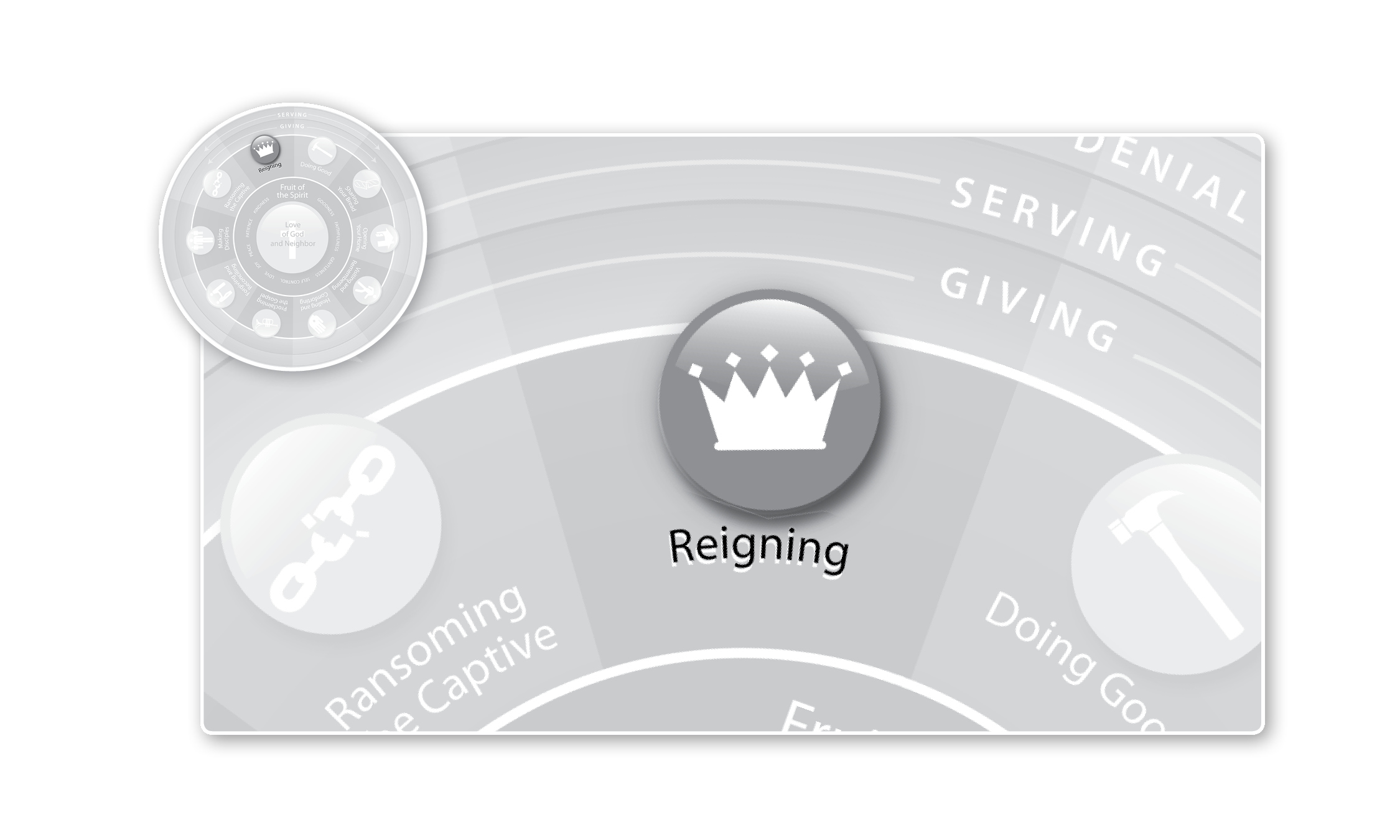
Reigning With Christ Through Suffering

Through Christ’s sufferings and death, he reigned.  In fact, this was perhaps his greatest single act of reigning.  This is a profound statement considering the fact that we might perceive his greatest act of reigning to have something to do with a scepter, a crown or even a throne.

Consider Philippians 2:6-9 which says,

Who, being in very nature God, did not consider equality with God something to be grasped, but made himself nothing, taking the very nature of a servant, being made in human likeness. And being found in appearance as a man, he humbled himself and became obedient to death— even death on a cross! Therefore God exalted him to the highest place and gave him the name that is above every name.

At the very least this should cause us to reflect more deeply on Christ’s life.  But even more than that it should cause us to re-think what it means to reign with Christ in the here and now.  Clay Jones, professor at Biola University says,

His (God’s) ultimate goal for us isn’t for victory in boardrooms or on battlefields (although, on occasion, that is part of it). The victory He’s interested in isn’t measured with financial statements, in batting or earned run averages, in salaries, in sales, or in medals. Our victory is different.

But if our present day reigning isn’t expressed through our positions, bank statements or accolades, than how is it expressed?  According to Jones, Jesus reigned by enduring suffering rather than avoiding it.  Jesus reigned by sacrificing himself in order that others could experience reconciliation with God.  Jesus cared for and cultivated the world around him by displaying God’s character and glory through suffering.  And Jesus reminded his own disciples that by following him they will also walk a similar path of suffering and self-denial. (Matthew 16:24-26).

Paul reminds us that God’s strength is displayed through our weakness (2 Corinthians 12:9).  Today, reigning like this is typified in our persecuted brothers and sisters around the world.  Because of their apparent weakness, we often pity them or even think they need rescuing.  But God honors them and uses them to display his glory in some of the most challenging places on the earth.

Has God used suffering as an occasion to reign in your own life?

Posted in Reigning | Tagged , , | Leave a comment

