
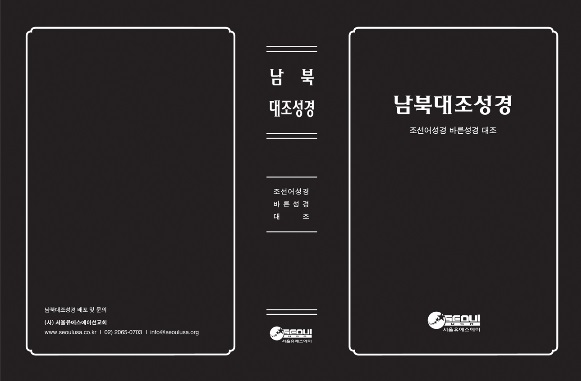
 This week significant media attention is being given—justifiably—to the Report of the Commission of Inquiry on Human Rights in the Democratic People’s Republic of Korea. It is an important document filled with important testimony. The process was important. The recommendations are important. And it is important for the world to hear the voices of North Korean people sharing their experiences.
But there is something else to observe that is very important.
In the wake of the report’s release, China is still saying the same things that China has always said about North Korea. Russia is still saying the same things that Russia has always said about North Korea. North Korea is still saying the same things that North Korea has always said about North Korea. Even the human rights organizations are still saying the same things that the human rights organizations have always said about North Korea.
The Commission’s report is important, but it does not have the power to change the human heart. The power to change the human heart—and thus the power to transfer the country of North Korea and the experience of its citizens—resides in only one document:
The Bible.
At Seoul USA, we have a very high standard of evaluating information before publishing it. We require testimony from 3 independent sources before releasing a story on NK. Today I want to make an exception to that. I want to share with you a story that we heard from just one source. It comes from an informant in the South Korean intelligence community. The informant shared with us that the Kim family in North Korea has a saying that originated with Kim Il Sung himself. The saying is this:
“Only Christianity can cut the root of communism.”
In the Kim family there is no saying that a UN report, or humanitarian aid, or military power will cut the root of communism. But in the Kim family there is a saying that what will cut the root of communism in North Korea is Christians acting like Christians. I like to think of this as Kim Il Sung’s prophecy of his own demise.
Christianity took root on the Korean continent at the turn of the 20th Century primarily as a partnership between the people of the northern part of Korea and Christian missionaries from the West. At that time it would have been possible to write a scathing report on human rights violations in Korea. Children were starving. Women were enslaved. Opposing political views were unmercifully silenced. The persecution of Christians was equally a fact of life then as now.
But when the Christians of northern Korea and the West partnered together at the turn of the last century we did not charge the situation through a human rights campaign.
We transformed the country by distributing the Bible.
From a Korean language article in 2007 entitled “Korean Church’s Interest in Distribution of the Bible”:
In 1894, the missionaries from the American Northern Presbyterian church had 235 baptized believers and the Methodist church had 221 registered and probationers in the church. But by 1905 the number of Christians increase to 30,386 and 7,796 each. This was partly due to the Russo-Japanese war but the amazing outcome was largely due to the growth of faith resulting from distribution of the Korean bible. The believers were aware of the evangelical power of the bible from their experience and they put all their heart into distributing the bible.
God did not clear up human rights violations, open up Korea, and then send in the Bible and missionaries once the beachheads had been secured. God sent in Bibles and missionaries to secure the beachheads; and through the advance of the gospel, Korea–and the experience of its women, children, laborers, and even its political dissidents–was transformed.
First comes the Bible. Then fundamental, seismic change happens as people hear and do the word.
So read the UN report carefully. Then remind yourself that the Gospel remains the only power capable of transforming the human heart.







 Do the Word
A Scriptural Test To Take Before You Post A Comment Online
Although the Scripture’s teaching on how to do good to our enemies never changes, our day to day application of doing good has some new dimensions in this Internet age. We can now have enemies whom we’ve never met with whom we can instantly interact on a very personal level. When we engage in this type of Internet communication, however, two problems often arise.
A few weeks ago a brave Facebook friend posted about her divorce. She had friends and a pastor who were already walking with her through this painful time, but she wanted to share more openly with others and ask for prayer. Almost anticipating the oncoming barrage of well-meaning advice and not so well-meaning criticism she posted this,
I’m not encouraging you to refrain from commenting on online articles and social media. But I’m asking you to examine what you write in light of Scripture. For example, how would your Facebook comments look different in light of Romans 14:17? Or how would you read that internet newspaper article different in light of Matthew 5:44?
Whether it’s an enemy or even a friend, it can be easy to hurt someone through an offhand social media comment. And if you feel the urge to say something hurtful online, in the words of my friend, “Please, hand it over to Jesus.”