
The Psalms and Songs Of Praise To Kim Il Sung Are Not Entirely Different And Not Entirely The Same

SUSA-KoreanA few weeks ago I studied the Psalms along-side our Underground University missionaries in training. We studied the different kinds of psalms including the psalms of praise, lament and cursing. Much of our study that day was standard, but I didn’t know quite what to expect when I asked them to write their own psalms.

They wrote their psalms in the model of Psalm 69, where David tells the Lord of his miseries and yet still sees the opportunity to praise God. Each North Korean student took this exercise very seriously, and one cried so deeply that she couldn’t even read her psalm to the rest of the class.

Here are a few of their psalms . . .

  • I cannot tell every tear and my sorrows. For the last 16 years I have been torn apart from my children. In recent days, I have suffered from contempt and disdain for my weaknesses. Whenever I was treated contemptuously, I had no place to go and had no one to appeal to about my sorrow, but I took courage from the Psalms. I read the Psalms over and over again more than ten times and when I praised God, I was consoled by Him.

  • God, there is no way to completely wipe out my sorrow, pains and regret to think about my wasted days without knowing You. However, as I am getting to know You, I can appreciate the sacrifice of Jesus. I cannot waste my time anymore without You. I only praise You, Lord, who has brought me as far as here.

  • God, my Lord! There is a great sadness of our nation, being divided into two Koreas. Please, finish our tearful tragic history soon. God, my Lord! I will not stop praising you with the heart of Sarah who was waiting for her son, Isaac, to come back.

The songs and poems of praise for Kim Il Sung in North Korea are surprisingly not unlike the psalms found in the Bible. One difference I’ve noticed was that King David was extremely raw and honest about his own difficulties and how at times he felt like God was at fault. Consider what David said in Psalm 10:1:

Why, O LORD, do you stand far away? Why do you hide yourself in times of trouble?

In North Korea, even the slightest bit of discontent towards Kim Il Sung could mean imprisonment or death . . . especially if you are from one of the lower classes. Consider the story of Chang-bo, as told by Barbara Demick, who commented on a news story about a shoe factory that makes rubber boots. She says,

The camera panned over crisply efficient workers of an assembly line where the boots were being produced by the thousands. The narrator raved about the superb quality of the boots and reeled off the impressive production statistics. “Hah. If there are so many boots, how come my children never got any?” Chang-bo laughed aloud. The words tumbled out of his mouth before he considered the consequences.

Chang-bo was arrested and interrogated for three days before being released . . . probably because of his good family background.  Demick noted that Chang-bo and his wife

realized how lucky they were.  If not for Chang-bo’s excellent class baackground and his party membership, he would not have been let off so lightly.

To express any doubt, fear or anger towards Kim Il Sung is an act of disloyalty for a North Korean. For David, it was a process of his growth in God. It was a way for David to tell God (and God already knew, of course) what was in his heart, and to ask God to change his heart. At times, David’s sentiments were sinful. The Psalms were a way for David to confess those sins and ask for God’s forgiveness.

For Kim Il Sung and the North Korean state, any disagreement, doubt or expressed ill feelings are a threat to the Kim regime. The Underground University students now understand that it is different with God, because He is so secure in his reign that He allows us the freedom to grow, and in that growth we can express to God our true feelings . . . anger, discontent, doubt and fears.  If we are willing to give those emotions to God, he can transform us into people who don’t only give God “lip-service,” but who truly follow him with our whole hearts.

Posted in North Korea | Tagged , , , | 2 Comments

How Witnessing An Execution Gave One North Korean An Insatiable Hunger To Read The Bible

SUSA-KoreanFile this one under Romans 8:28:

We received a letter from KCR, a North Korean defector in prison in South Korea. (There are many NK defectors in SK prisons, and they are rarely reached by churches.) We sent him one of our North Korean/South Korean Parallel Bibles, and he shared a long testimony about his burning desire to read the Bible when he was in North Korea. Below is an excerpt from his letter. Note especially the sections I put in bold:

I was brainwashed to devote my life to Kim Il-sung and was demanded to worship his family as idols. I could not imagine any other god or leader other than Kim Il-Sung because of the ideology education given to me by the North Korean government.

I, who was brought up in a Korean-style socialistic republic, was totally isolated from the world while I was brainwashed with the Juche Idea. A government policy to obliterate all religion in North Korean made me deny the existence of God.

Even though I was taught that foreign missionaries worked as secret agents to invade Korea, pretending to spread the gospel, I had several questions as to why these foreign missionaries really came. I doubted there was a giant called God. However, there was no way for me to be exposed to the fact that God exists. Indeed, North Korea is a closed society where it is impossible to obtain information on God.

Meanwhile, I watched a movie about Choe Deok-sin who defected with his wife to North Korea from their exile in the United States in 1986. I saw that he was praying, holding a Bible in his hand in the movie. I learned that the Bible is a book written about the word of God, and I started wishing to read the Bible, a forbidden book in North Korea.

At that moment, a peddler who brought a Bible by chance while he did his business in between China and North Korea was revealed to be in possession of a Bible and was shot to death. However, the tragic event further stimulated my curiosity about the Bible rather than reducing it.

As a man who is full cannot understand another man who is starving, I do not think other Christians around the world would anticipate that there are people who desperately desire to read the Bible once in their lifetime.

I read the Bible for the first time in my life on my eventful way to South Korea. When I was in the hospital in Beijing, a Chinese doctor gave me a Bible and I read Matthew for the first time. When I read the genealogy of Jesus, I traced back my own family tree in my mind and wondered who would be my first forefather. And the Ten Commandments gave me a shock. It closely resembled North Korea’s Ten Principles.

I pray for God to give us unification soon in order to rescue the poor North Koreans from the dictatorship government.

Pastor Tim is going to bring a stack of our North Korean/South Korean Parallel Bibles back to the US when he returns from Korea next week. Cost is $49.95 USD plus shipping. If you’d like to order one, you can do so on the Seoul USA Resource page or send Pastor Tim an email at [email protected].

Posted in Bible, North Korea, persecution | Tagged , , , , | 5 Comments

North Korea: Land Of Concentration Camps…And The Loveliest Moonlit Sky

SUSA-Korean

I hope you’ve read this month’s Voice of the Martyrs/US special edition newsletter on which we were honored to collaborate. Make sure especially to check out the Voice of the Martyrs online article on the 30,000 Christians who are in North Korean prison camps, and then sign the Letter of Confession to join underground Christians in confessing only Christ to Kim Jong Un.

Given the unspeakable atrocities in the camps and in North Korea in general, it can come as a huge surprise to Westerners to hear that North Korean defectors in South Korea actually love and miss their country. How could anyone miss a place like North Korea?

To truly understand North Korea means understanding not only its prison camps and police state culture but also learning about the sights, smells, tastes, and everyday life experiences of North Koreans. It’s only then that the love makes sense.

For example, you may have seen the satellite photos of North Korea at night. It is as black as the sea, bordered on one side by the blinding light of China and on the other side by the blinding light of South Korea. It is possible–and accurate–to describe that darkness with words like “energy bankrupt.” But North Korean defectors will tell you that it is also the most breathtaking night sky in the world, and they have stories about moonlight walks underneath it.

Barbara Demick, in Nothing to Envy, retells the story of two young lovers in Chongjin, North Korea. Set against the backdrop of a city without electricity, Demick says,

The night sky in North Korea is a sight to behold. It might be the most brilliant in Northeast Asia, the only place spared the coal dust, Gobi Desert sand, and carbon monoxide choking the rest of the continent . . .

The young couple would walk through the night, scattering ginkgo leaves in their wake. What did they talk about? Their families, their classmates, books they had read – whatever the topic, it was endlessly fascinating. Years later, when I asked the girl about the happiest memories of her life, she told me of those nights.

You might be thinking, “The happiest memories of someone’s life happened inside of North Korea?” Surprisingly, we have heard that sentiment expressed many times by North Koreans. They abhor the camps, decry the political system…and still miss their home.

That’s why we should not read about the prison camps and think of escape as the solution. In fact, South Korea is the deadliest place in the world for North Koreans. 16.3% of all North Koreans who die in South Korea, die by their own hand: suicide. Many more admit to feeling lonely and depressed due to culture differences, language differences (the two dialects are about 40% divergent), and guilt due to the family members they left behind.

It may not be surprising to learn that NK defectors are depressed, but it is utterly surprising for Westerners to see that North Koreans defectors have happy memories of North Korea, and that many even wish they could go back!

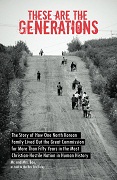
North Korean defectors’ perspective on life in NK is markedly different than we might imagine. They have lived, breathed, tasted and felt North Korea in ways that we never can. As a result, we should let our outrage over the prison camps and our action in signing the Letter of Confession lead us to continue to walk alongside North Korean defectors, hearing their stories (sad as well as happy) and joining our hearts with theirs. The Barbara Demick book is a great place to start in gaining insight into everyday North Korean life. Pastor Foley’s These are the Generations provides a related glimpse, only this time into the everyday life of North Korean Christians.

And next time you see the photos of North Korea at night, don’t think only of energy bankruptcy. Think of two young lovers strolling under the moonlit Chongjin sky.


Posted in North Korea, persecution | Tagged , , , | 2 Comments