Russia: New law causes pastors to mull risks of speaking, praying about Ukraine

A call for national repentance from more than 400 Russian church and seminary leaders was posted on a small Russian Christian website, then quickly removed.  A Russian lawyer instructed Russian churches via Facebook how to avoid trouble when they pray for peace during their worship services. A popular Russian pastor assured Russian Christians that private prayers to God to end the war are sufficient fulfillment of their spiritual responsibilities.

Russia’s new law, Article 20.3.3, is causing Russian pastors to “count the cost” before speaking or even praying publicly about their country’s actions in Ukraine.

These three examples from this month illustrate how Russia’s new law, Article 20.3.3, is causing Russian pastors to “count the cost” before speaking or even praying publicly about their country’s actions in Ukraine.

Voice of the Martyrs Korea operates Голос Мучеников – Корея, our Russian language edition of our popular Facebook page on Christian persecution, with 12,000 followers from across the Russian-speaking world.

Some Russian Christians are sharing their prayers for Ukraine and their concerns about Russia’s actions in Ukraine, not only on Voice of the Martyrs Korea’s Facebook page, but inside Russia itself. But a law enacted March 4, which criminalizes what the law calls “public actions aimed at discrediting the use of the Armed Forces of the Russian Federation”, is causing Russian Christians to mull the risks of speaking according to their conscience.

Already one priest has been charged under the new law. According to BBC’s Russian language service, Ioann Burdin of Resurrection Church in Kostroma will be prosecuted for allegedly making anti-military statements in his sermon and circulating an online petition opposing the war.

Until more charges are made and more cases are prosecuted, it’s not possible to know with certainty what is permissible and what is criminal for pastors and churches.

Even prayers for peace could conceivably, in certain contexts, constitute a violation of the law, according to Sergey Chugunov, a Russian attorney who advises pastors and churches on his Facebook page. “I never thought we would live in a time where we would have to answer these questions – can the church call on parishioners to pray for peace in the light of the recent changes in the legislation?” wrote Chugunov in a recent Facebook post. Chugunov says Russian pastors and churches should expect to be prosecuted if they publish or publicly proclaim certain phrases like “No War”. But Chugunov also advises Russian pastors and churches to exercise caution in making any public statement related to the conflict. “Churches need to be careful in the formulation of widespread prayers and invitations to pray for peace,” he wrote on Facebook.

A scene from the 2018 movie, Tortured for Christ, which details efforts by Romanian pastor Richard Wurmbrand, to evangelize Russian soldiers sent to his country during the Soviet era. Pastor Foley said, “In many ways, these days it feels like we are back in the earliest days of Voice of the Martyrs.”

But 400 Russian Baptist and Pentecostal church and seminary leaders went well beyond calling for prayers for peace in an open letter earlier this month entitled “Appeal to Compatriots”. The full text of the appeal, which was posted briefly on the website of a small Christian publishing company in St. Petersburg before being removed, apparently voluntarily, follows:

Sometimes I will say about a nation and a kingdom that I will destroy it; but if this people turn from their evil deeds, I will put off the evil that I thought to do to them” (Jer. 18: 7-8).

Dear compatriots!

Our army is conducting full-scale military operations in another country, dropping bombs and rockets on the cities of our neighboring Ukraine. As believers, we assess what is happening as a grave sin of fratricide – the sin of Cain, who raised his hand against his brother Abel.

No political interests or goals can justify the death of innocent people. Old men, women, children are dying. Soldiers on both sides are dying, cities and infrastructure are being destroyed. In addition to military targets, shells and bombs destroy hospitals, civilian buildings and residential buildings. Many people have become refugees, the war zones are on the verge of a humanitarian catastrophe.

In addition to bloodshed, the invasion of sovereign Ukraine encroaches on the freedom of self-determination of its citizens. Hatred is being sown between our peoples, which will create an abyss of alienation and enmity for generations to come. The war is destroying not only Ukraine, but also Russia – its people, its economy, its morality, its future.

The Scriptures call us to “keep our hands from evil and seek the ways of peace” and warn that “the one who sows evil will reap it.” If we really want to rely on spiritual values, now it is extremely important to listen to the words of Jesus Christ: “Put your sword in your sheath, for he who takes the sword by the sword will perish.” It is also said: “Judgment on bad deeds is not quickly done; hence the heart of the sons of men does not fear to do evil.” But God’s judgment is impartial and inevitable.

Today the moment has come when each of us must call a spade a spade. While we still have a chance to avoid punishment from above and prevent the collapse of our country. We need to repent for what we have done, first of all before God, and then before the people of Ukraine. We must give up lies and hatred. We call on the authorities of our country to stop this senseless bloodshed!

Ministers of Evangelical Churches in Russia

The letter appears to no longer be accessible on any Russian website, but we are seeking to spread the letter widely, in Russian as well as by translation into Korean, Chinese, and English. We are spreading the letter not to advocate a particular political position but rather to prevent the voice of our Russian Christian brothers and sisters from falling silent.

Still, silence is also a part of the Russian church’s faithful witness at the moment.

There are two kinds of silence churches may undertake. There is the silence which comes from fear, which is a sin. But there is also the silence of prayer, which is essential to the church’s ministry. One popular Russian pastor wrote on his Facebook page this month that Russian Protestants are such a small minority that they are unlikely to be able to change their country’s actions in Ukraine through protest marches or public statements, but he says they should not underestimate the power of appealing to God through silent prayer. “War can be stopped by God,” he said. “That’s why we cry out to him.”

That’s something no law can prohibit.

File footage from 2021 of Russian pastors discussing a building seizure of a local church congregation. Russian Christians have been dealing with a growing number of restrictions on property use, evangelism, contact with foreign missionaries, and, now, speaking out about Russian activities in Ukraine. 

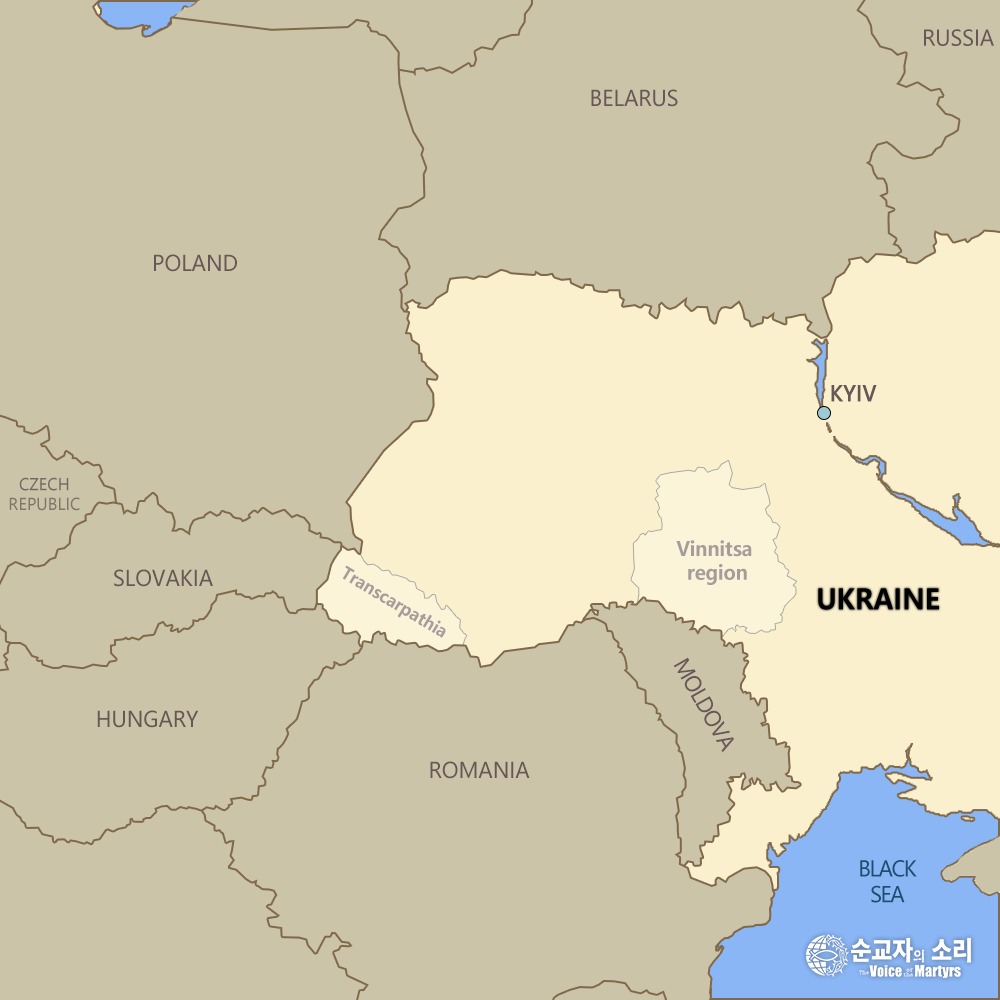
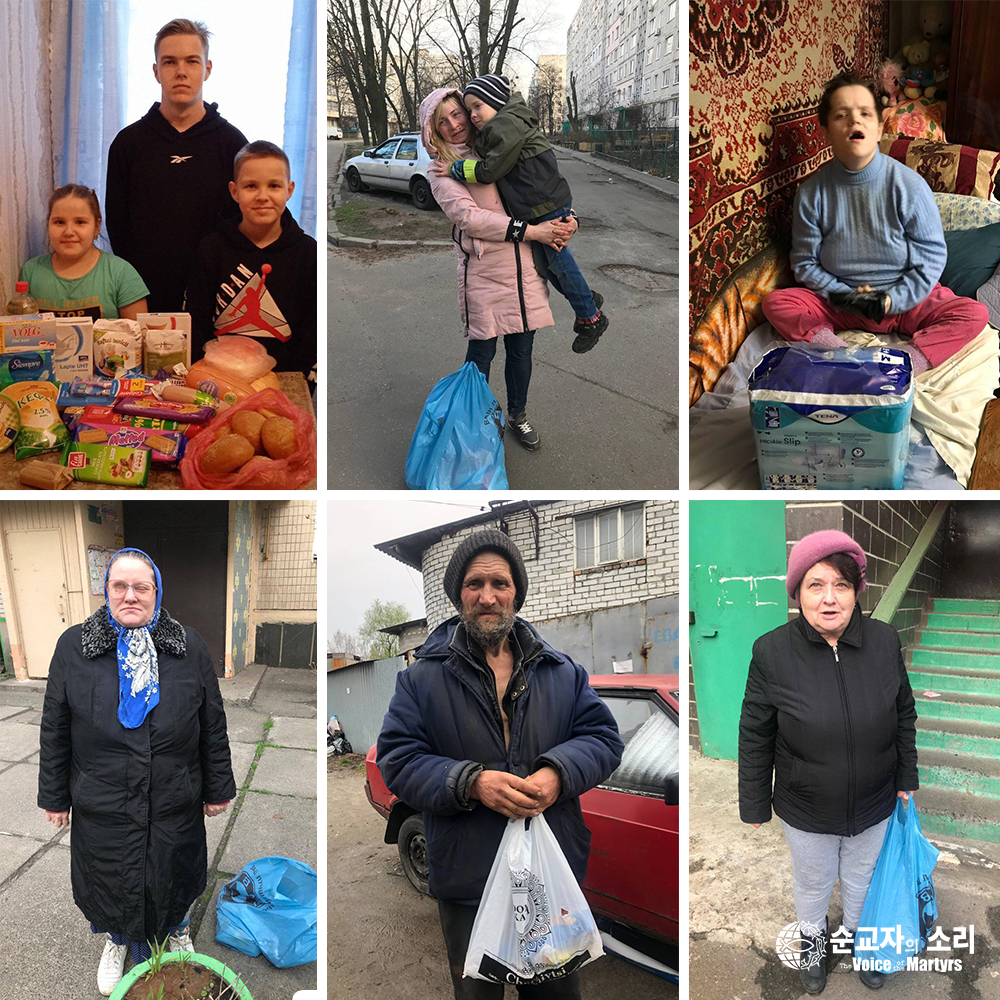
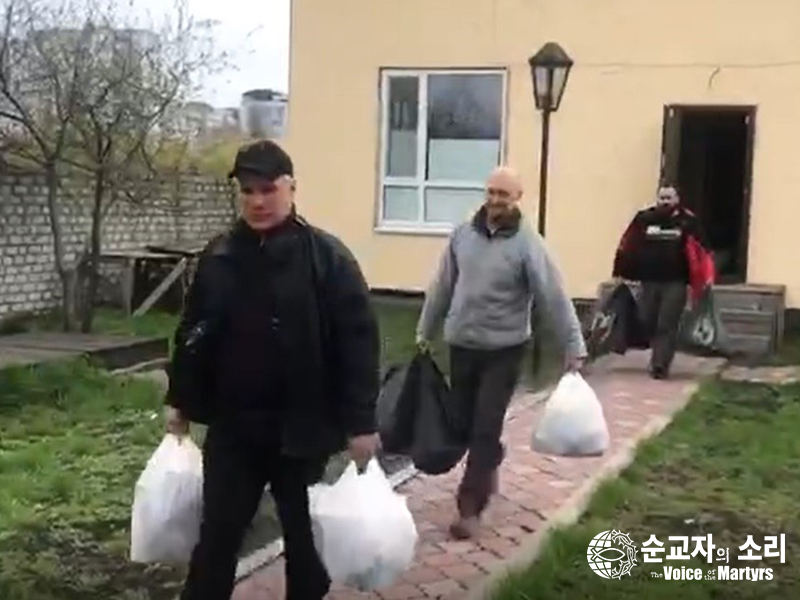
Voice of the Martyrs Korea, in partnership with our sister mission Voice of the Martyrs Poland, has been sending emergency financial support to Ukrainian, Polish, and Moldovan churches ministering to the physical and spiritual needs of Ukrainian Christians and Christian refugees during the current conflict.

But VOMK’s primary and longest-standing commitment is to equip Christians to make a faithful witness wherever they are silenced or persecuted. Helping Russian Christians carry out a faithful underground Christian witness is how Voice of the Martyrs began more than 60 years ago. Our worldwide founder, Romanian pastor Richard Wurmbrand, smuggled Bibles and gospel tracts to Russian soldiers who had been sent to Romania.

In many ways, these days it feels like we are back in the earliest days of Voice of the Martyrs.

We have many more Russian language training resources on book, website, and social media than our founder Romanian pastor Richard Wurmbrand did when VOM first started. But the one thing that hasn’t changed is that Russian Christians are still willing to risk everything in order to be faithful witnesses for Jesus.

Individuals interested in learning more about Voice of the Martyrs Korea’s underground training partnerships with Russian Christians can visit www.vomkorea.com/Russia. Individuals interested in donating to the Ukraine Christian Emergency Relief project can give at www.vomkorea.com/en/donation or via electronic transfer to:

국민은행 (KB Bank) 463501-01-243303

예금주 (Account Holder): (사)순교자의소리

Please include the word “Ukraine” with the donation.
Posted in Russia, Ukraine | Tagged , , , , , , , , , | Leave a comment

Ukraine: Invasion brings religious hunger, threat of religious restrictions

As the Russian-Ukrainian conflict drags on, some Christians in Ukraine are literally taking their churches underground in an effort to survive missile and artillery attacks, while other Christians have little choice but to seek supplies and safety as temporary refugees in neighboring countries like Poland and Moldova. But both groups of Christians are witnessing some common themes: an upsurge in religious hunger among their fellow Ukrainians, along with a concern that religious restrictions may soon prevent those hungers from being satisfied.

Eastern Ukraine, with the conflict zones of Luhansk and Donetsk indicated.

Always during times of war, people search for hope as much as they search for food and shelter. The Ukraine Bible Society announced last week that they are nearly out of Bibles as a result of the upsurge of spiritual interest among ordinary Ukrainians. That’s why spiritual aid is as urgent to offer as physical aid to people whose lives are disrupted by conflict. Whether they are refugees in a new country or residents in a bomb shelter, whether they are Christian or atheist, people want more than bread and an Internet connection. They want someone to pray with them, cry with them, and help them try to make sense of all the death and destruction.

Voice of the Martyrs Korea is partnering with dozens of local Ukrainian churches, as well as Polish and Moldovan churches along the border with Ukraine, in cooperation with our sister ministry, Voice of the Martyrs Poland. We are supplying both humanitarian and spiritual aid to Ukrainian Christians, as well as Ukrainians who are turning to local churches for help. Voice of the Martyrs Korea sent an emergency transfer of 10,000 USD last week to enable the local churches to immediately meet needs, and we will send additional funds as future donations permit.

Though international media has not reported extensively on the religious dimension of the conflict, it is a subject of considerable discussion among ordinary Ukrainians. Since Russia’s action in Crimea in 2014 and so-called “People’s Republic” forces in Donetsk (DPR) and Lutensk (LPR) gained increasing control of the Donbas region of Eastern Ukraine, Ukrainians have heard DPR and LPR soldiers say they are fighting for a unified Orthodox state—a Russian Orthodox state.

Russia and Ukraine have by far the largest population of Orthodox believers of any two countries in the world, though a recent bitter split has placed the oversight of those believers under two different leaders and church structures, one loyal to Moscow and the other supported by most of the other Orthodox church bodies around the world.

It is not only the autonomous Orthodox churches that the Russian and DPR/LPR forces regard as enemies. Protestants, though they are comparatively small in number in both Ukraine and Russia, are also facing growing restrictions and difficulties. Protestants are regarded theologically as sects and politically as suspicious because they are rumored to be pro-American and pro-Western, funded and directed by outside forces hostile to the so-called “Russian world”.

When DPR and LPR forces gained control in the Donbas region in 2014, it was natural for anti-Protestant suspicions to coalesce into anti-Protestant policies and laws, similar to ones implemented in Russia during the same period. As a result, for Christians in Eastern Ukraine’s Donbas region, underground church life is already an everyday reality.

Protestant Christians in the DPR and LPR have been underground for eight years already. When DPR and LPR forces gained control in the Donbas territory in 2014, they forced Protestant churches to re-register in order to obtain legal status, and, especially in the Luhansk region, they denied most of the re-registration requests. In both the Donetsk and Luhansk regions of Donbas they confiscated the Protestant church buildings, and in many cases those buildings are still in use today as barracks and command posts for the DPR and LPR forces.

The constitutions of both the Donetsk and Luhansk People’s Republics give the discrimination against Protestant churches the force of law. Article 22 in both constitutions ban so-called religious “propaganda” that would claim any religion as “superior”—which in practice since 2014 has clearly meant “superior to Russian Orthodoxy”.

Protestant Christians across Ukraine are well aware of the restrictions the Donbas Christians face. They expect that they would be subject to the same restrictions in the event of a Russian victory in Ukraine. But Ukrainian Christians are inspired by the Donbas Christians and look to them as a model of how they can continue to be church regardless of who is in control of the country.

It would be a mistake to conclude that the loss of church buildings and legal status has crippled Protestant Christianity in the Donbas region, or that Christians across Ukraine look at Donbas and think their only hope is to flee Ukraine. We sometimes wrongly assume that the apex of Christian development is found in external things: legal status, church buildings, pastors, and a strong public presence in the community. But if that’s the standard, then none of the churches in the New Testament meet it. Instead, scripture shows us that the apex of Christian development is not found in external things at all, but rather in internal things, namely, Christians being brought to full maturity in Christ, especially in the midst of persecution. That’s what we’ve seen in Donbas as well.

40,000 Action Bibles were distributed to Ukrainian children living in conflict zones in 2021.

Many of the Donbas churches were involved in a Bible distribution project co-sponsored by Voice of the Martyrs Korea last year.

Local Christians distributed 40,000 Action Bible New Testaments to children in conflict zones throughout Eastern Ukraine last year, in a project supported by a coalition of ministries including Voice of the Martyrs Korea, Voice of the Martyrs Canada, Mission Eurasia, and School Without Walls. Some people might say, “Who can distribute Bibles during a war?’ But the answer is: Local Christians can, and they must. Religious hungers are high, and 1 Peter 3:15 tells us that we must always be ready to give an account of the hope within us. And “always” means even during a war.

Voice of the Martyrs Korea is in regular contact with a wide cross-section of Christians across Ukraine and now in neighboring countries where they are living as refugees, through our Russian language Facebook page. Most local Christians are staying in Ukraine, and the ones who are leaving say they plan on coming back as soon as is practicably possible.

Even amidst the conflict and danger, Ukrainian Christians remain focused on their Christian mission.

One of our Facebook subscribers in Kiev had been writing letters to Christian prisoners as a part of our VOMK Prisoner Alert project. As military activity intensified around Kiev, she was concerned that she would not be able to mail the letters. So she asked us to send her drawing to Christians in prison for their faith. We are including it here in response to her request. Please consider printing it out and sending it to Christians prisoners on our list.

A drawing done by a Ukrainian Christian to be sent to Christians imprisoned for their faith. At her request, please print it out and send it to prisoners on our PrisonerAlert list.

The witness of the Donbas underground Christians has prepared and emboldened the Ukrainian church overall. For eight years they’ve showed their brothers and sisters in the rest of Ukraine that it’s possible to be fully church, even when you don’t have a building or legal status, and even when you’re in the middle of a war zone.

Ukrainian Christians in contact with VOMK profess a faith that goes deeper than politics. Part of the aid we are providing Ukrainian Christians, both inside Ukraine and in the refugee areas, is access to our Preparing for the Underground Church series, which was written in English and Korean but has been translated into Russian and made available for free online and through printed copies. It tells Christians how to take their churches underground.

VOMK has also made available to Ukrainian Christians the Russian translation of our book on underground North Korean Christians, called These are the Generations. The Christian from Kiev who sent us the drawing for prisoners also wrote to us about this book right as her area of Kiev was facing bombardment. She said she had read it right before the war started. She wrote, “It was very interesting to learn how people live in North Korea, especially believers. What incredible challenges they face, how brave, hardworking and resilient they are. Praise God for the North Koreans.” Christians in crisis are always encouraged by other Christians in crisis. So in addition to providing the Ukrainian Christians physical bread, we are providing them with underground church spiritual “bread” as well.

Individuals interested in donating to the Ukraine Christian Emergency Relief project can give at www.vomkorea.com/en/donation or via electronic transfer to:
국민은행 (KB Bank) 463501-01-243303
예금주 (Account Holder): (사)순교자의소리
Please include the word “Ukraine” with the donation.

Posted in Ukraine | Tagged , , , , , , , , , , , , , , , | 2 Comments

VOMK partners with NK defectors to prepare “Readers Edition” of Korea’s first Bible

North Korean defector students at Voice of the Martyrs Korea’s Underground University work to update the Ross Bible as part of a “Contemporary Reader’s Edition” marking the 140th anniversary of the first appearance of scripture in Hangul.

2022 marks the 140-year anniversary of the release of the first portion of scripture ever translated into the Korean language: Missionary John Ross’ Gospel of Luke, first published in 1882 and smuggled into Korea from Moukden, China (today’s Shenyang). We at Voice of the Martyrs Korea are currently preparing a “Contemporary Reader’s Edition” of the Ross New Testament with the aid of our North Korean students and constituents. We will be releasing the Gospel of Luke in fall 2022, followed by a Luke/John/Acts trilogy in 2023 and a full Ross New Testament “Contemporary Reader’s Edition” in 2024.

Today, Korean Christians are able to read the Bible in a large number and variety of translations. Sadly, the one Bible that is not available for them to read is the Bible that has been called the foundation of the Korean Church. The Ross Bible was for two decades the only Hangul New Testament available to Koreans, until in 1900 the first edition of the Korean Authorized Version New Testament was published. The Ross Bible was the Bible of the Korean church during its formative period, and it left a permanent imprint on the Korean church in the form of a church that is Bible-centered and lay-driven. God used the Ross Bible powerfully to impart the saving knowledge of Jesus Christ to the first generation of Korean Christians even before missionaries arrived in Korea.

An estimated 15,000 copies of the Ross New Testament were distributed throughout Korea and Northeast China by Korean colporteurs and Bible smugglers before foreign missionaries became established in Korea and decided to develop their own Bible translation. The pioneering missionaries were amazed at the fruit that the Ross Bible produced. In 1889, just four years after he first arrived in Korea, H.G. Underwood wrote, “Applications for baptism are coming to Seoul to-day by the hundreds from all parts of the land where copies of the [John Ross] gospel have been distributed.” That was just one of countless reports the missionaries received as churches sprung up wherever the Ross Bible was distributed, in places the missionaries had not yet visited.

While the official translation committee ultimately decided to create their own translation rather than to revise and continue to use the Ross version, respect for the Ross translation has grown over the years.

The translation committee raised various concerns about the Ross translation, including the possible difficulty of adapting the Pyongan dialect, as well as issues about the use and non-use of Chinese, the spelling, the new Korean words the translators created, and even some questions of translation philosophy. But in 1960 when the translation committee was working on the new translation of the New Testament, a liaison to the committee from the British and Foreign Bible Society, Richard Rutt wrote, “The best piece of [Bible] translation work so far done in Korean was Ross’s”, because of how easy to understand that it was for ordinary Korean people.

Some scholars have even suggested that the reason why the Ross Bible was not adopted by the translation committee was precisely because it was primarily the work of ordinary Koreans, written for other ordinary Koreans. After all, these were not professional Bible translators. Missionary Ross and Missionary McIntyre were still learning Korean. The many Koreans who were involved in the translation were still learning Christianity. In fact, the reason why they came to Ross and McIntyre was to be discipled. And the way that Ross and McIntyre discipled them was to have them help to translate the Bible.

VOMK’s work in creating a “Contemporary Reader’s Version” of the Ross Bible has given all of us who are participating in the project a deep appreciation for how sophisticated Ross’ translation process was. Missionary Ross and his team may not have been professional Bible translators. But when you read the detailed documentation of the steps they went through to ensure both the accuracy and the understandability of the translation, it’s clear that they had a professional process. And when you look at how the Ross translation fundamentally shaped the character of the Korean church, it’s clear that the process was guided by the Holy Spirit.

My own motivation for participating in the project comes from a desire to see that spirit return to the Korean church. Missionary Ross had absolute trust in the sufficiency of scripture to reveal Christ fully. There’s a great story about Yi Song Ha, one of the earliest colporteurs, when he was trying to smuggle Bibles into Korea. He was staying at an inn on the border, and the innkeeper reported to the authorities that he had these books. So Yi had to quickly burn some of the books and then throw the rest in the Yalu River. He was sad and embarrassed to tell this to Missionary Ross. But Missionary Ross responded, “Whoever then drinks the waters of the Yalu or lives in the houses on which fall the ashes of burning Bibles will believe in Christ!” And Ross was right: Christianity spread up and down the banks of the Yalu. Now, with Korean Christianity in sharp decline, we need to recover Missionary Ross’ trust in the word of God. We hope the publication of the “Contemporary Reader’s Edition” can accomplish that goal.

Dr Foley and I have had the goal of publishing a reader’s edition since we started Voice of the Martyrs Korea nearly twenty years ago, but over the years we discovered that it was a project that professional translators and publishers were reluctant to undertake. Some told us there would be little popular interest in the book. Others told us that it might be too controversial to publish it. But to me, when I see Korean Christians reading the Message Bible or the Living Bible or some of the other popular new translations, how can it be that the only place to see a Ross Bible is in a museum and the only people who can read it are scholars of early Korean writings? The Ross Bible is how the voice of Christ first came to ordinary Korean people. Ordinary Korean people deserve to hear that voice again today, exactly as it first sounded—or as close to how it first sounded as possible.

Undertaking the project has required assembling a team and process similar to Ross’. We have foreign missionaries and bilingual staff who are able to read Ross and McIntyre’s English language notes in order to help track down why certain words or phrases were used. We have people who can look at the Chinese versions that Ross’ team used, which is necessary for solving certain translation puzzles.

But the core members of our team are Voice of the Martyrs Korea’s North Korean students and constituents. Since the Ross translation was originally done by Koreans from the north and west parts of the country, ordinary North Koreans of today actually can better understand some of the dialect and vocabulary than professional South Korean translators can.

The Ross Bible project has become the entire curriculum of both of Voice of the Martyrs Korea’s schools for North Korean defectors this year, just as it was for the North Koreans who came to Ross and McIntyre. Now that we’ve been doing the project for a while, it’s easy to see why Missionary Ross discipled North Koreans by having them translate. Many of our North Korean students get completely absorbed in the work of updating the translation. They will work intensely all day and into the evening without taking a break. It’s been the most effective form of ministry we’ve ever done with North Koreans. Missionary McIntyre wrote that during the translation process, his role was mainly to sit back and listen. That’s been our experience, too.

I believe God has given North Koreans a particular anointing or gift or connection related to the Ross Bible. One of our North Korean students attends a North Korean defector congregation at a South Korean church. Some of the church members were skeptical about the project. So she stood up in front of the leaders and passionately shared with them how she encountered God in translating the Bible, and how important the project is to both North Koreans and South Koreans. There were South Koreans there who heard her, and they clapped enthusiastically. One said, “I have never heard any testimonies like this one before.”

Creating a “Contemporary Reader’s Version” of the Ross Bible is hard work. It’s difficult to explain how long it takes, and how challenging it is for the participants. The Ross Bible was done before the standardization of the Korean language, so the text represents every word phonetically. You have to sound out the word, figure out what it is, write it out, figure out how it is written today, figure out what the whole sentence is, figure out what words are obsolete, research those—literally every sentence is a challenge. But it drives all of us further into the text, and like our North Korean student said, that’s where you meet God.

The goal of our project is to put the Ross Bible back in the hands of ordinary Koreans. There was a previous effort by a South Korean scholar to update the Ross Bible. It was well done, but the end product was a limited edition hardback book for other scholars, with many footnotes. Our project is designed to more closely mirror the original one: Ordinary North Koreans, assisted by missionaries, putting the New Testament in an inexpensive paperback book format that ordinary Koreans all over the world can read. No footnotes, no scholarly comments, no fancy printing or binding. Just the words of life, expressed in ordinary Korean words through the work of ordinary North Korean people who are learning to follow Christ.

Voice of the Martyrs Korea is scheduled to release the first installment of the project, the “Contemporary Reader’s Version” of the Ross Bible Gospel of Luke, in fall 2022. Distribution is planned for both North and South Korea.

More information about Voice of the Martyrs Korea’s schools for North Korean defectors is available at https://vomkorea.com/en/project/northkorea/uu-school/.

That those who are interested in donating to the Ross Bible project can make their donation at www.vomkorea.com/en/donation  or give via electronic transfer to:  

국민은행 (KB Bank) 463501-01-243303 

예금주 (Account holder): (사)순교자의소리  

Please include the phrase “NK Bible” on the donation

Posted in Bible, John Ross, North Korean defector | Tagged , , , | Leave a comment