
Who Did Christ Die For? Not Sinners.

Part VII of our series on Ransoming the Captive
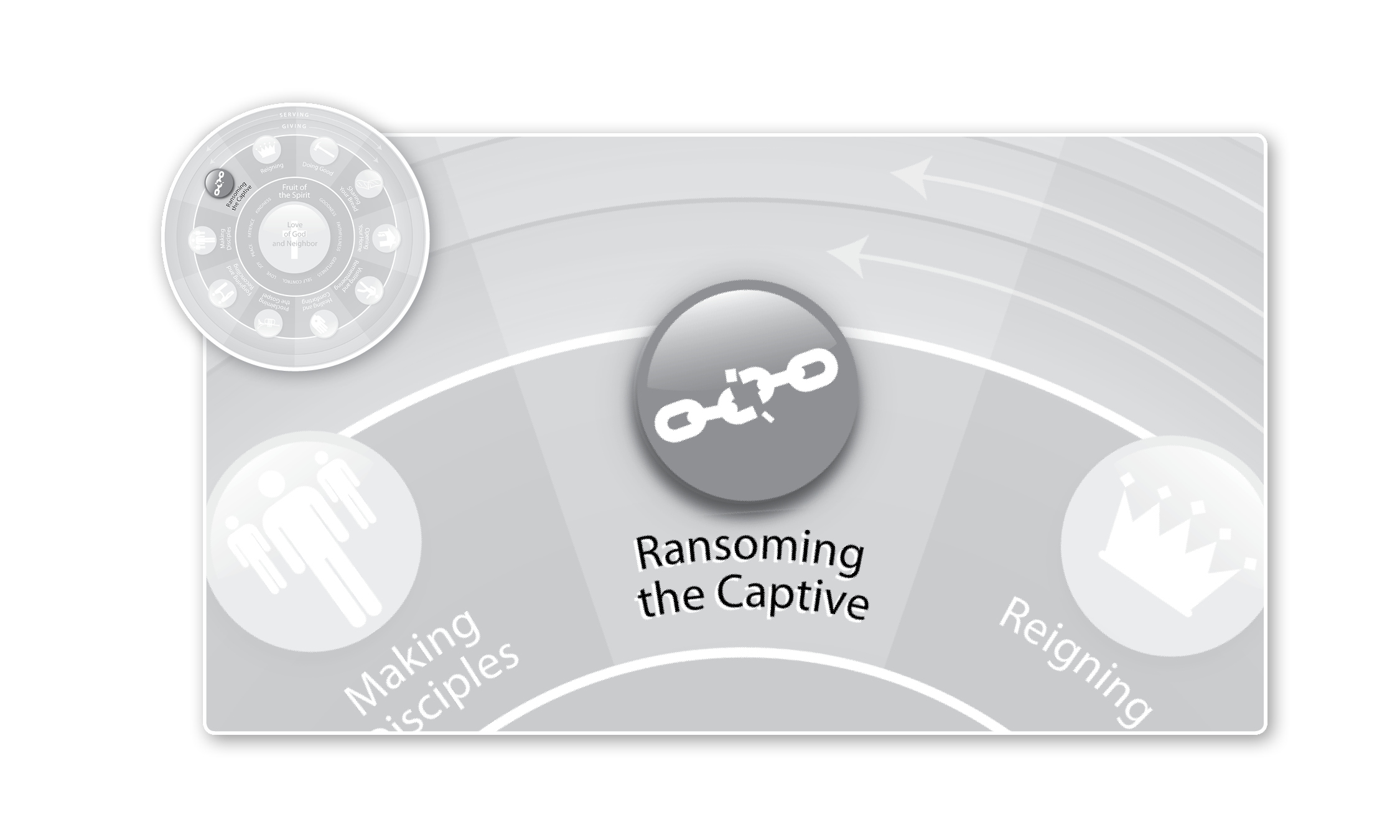
Before we progress any further into this series on Ransoming the Captive, we need to make one thing clear:

Jesus did not die for strangers. Nor did he die primarily for sinners. Nor did he die primarily for his enemies. 

That the people he dies for are all these things—sinners estranged from God who are thus his enemies—is absolutely true and Scriptural. In fact, in Romans 5:8 the Apostle Paul even says, “but God shows his love for us in that while we were still sinners, Christ died for us.”

But listen to that verse again carefully:

“but God shows his love for us in that while we were still sinners, Christ died for us.”

Who did Christ die for? Not sinners. Us.

He died for us while we were sinners. But the best description of who Jesus died for is that he died for us, his beloved humanity, which, tragically, had become his sinfully estranged enemies.

And in this is a world of difference.

We must always remember that it is God’s nature to love human beings. Yes, he is full of righteous wrath toward sinners. But he did not create our race as sinners. He created us as his beloved children. The sin part we added in! So ransoming his beloved children is simply the costly but very natural consequence of his fatherly love toward us.

And that’s why, since the dawn of the race, he has done good to each one of us, fed each one of us, shared his bread with each one of us, opened his home to each one of us, visited and remembered each one of us, and healed and comforted each one of us. Having done all these things for each human being, would he not also give himself to ransom us from whatever separates us from him?

The Apostle Paul says it this way in Romans 8:32. It’s a short, simple passage that I would highly encourage you to memorize.  Actually, don’t just memorize it. Meditate on it, and plant it in the deepest place of your ransomed heart:

He who did not spare his own Son but gave him up for us all, how will he not also with him graciously give us all things?

In the same way, when we Christians mirror his love to the world—when we do good to unlovable others in his name, sharing our bread with unlovable others in his name, open our homes to unlovable others in his name, visit and remember unlovable others in his name, heal and comfort unlovable others in his name, proclaim the Gospel in his name, forgive and reconcile in his name, and make disciples in his name, fall in love with unlovable others in his name…then why in the world would we not also give our lives in his name to ransom the unlovable others to whom we have given all these things? It is our reasonable and joyful worship.

So think of ransoming others as all eight other Works of Mercy extended across time, anchored by the decision to hold nothing back, even our own lives, until the unlovable other be freed in Jesus’ name.

This makes a lot of sense if you think for a moment about non-believers. If a non-believer’s family member gets kidnapped, he or she would of course sacrifice everything to meet demands for ransom. He or she would call the police, the TV station, every friend and relative and casual acquaintance who might possibly be able to help. And he or she wouldn’t try for just a day to raise the ransom. I’ve seen stories on TV of non-Christians who have been trying for more than a decade to free family members who have been kidnapped by the Contras or the Sandanistas or the FARCs or whoever the kidnapping group happens to be. They—these non-believers—put their own lives on hold and devote everything to the ransoming of captive family members.

So among Christians, when those God gives us to love—whether members of the family of God or captives we believe Christ is working to set free—are imprisoned, we should stream in from cities around the world bringing food, raising money, spending the night at the prison, helping the prisoner, defending him, strengthening him, lavishing everything on him because this is what we do in our family.

It’s how Christ taught us.

If a family member of yours were abducted, is there anything you wouldn’t do to get them back?  How should that affect how we show love to captives?

Posted in Uncategorized | Tagged , , , , | Leave a comment

Only Slaves of Christ Are Free

Part VI of our series on Ransoming the Captive

As we progress through this series on Ransoming the Captive, it is important to remember one thing, lest we forget: captives can’t pay ransom for others.

But freed men? That’s another story!

God is replacing our futile ways of captivity with his righteous ways of ransoming unlovable human beings. And he’s teaching us those righteous ways. Not because our blood saves anybody—it doesn’t—but because when we let God use us to ransom unlovable others in his name, it points unmistakably back to him.

So if you follow Jesus, you have to be ready to lay down your life in his name as a ransom for the captives he loves.

At a moment’s notice.  That’s what the mother of James and John found out in Matthew 20:20-28:

“Then the mother of Zebedee’s sons came to Jesus with her sons and, kneeling down, asked a favor of him.

‘What is it you want?’ he asked.

She said,  ‘Grant that one of these two sons of mine may sit at your right and the other at your left in your kingdom.’

‘You don’t know what you are asking,’ Jesus said to them. “Can you drink the cup I am going to drink?’

‘We can,’ they answered.

Jesus said to them, ‘You will indeed drink from my cup, but to sit at my right or left is not for me to grant. These places belong to those for whom they have been prepared by my Father.’

When the ten heard about this, they were indignant with the two brothers. Jesus called them together and said, ‘You know that the rulers of the Gentiles lord it over them, and their high officials exercise authority over them. Not so with you. Instead, whoever wants to become great among you must be your servant, and whoever wants to be first must be your slave—just as the Son of Man did not come to be served, but to serve, and to give his life as a ransom for many.’

(Matthew 20:20–28)

This is the Scriptural “twist” to ransoming the captives that many modern Christians fail to see (or just don’t want to):

Jesus does not set us “free” from captivity so that we no longer have a master.  Instead, we are ransomed from captivity by Christ in order to become his own possession, which, as it turns out, is true freedom.

Hear—and heed—the Word of the Lord from the Apostle Paul in 1 Corinthians 7:20–23:

“Each one should remain in the situation which he was in when God called him. Were you a slave when you were called? Don’t let it trouble you—although if you can gain your freedom, do so. For he who was a slave when he was called by the Lord is the Lord’s freedman; similarly, he who was a free man when he was called is Christ’s slave. You were bought at a price; do not become slaves of men.”

Only when we remain forever his captives – only when we leave behind our role of being captives and join him in his role of freeing captives – is it possible for us unlovable human beings to be finally, fully, ecstatically free.


Posted in Uncategorized | Tagged , , , | 2 Comments

Did Christ Become a Ransom So We Wouldn’t Have To?

Part V of our series on Ransoming the Captive

We concluded our last post by noting how Jeremiah foretells of Jesus’ work on the cross, ransoming each of us from the captivity of sin and death.

On the island of Patmos, John, one of Jesus’ twelve disciples, records the vision given him by God.  In this part, the angels worship Christ for condescending to be our ransom:

 “And when he had taken the scroll, the four living creatures and the twenty-four elders fell down before the Lamb, each holding a harp, and golden bowls full of incense, which are the prayers of the saints. And they sang a new song, saying,

‘Worthy are you to take the scroll and to open its seals, for you were slain, and by your blood you ransomed people for God from every tribe and language and people and nation, and you have made them a kingdom and priests to our God, and they shall reign on the earth.’

(Revelation 5:8–10, ESV)

Now here’s the really interesting part about the word “ransomed” in this passage of Scripture. In Greek, the word that’s used is agorazo, which means “to be in the market place… to do business there, buy or sell.”

Jesus, in other words, is described as “doing the business” of buying us back!

The angels sing about how he does this: by purchasing us captives with the currency of his own blood.

Jesus the businessman, buying back captives. It’s an amazing thing for angels to sing about, don’t you think? It shows just how earthy this business of redemption is. He doesn’t just redeem us spiritually. He spills his very physical blood in order to redeem our spirits, souls, and bodies.

If you want to get even the smallest glimpse of what that’s like, consider the story of Oscar Schindler, another businessman who gave everything he had—spirit, soul, and body—to redeem the Jewish people from destruction at the hands of the Nazis.

Here’s how Louis Bulow tells it:

“Why did [Schindler] do it? Why did he spend something like 4 million German marks keeping his Jews out of the death camps—an enormous sum of money for those times?…

No one will ever know exactly what made this complex man do what no German had the courage to do. A large part of the fascination of Schindler is that not even those who admire him most can figure out his motives. But Oscar Schindler rose to the highest level of humanity, walked through the bloody mud of the Holocaust without soiling his soul, his compassion, his respect for human life – and gave his Jews a second chance at life. He miraculously managed to do it and pulled it off by using the very same talents that made him a war profiteer—his flair for presentation, bribery, and grand gestures.

Oscar Schindler was a sentimentalist who loved the simplicity of doing good. A man full of flaws like the rest of us. An ordinary man who even in the worst of circumstances did extraordinary things, matched by no one. The unlikeliest of all role models who started by earning millions as a war profiteer and ended by spending his last pfennig and risking his life to save his 1300 Schindlerjews.…

Irving Glovin, Schindler’s attorney and friend, met Oscar in 1963 and bought the rights to the story and film in 1980. He later recalled Schindler not only with affection, but with great admiration: ‘He drank, yes, he drank. He liked women. He bribed. But he bribed for a good purpose. All of these things worked. If he were not this kind of person he probably wouldn’t have succeeded. Whatever it took to save a life he did.’”

It’s not in the drinking or the love of women or the bribery that Schindler is like Jesus. It’s the part that says, “Whatever it took to save a life he did.

But you’ll notice that even Schindler’s generosity is only the faintest reminder of Jesus’ own.

Jesus gave more than 4 million German marks in ransom. He became the ransom for us. 

And that’s why in heaven, the elders and the four living creatures praise, of all things, Jesus’ business savvy! He put the right value on the right things, and whatever it took to save a life—which, it turns out, was giving his own life—he did. 

That’s what Peter tells us in 1 Peter 1:17-19. Here, Peter talks about exile.  That’s where we are now: in exile. Struggling through a world caked everywhere with the mud of sin. God cast our ancestors out of the Garden of Eden and consigned us to exile as the necessary consequence of our sins. But as Peter reminds us, God did this for our own good. There’s something we’re learning here; namely, the ways of the one who ransomed us. We’re learning to be like him. Peter says:

“…conduct yourselves with fear throughout the time of your exile, knowing that…you were ransomed from the futile ways inherited from your forefathers, not with perishable things such as silver or gold, but with the precious blood of Christ, like that of a lamb without blemish or spot.”

(1 Peter 1:17b–19, ESV)

If we’re learning to be like him, and he was a ransom, then how do you think he wants us to mirror that to the world? Or, to ask it a little differently:

Did he become a ransom so that we don’t have to?

Answer: No. He became our ransom so that we would voluntarily choose to use our whole lives to ransom others also. Use our lives in a way that makes Oscar Schindler’s 4 million German marks seem average, not extraordinary.

What would it look like for you to do that?  Who can you ransom out of captivity this way?

Posted in Uncategorized | Tagged , , , | 3 Comments

