
“He will save his people from their sins” (Mt 1:18-25)

In Matthew 1, we see the genealogy of Jesus. But the interesting thing is that the kings Ahaziah, Jehoash, and Amaziah are left out of Jesus’ genealogy. Why is this?

First of all, the important thing to keep in mind is that God always works according to his word, never according to human systems.

In the 1970s, Christian leaders in the West said that God works through the “Seven Mountains”: religion, family, education, media, arts & entertainment, business, and government. These leaders said that if we wanted to win the world for Christ, we would need to “influence” these mountains.

But, in reality, to God these are not mountains. God is not an influencer. To God, what shapes the world is not human systems but his word. God’s word does not influence the world. It creates it.

“In the beginning God created the heavens and the earth. Now the earth was formless and empty, darkness was over the surface of the deep, and the Spirit of God was hovering over the waters. And God said, “Let there be light,” and there was light.” (Genesis 1:1-3)

“The Son is the radiance of God’s glory and the exact representation of his being, sustaining all things by his powerful word.” (Hebrews 1:3)

Many translations of the Bible have Matthew 1:1 reading “The genealogy of Jesus”. But the original word is not “genealogy” but “genesis”. Jesus’ birth does not just influence the world; it is its genesis. God is not constrained to work through the world’s systems. If God wants, he can just leave out human systems and those who manage them, such as the three kings who are not included in Jesus’ genealogy. They are nullified.

“God chose the lowly things of this world and the despised things—and the things that are not—to nullify the things that are,” (1 Corinthians 1:28)

This is what happened in the “genesis” of Jesus:

“This is how the birth of Jesus the Messiah came about: His mother Mary was pledged to be married to Joseph, but before they came together, she was found to be pregnant through the Holy Spirit. Because Joseph her husband was faithful to the law, and yet did not want to expose her to public disgrace, he had in mind to divorce her quietly. But after he had considered this, an angel of the Lord appeared to him in a dream and said, “Joseph son of David, do not be afraid to take Mary home as your wife, because what is conceived in her is from the Holy Spirit. She will give birth to a son, and you are to give him the name Jesus, because he will save his people from their sins.” All this took place to fulfill what the Lord had said through the prophet: “The virgin will conceive and give birth to a son, and they will call him Immanuel”(which means “God with us”).”

When the Lord acts in our lives, he usually doesn’t act in ways that are according to our plans or systems. His actions generally interrupt our lives because God is not constrained by human systems. He acts according to his word.

The birth of Jesus interrupted Joseph’s life because he was forced to choose between the law of God and God. According to the law, Joseph should have cancelled his engagement to Mary. But, instead, he obeyed the word of God from the angel and took Mary as his wife.

“For what the law was powerless to do because it was weakened by the flesh, God did by sending his own Son in the likeness of sinful flesh to be a sin offering. And so he condemned sin in the flesh,” (Romans 8:3)

God had to work “apart from the law” (cf. Romans 3:23) in order to set us free from sin because the law was powerless to do so. Working through the “seven mountains” is not a definition of God’s action, but it is a better definition of sin: rejecting the direct care of God and indirectly receiving his care through mediators such as nations, kings, priests, and laws.

Throughout the Old Testament, God promised that he would come personally to rule on the earth, to save us from our sinful rejection of him. He promised to do this by coming personally and removing all mediators from between him and us, not by replacing bad mediators with good mediators. This is the good news of the Kingdom of God. This is the promise that is fulfilled in the birth of Christ, Emmanuel.

Joseph was a descendant of David, but Jesus was not the flesh-and-blood son of Joseph. Jesus became the son of David through adoption. Joseph adopted Jesus by naming Jesus. We might think, “Wouldn’t it be better if Jesus was a direct descendant of David rather than an adopted one?” But God does not work through human systems. God knows that spiritual parentage is more important than fleshly bloodlines.

“You belong to your father, the devil, and you want to carry out your father’s desires. He was a murderer from the beginning, not holding to the truth, for there is no truth in him. When he lies, he speaks his native language, for he is a liar and the father of lies.” (John 8:44)

“children born not of natural descent, nor of human decision or a husband’s will, but born of God” (John 1:13)

Names that are given to babies by God are also the word of God and carry the power of the word of God.

“As the rain and the snow come down from heaven, and do not return to it without watering the earth and making it bud and flourish, so that it yields seed for the sower and bread for the eater, so is my word that goes out from my mouth: It will not return to me empty, but will accomplish what I desire and achieve the purpose for which I sent it” (Isaiah 55:10-11)

God tells Joseph to give Jesus two names. One, “Jesus” and another “Immanuel”. As for “Immanuel” it is because Jesus is “God with us”.

“The Word became flesh and made his dwelling among us. We have seen his glory, the glory of the one and only Son, who came from the Father, full of grace and truth.” (John 1:14)

In fact, the whole of the Gospel of Matthew is about “God with us”. He is born as Emmanuel and, at the end of the Matthew, he says “And surely I am with you always, to the very end of the age” (Note: “I am” is the name of God).

There are only two scriptures in the Old Testament about God saving his people from their sins. They are Ezekiel 36:16-29 and Ezekiel 37:21-27

“For I will take you out of the nations; I will gather you from all the countries and bring you back into your own land. I will sprinkle clean water on you, and you will be clean; I will cleanse you from all your impurities and from all your idols. I will give you a new heart and put a new spirit in you; I will remove from you your heart of stone and give you a heart of flesh. And I will put my Spirit in you and move you to follow my decrees and be careful to keep my laws. Then you will live in the land I gave your ancestors; you will be my people, and I will be your God. I will save you from all your uncleanness..” (Ezekiel 36:24-29)

“They will no longer defile themselves with their idols and vile images or with any of their offenses, for I will save them from all their sinful backsliding, and I will cleanse them. They will be my people, and I will be their God. “‘My servant David will be king over them, and they will all have one shepherd.” (Ezekiel 37:23-24)

In modern popular theology, sin is breaking God’s law and, because we broke God’s law, Jesus had to die as a substitute for us, so if we believe in Jesus we are counted righteous and can go to heaven when we die. But Ezekiel 36 and 37 show us that sin is not about a broken law, but something far deeper: a broken relationship between us and God. It was broken not because we are not perfect, but because we rejected the relationship with God, a relationship where we receive God’s direct care and reign over us.

In Ezekiel, it wasn’t just that Israel broke God’s law. They rejected God as their sole ruler and provider and sought care and rule from worldly systems–in the “Seven Mountains”, so to speak. So, the Lord scattered them among the nations they emulated. But he promised to bring them back, giving them a new Spirit and new hearts which trust him by washing them with water—a promise fulfilled when we are baptized into Christ’s death, receiving the Holy Spirit.  

With Joseph and Mary, God spoke to them through angels and dreams. Most of us would be thrilled if God guided us through angels and dreams. But the writer of Hebrews says this:

“In the past God spoke to our ancestors through the prophets at many times and in various ways, but in these last days he has spoken to us by his Son,” (Hebrews 1:1-2)

Now God speaks to us not merely through angels and dreams but directly, through the Son. By his blood, the Lord Jesus saved us from our sins. He freed us from our slavery to the structures and systems of this world, to which we had turned instead of God. Now Christ gathers us as his people to rule over us personally and provide for us directly until the end of the age. Now we see him through the eyes of faith, but then he will appear, and we, in our resurrected bodies on a new heavens and new earth, will see him face to face!

Posted in Bible, Bible Study, Reading the Bible, Uncategorized | Tagged , , , , , , , , , , | Leave a comment

“Are you the one who was to come, or should we expect another?” (Mt 11:2-11)

When John, who was in prison, heard about the deeds of the Messiah, he sent his disciples to ask him, “Are you the one who is to come, or should we expect someone else?”

Jesus replied, “Go back and report to John what you hear and see: The blind receive sight, the lame walk, those who have leprosy are cleansed, the deaf hear, the dead are raised, and the good news is proclaimed to the poor. Blessed is anyone who does not stumble on account of me.”

As John’s disciples were leaving, Jesus began to speak to the crowd about John: “What did you go out into the wilderness to see? A reed swayed by the wind? If not, what did you go out to see? A man dressed in fine clothes? No, those who wear fine clothes are in kings’ palaces. Then what did you go out to see? A prophet? Yes, I tell you, and more than a prophet. This is the one about whom it is written:

‘I will send my messenger ahead of you, who will prepare your way before you.’

Truly I tell you, among those born of women there has not risen anyone greater than John the Baptist; yet whoever is least in the kingdom of heaven is greater than he. (Matthew 11:2-11)

By Pieter Brueghel the Elder – Google Arts & Culture: Home – pic Maximum resolution., Public Domain, https://commons.wikimedia.org/w/index.php?curid=122059315

Through Jesus’ life, death, burial, resurrection, and ascension, he brought the direct reign of God–the Kingdom of God—with him wherever he was. And when, with his Father he poured out the Holy Spirit from his throne in heaven, Christ’s reign was extended over the whole world.

Many people’s understanding of the Kingdom of God robs Christ of the complete and total victory which the scriptures announce that he has clearly already won. They either believe that the Kingdom is only in heaven, or in our hearts, or in the future, or only partly present, or only in the church.

Revelation 1:5 tells us that Jesus is presently the ruler of the kings of the earth. But, if that is so, why do we not see him ruling over everything?

Hebrews 2:8 says this “Thou hast put all things in subjection under his feet. For in that he put all in subjection under him, he left nothing that is not put under him. But now we see not yet all things put under him.” (KJV)

Psalm 110:2 also says, “The LORD will extend your mighty scepter from Zion, saying, “Rule in the midst of your enemies!””

Christ already defeated his enemies on the cross, as Colossians 2:15 tells us. But instead of destroying them, he invites his enemies to end their rebellion and receive his mercy. The gospel is the offer of mercy to Christ’s enemies before he returns to judge the world.

This doesn’t mean that his enemies can do whatever they want to do at the present time. Christ already rules over them directly and personally. Nothing they do can stop him or even slow him down. Everything that they do only accomplishes his purpose of bringing them to his feet. There, at his feet, they must choose either his mercy or their destruction.

The Kingdom of God is at hand. Christ is presently ruling and reigning over the earth. In scripture, the Kingdom of God is never separated from the salvation is God. If the salvation of God is present, then the Kingdom of God is present.

“Where is your king, that he may save you? Where are your rulers in all your towns, of whom you said,… “I will deliver this people from the power of the grave; I will redeem them from death. Where, O death, are your plagues? Where, O grave, is your destruction?” (Hosea 13:11, 14)

Scripture is clear that the Kingdom of God and the salvation of God save us not only from our sins, but from all the things that seek to rebel against God in the world.

“For he has rescued us from the dominion of darkness and brought us into the kingdom of the Son he loves,” (Colossians 1:13)

Christ rescues us from all things now because his Kingdom is present now. Previously, we were under those appointed by God such as rulers, presidents, parents, etc. But now we are under Christ’s direct rule, and nothing in this age can interfere with that.

In scripture, the Kingdom of God is not an optional kingdom. You don’t get to decide whether you become part of it or not. On the cross, the Kingdom of God defeated all the other kingdoms and put all people under the direct rule and care of Christ. His rule can either be welcomed with joy or rejected and rebelled against. And those who rebel will face eternal destruction on the day of Christ’s return.

Christ is already Lord of all. But in the present age the Kingdom can only be seen by faith. Many Christians hear “seen by faith” and tend to think that this means that the Kingdom is only present in our hearts. But “seen by faith” doesn’t mean that the Kingdom is not here. It means that it is not detectable using the senses that are used to see things in the present age.

“Jesus replied, “Very truly I tell you, no one can see the kingdom of God unless they are born again.” (John 3:3)

We might say, “I am born again, but I still can’t see the Kingdom of God. Why?” This is actually the question which John the Baptist asked Jesus: “Are you the one who is to come, or should we expect someone else?”. The scripture does not say that John asked this because he was languishing in prison and sad that he might have selected the wrong candidate for the Messiah.

John the Baptist’s question does not reveal a lack of faith. It reveals a lack of sight. John knew that he was faithfully proclaiming the message of the Kingdom of God that God had given him through the scripture to preach.

“See, the Name of the Lord comes from afar, with burning anger and dense clouds of smoke; his lips are full of wrath, and his tongue is a consuming fire.” (Isaiah 30:27)

We can understand what motivated John’s question to Jesus based on how Jesus responded to John’s question: “Jesus replied, “Go back and report to John what you hear and see: The blind receive sight, the lame walk, those who have leprosy are cleansed, the deaf hear, the dead are raised, and the good news is proclaimed to the poor.” (Matthew 11:4-5)

John preached about the Kingdom from the prophet Isaiah. So Jesus responds to John’s question by also quoting from Isaiah:

Strengthen the feeble hands, steady the knees that give way; say to those with fearful hearts, “Be strong, do not fear; your God will come, he will come with vengeance; with divine retribution he will come to save you.” Then will the eyes of the blind be opened and the ears of the deaf unstopped. Then will the lame leap like a deer, and the mute tongue shout for joy. Water will gush forth in the wilderness and streams in the desert.” (Isaiah 35:3-6)

Jesus is not only the only king of the Kingdom of God, but the only teacher. Jesus is not encouraging John but teaching John. Jesus is the only one who can open people’s minds to understand the scriptures.

“But you are not to be called ‘Rabbi,’ for you have one Teacher, and you are all brothers. And do not call anyone on earth ‘father,’ for you have one Father, and he is in heaven. Nor are you to be called instructors, for you have one Instructor, the Messiah.” (Matthew 23:8-10)

It is almost as if Jesus answers John’s question by saying, “John, you are correct. But keep reading after Isaiah 30. Before the Messiah comes in judgment, he must come in mercy to strengthen the feeble hands and knees. He must first give sight to the blind, and preach the good news to give life to the dead.”

And, later, as he taught his disciples, he first had to be crucified, buried, and rise again on the third day to fulfill the scriptures.

“He said to them, “This is what I told you while I was still with you: Everything must be fulfilled that is written about me in the Law of Moses, the Prophets and the Psalms.” Then he opened their minds so they could understand the Scriptures.” (Luke 24:44-45)

Jesus told the crowd, “Truly I tell you, among those born of women there has not risen anyone greater than John the Baptist; yet whoever is least in the kingdom of heaven is greater than he.” Jesus’ purpose is not to praise John the Baptist, but to use what just happened as a teaching illustration about the kingdom of GOd. He is teaching that, even though the Kingdom of God is fully present, it is impossible for us to discern God’s activity based on what we see. Even John, who proclaimed the Kingdom of God, could not see it. Yet, even the least in the Kingdom of God can see what John cannot.

When we are baptized, we die to the present age. But, even though we are born again, we cannot use the senses of this age to see the Kingdom. We must use Kingdom-senses to see the Kingdom. We receive this Kingdom-sense at our baptism. “Kingdom-sense” is not some spooky spiritual ability that allows us to hear voices in our ears and see visions. Jesus shows us clearly the only sense by which we can detect the Kingdom of God. It is his word. Jesus responded to all inquirers by revealing himself to him through his word.

“The Word became flesh and made his dwelling among us.” (John 1:14)

The word of God, taught by Jesus himself through the Holy Spirit, is the only way we are able to see the Kingdom of God. Even though Christ is ruling over all creation directly, the only way to detect that activity is through him teaching us through His word. Without the Holy Spirit opening our eyes and the Spirit manifesting him to us, we are as blind to Christ’s reign as an unbeliever—and as blind as Jesus’ disciples, Nicodemus, and John the Baptist.

We can’t overcome this blindness just by sitting down and reading the Bible. Scripture only becomes the living word of God when Christ himself teaches it and the Holy Spirit opens our minds to receive it. That means we have to come to scripture with humility and patience, asking Christ to teach us. We must wait on him to teach what he wants to teach us, when he wants to teach us. He is gracious and merciful, and he will respond to us just like he did to John the Baptist and to his own disciples.

Posted in Bible, Bible Study, Reading the Bible, Uncategorized | Tagged , , , , , , | Leave a comment

“Today you will be with me in paradise”

“When they came to the place called the Skull, they crucified him there, along with the criminals—one on his right, the other on his left. Jesus said, “Father, forgive them, for they do not know what they are doing.” And they divided up his clothes by casting lots. The people stood watching, and the rulers even sneered at him. They said, “He saved others; let him save himself if he is God’s Messiah, the Chosen One.” The soldiers also came up and mocked him. They offered him wine vinegar and said, “If you are the king of the Jews, save yourself.” There was a written notice above him, which read: this is the king of the jews. One of the criminals who hung there hurled insults at him: “Aren’t you the Messiah? Save yourself and us!” But the other criminal rebuked him. “Don’t you fear God,” he said, “since you are under the same sentence? We are punished justly, for we are getting what our deeds deserve. But this man has done nothing wrong.” Then he said, “Jesus, remember me when you come into your kingdom.” Jesus answered him, “Truly I tell you, today you will be with me in paradise.”

This final Sunday of the church year is called “Christ the King Sunday”. The purpose of this Sunday is to give us a picture of what it means that Christ is the king. But in Luke 23, Jesus is being crucified. How does this depict Christ as King? Wouldn’t it have been better to choose a scripture like Revelation 19:11?

“I saw heaven standing open and there before me was a white horse, whose rider is called Faithful and True. With justice he judges and wages war.”

Many Christians these days think this way. They believe that Jesus’s weakness was displayed on the cross, but that Jesus’ power will be revealed when he comes again. But this is a worldly understanding of power.

In the world, power is what you use to save and protect things. So, many Christians think that God is calling us to use power to save and protect strong families and marriages and to ban abortion. We think of Christ’s death on the cross like a soldier who died standing up for his country. And we think that Christ is calling us to sacrifice for him and for Christian values.

If we are to understand what it means that Christ is King, one of the most important things to understand about the King is that he does not change.

“I the LORD do not change. So you, the descendants of Jacob, are not destroyed.” (Malachi 3:6)

“Every good and perfect gift is from above, coming down from the Father of the heavenly lights, who does not change like shifting shadows.” (James 1:17)

“Jesus Christ is the same yesterday and today and forever.” (Hebrews 13:8)

It is true that Jesus was born, died, resurrected, ascended, and will come again. But that does not mean that his character changes. Before Jesus comes, when he is on the cross, when he was resurrected, when he ascended, and when he comes again, he is the same!

“so Christ was sacrificed once to take away the sins of many; and he will appear a second time, not to bear sin, but to bring salvation to those who are waiting for him.” (Hebrews 9:28).

When Jesus was on the cross, it wasn’t that Jesus’ character and power were hidden. Instead, they were on full display. Jesus revealed his identity and God’s identity fully.

“After Jesus said this, he looked toward heaven and prayed: “Father, the hour has come. Glorify your Son, that your Son may glorify you.” (John 17:1)

“For in Christ all the fullness of the Deity lives in bodily form,” (Colossians 2:9)

The problem is not that Christ’s power was hidden on the cross. It is that we have a warped and sinful understanding of power.

“With that, one of Jesus’ companions reached for his sword, drew it out and struck the servant of the high priest, cutting off his ear. “Put your sword back in its place,” Jesus said to him, “for all who draw the sword will die by the sword. Do you think I cannot call on my Father, and he will at once put at my disposal more than twelve legions of angels? But how then would the Scriptures be fulfilled that say it must happen in this way?”” (Matthew 26:51-54)

Jesus did not restrain his power by refraining from calling on angels. If he wanted to, he could call down from heaven more ‘power’ than the disciples could even imagine. But Jesus knew that that is not true power. Compared to God’s word, everything else is weak. Jesus knew that when God’s word said that something must happen in a certain way, no amount of worldly power could stop it.

“As the rain and the snow come down from heaven, and do not return to it without watering the earth and making it bud and flourish, so that it yields seed for the sower and bread for the eater, so is my word that goes out from my mouth: It will not return to me empty, but will accomplish what I desire and achieve the purpose for which I sent it.” (Isaiah 55:10-11)

“For the word of God is alive and active. Sharper than any double-edged sword, it penetrates even to dividing soul and spirit, joints and marrow; it judges the thoughts and attitudes of the heart.” (Hebrews 4:12)

The word of God is stronger than any power in the world. Jesus knows this, and this is why he only uses the power of the word.

“Coming out of his mouth is a sharp sword with which to strike down the nations. “He will rule them with an iron scepter.” He treads the winepress of the fury of the wrath of God Almighty.” (Revelation 19:15)

The sword of the word is the sword that protects Jesus when he is on the cross. Nothing can happen to him (or to any of us) that is against the promises of the word of God. When Jesus was on the cross, the religious leaders tried to get him to act against the word. They told him if he was the King of the Jews, to come down from the cross. But Jesus kept the word of God: not saving his own life but instead using it to love his enemies.

Jesus lives out the word of God faithfully on the cross. This is why, on the cross, Jesus is not only dying for our sins, but he is ruling as our King. This is why Paul said that, on the cross, Jesus defeats his enemies.

“And having disarmed the powers and authorities, he made a public spectacle of them, triumphing over them by the cross.” (Colossians 2:15)

Ruling is not controlling others by your power. That would be a worldly understanding of power, not a heavenly one. Christ is ruling by carrying out the will of His Father in heaven, as we pray for in the Lord’s Prayer.

From the beginning to the end of his life, Jesus lives a life of trust in what His Father has said to him regardless of what he sees or hears. That is the definition of real power.

This is important for us to understand because the Bible says that Christians will reign with Christ. Does this ‘reigning’ mean that we are going to sacrifice ourselves in a spiritual battle for our country, strong families, and Christian values?

No. We will reign the same reason Christ does. Because we live lives of simple, unshakeable trust in the word of God no matter what we see or what others say to us. In this way, the word of God is done on earth as it is in heaven.

We wrongly think of martyrdom as being about big, bold, noble actions on the part of the martyr. We think of the martyr as enduring persecution and torture, defending the faith, standing up for Christ. We imagine the martyr entering heaven triumphantly and Christ giving them a big hug and proclaiming, “Well done, good and faithful servant!”

But Christ does not praise martyrs for bold sacrifice on his behalf. Instead, he praises us for living lives of simple trust in his word. This is what it means to be Christ’s good and faithful servants. Christ praises us for trusting that he will act according to his promises, just as Christ trusted that God would act according to God’s promises. Martyrs are those who wait with patient endurance for God to deliver them and the world from evil, just as he promised. What he calls us to do isn’t to use our power to enforce his will but to use our will to trust the power of his word.

This is the difference between the two criminals with whom Christ was crucified. The first criminal cries out, like many in the world today, “God, fix this problem for me and then I will believe in you” or “God, give me the power to fix this thing”. But that is not faith. It is merely a demand that God act according to our worldly understanding of power to protect what we believe is precious, namely ourselves.

But the second criminal does three things:

  • He acknowledges his own guilt and unworthiness.
  • He proclaims Christ’s innocence and worthiness.
  • He places his simple trust in Christ’s words.

“Then he said, “Jesus, remember me when you come into your kingdom.” Jesus answered him, “Truly I tell you, today you will be with me in paradise.”” (Luke 23:42-43)

What does Jesus mean by “paradise”? We don’t know, and Jesus doesn’t tell us. But we are not called to fill in the blanks, we are called to trust that Jesus will tell us what we don’t know when we need to know it. But what we do know about “paradise” from the word of God in Genesis 2 is that the “paradise” of Eden is the place where God walked with humans without mediation. Because Christ is the God who walked with humans in the Garden of Eden, he is promising that unmediated relationship to the thief on the cross.

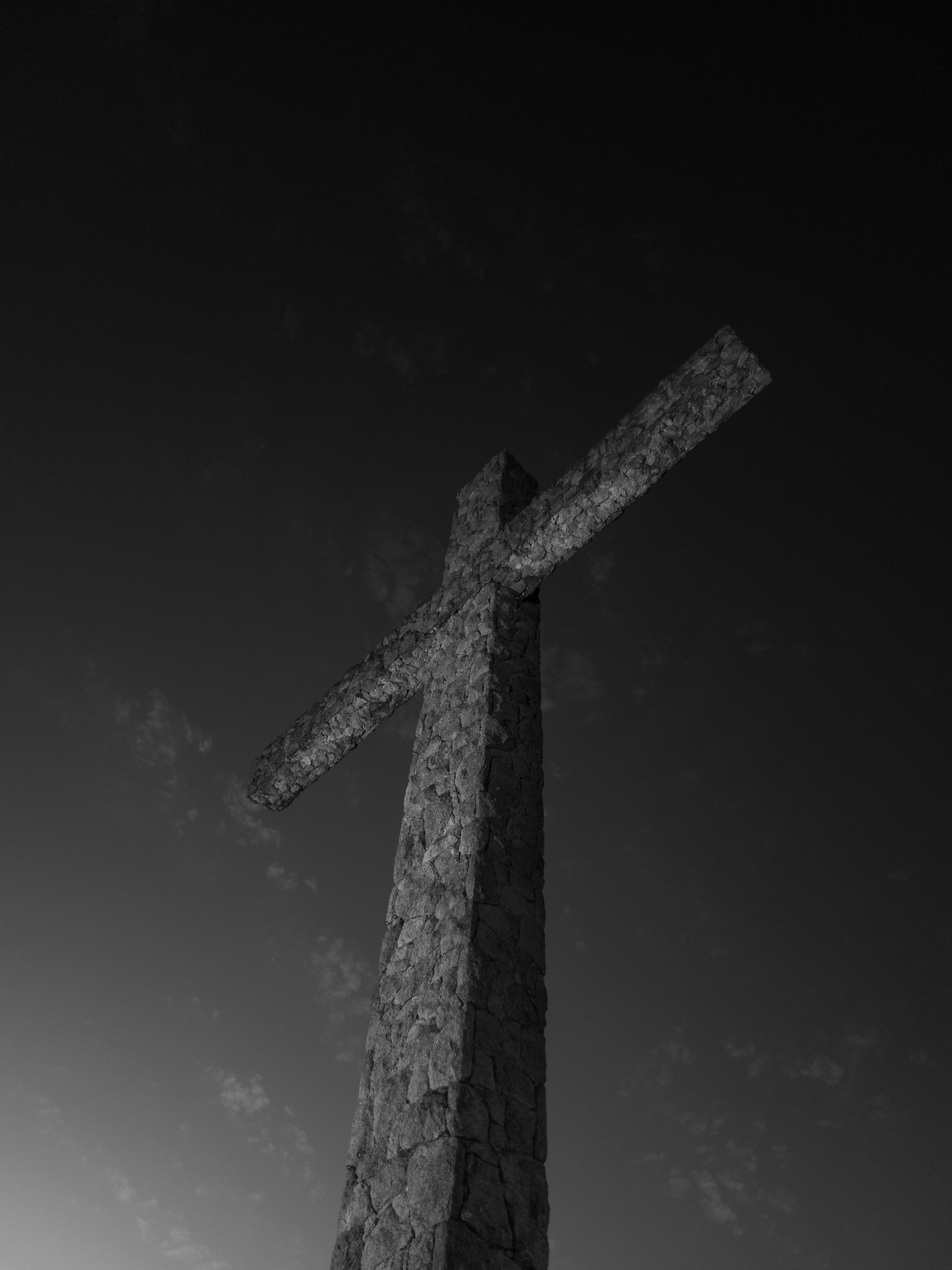
The way of the cross, how Christ lived and calls us to live, is to walk with unwavering trust that God will act according to his word. This is the way Christ has always lived, how he reigns, and how he conquered his enemies. There are no enemies whom Christ calls us to cut of their ears. Christ doesn’t call us to defend him or establish his kingdom. He calls us to trust and testify to his promises, just as he did with his Father’s promises all the way to the cross.

And Christ calls us to witness to his defeated enemies that he has made a promise of mercy to them called the gospel. Christ calls us to reign with him over all the powers and authorities in this world as we proclaim that gospel and join him in living according to the way of the cross.

The way of the cross is still rejected by the world as foolish. Often the way of the cross is rejected even by the church. We wrongly see the way of the cross as weak and insufficient to protect the things that are precious to us and precious to God. Like the disciple in the Garden of Gethsemane, we still pull out our little swords and try to cut off the ears of our enemies, thinking that by our power we are defending the kingdom.

But Christ tells us to put away our swords. Christ saves us not only from our sins but from our horribly wrong understandings of power. Christ is not calling us to use power for the “right things”. He is calling us to repent of our worldly understanding and use of power and instead live a life of simple, unshakeable trust in his promises as we walk according to God’s true wisdom and power, the way of the cross.

Posted in Bible, Bible Study, Reading the Bible | Tagged , , , , , , , , , , , | Leave a comment

