
Christian Morality is Not a Sliding Scale

Part II of our series on Doing Good

Our last post concluded by noting that what the world calls “neutral,” the Bible calls “evil.”  That’s the first big difference between how the world and God think about Doing Good.

The second way is this: the world typically thinks about doing good in gradations (e.g.. becoming a “better” person).

In Scripture, however, morality is not a sliding scale.

We do good because we are children of God; or we do evil because we are not children of God (or because we have forgotten that we are God’s children). The child of God does not gradually become a “better” person; instead, the child of God partakes more and more fully of God’s goodness and distributes it more fully to others.

“As Jesus started on his way, a man ran up to him and fell on his knees before him. ‘Good teacher,’ he asked, ‘what must I do to inherit eternal life?’

‘Why do you call me good?’ Jesus answered. ‘No one is good—except God alone.'” (Mark 10:17–18)

In the Bible, action always flows from identity; what is inside of us (in our spirits and souls) “leaks out” of our bodies in our basic orientation toward others.

As the apostle Paul describes it:

As for you, you were dead in your transgressions and sins, in which you used to live when you followed the ways of this world and of the ruler of the kingdom of the air, the spirit who is now at work in those who are disobedient. All of us also lived among them at one time, gratifying the cravings of our sinful nature and following its desires and thoughts. Like the rest, we were by nature objects of wrath.

But because of his great love for us, God, who is rich in mercy, made us alive with Christ even when we were dead in transgressions—it is by grace you have been saved. And God raised us up with Christ and seated us with him in the heavenly realms in Christ Jesus, in order that in the coming ages he might show the incomparable riches of his grace, expressed in his kindness to us in Christ Jesus.

For it is by grace you have been saved, through faith—and this not from yourselves, it is the gift of God—not by works, so that no one can boast. For we are God’s workmanship, created in Christ Jesus to do good works, which God prepared in advance for us to do. (Ephesians 2:1–10)

There is no praise from God for setting aside his good works and distributing our own, or for mixing the two. As God says through Jeremiah in the passage below, that is foolish: God’s ways are fundamentally different from human ways.

We learn good by seeing how God does good to us.

Unless we have received God’s goodness, we do not know what doing good is, nor do we know how to do it, nor to whom:

“My people are fools; 
   they do not know me. 
They are senseless children; 
   they have no understanding. 
They are skilled in doing evil; 
   they know not how to do good.” (Jeremiah 4:22)


God is not asking his children to “do good” generally. He is asking his children to do the good he has prepared for them to do. This includes personally dispensing his kindness to the ungrateful and wicked, and lending—not just our money but also our time and our life—to investments because we are not likely to get paid back. In this way the character of God is mirrored into the world so that the world must accept or reject him:

“And if you lend to those from whom you expect repayment, what credit is that to you? Even ‘sinners’ lend to ‘sinners,’ expecting to be repaid in full. But love your enemies, do good to them, and lend to them without expecting to get anything back. Then your reward will be great, and you will be sons of the Most High, because he is kind to the ungrateful and wicked. Be merciful, just as your Father is merciful.” (Luke 6:34–36)

Each Christian first received God’s goodness as his enemy. There is no other way. When we then do good by sharing God’s goodness to his remaining enemies, we become part of his strategic plan.

The works God has prepared us to do are strategic to his purposes, not our own.

They are not created with our safety or career advancement in mind. They will not protect or preserve our assets or our reputations. They are not designed to make us happy; to make us better people. They are prepared for one purpose: To make God known…especially to his enemies, who have nothing strategic to offer in return.

How does this change your perception of doing good?  To whom is God calling you to mirror his goodness?
Posted in Uncategorized | Tagged , , , , , , , | 2 Comments

What the World Calls “Neutral,” the Bible Calls “Evil”

Part I of our series on Doing Good

Why do people do good?

Sometimes it is to make others (or themselves) feel good. Often, it is to try to become a better person. And, of course, some do so to try to make the world a better place.

But no one does good for the specific purpose of benefiting one’s enemies. Yet, benefiting one’s enemies—lavishly and intentionally—is the massive and immovable cornerstone of Jesus’ own program of doing good:

“But I tell you who hear me: Love your enemies, do good to those who hate you, bless those who curse you, pray for those who mistreat you. If someone strikes you on one cheek, turn to him the other also. If someone takes your cloak, do not stop him from taking your tunic. Give to everyone who asks you, and if anyone takes what belongs to you, do not demand it back. Do to others as you would have them do to you.

“If you love those who love you, what credit is that to you? Even ‘sinners’ love those who love them. And if you do good to those who are good to you, what credit is that to you? Even ‘sinners’ do that. And if you lend to those from whom you expect repayment, what credit is that to you? Even ‘sinners’ lend to ‘sinners,’ expecting to be repaid in full. But love your enemies, do good to them, and lend to them without expecting to get anything back. (Luke 6:27–35)

It would not be the least bit presumptuous to sum up Jesus’ entire earthly mission as a salvific program of “doing good to the enemies of God.”

The apostle Paul explains:

“At just the right time, when we were still powerless, Christ died for the ungodly. Very rarely will anyone die for a righteous man, though for a good man someone might possibly dare to die. But God demonstrates his own love for us in this: While we were still sinners, Christ died for us.” (Romans 5:6–8)

Jesus tells his followers that they have only one reason to do good: to mirror the character of his Father into the world. Here is how Jesus concludes the Matthew 6 passage on doing good to one’s enemies:

“Then your reward will be great, and you will be sons of the Most High, because he is kind to the ungrateful and wicked. Be merciful, just as your Father is merciful.” (Luke 6:35–36) 

In order to understand Jesus’ approach to doing good, we need to see that there are two huge differences between the way the world looks at good and evil and how God does.

The First Difference

According to the world, there are good actions and there are evil actions, but most actions are basically neutral. The idea is that most of the time we are just living life, doing neutral things, and then every so often a situation comes up where we have to choose whether to do something good or something evil; both of which require about the same amount of effort.

In other words, the world seems to believe it’s hard to be evil unless you really mean to be.  Most of the time we are basically average people, neither good nor evil, but we are capable of doing good when the right situation comes up.

The Bible does not recognize these three categories of good, neutral, and evil.  Instead, it recognizes only two: good and evil. If one is not doing good, then one must be doing evil:

“Whoever of you loves life 
and desires to see many good days,
keep your tongue from evil 
and your lips from speaking lies.
Turn from evil and do good; 
seek peace and pursue it.” (Psalm 34:12–14)

Understanding this helps to make sense of Mark 3:4.  Here, Jesus asks the Pharisees, “Which is lawful on the Sabbath: to do good or to do evil, to save life or to kill?”

The question is: what is one’s orientation toward others—good or evil?

He doesn’t give them the option of being neutral, even though the world says that’s what most of us are. What the world calls neutral the Bible calls evil. Why?  Because doing the neutral thing of living as if you and your concerns are the central reality of your existence necessarily makes God second.

The word the Bible uses for that is “evil.”

Tune into our next post to learn about the second big difference.

Posted in Uncategorized | Tagged , , , , , | 3 Comments

Finding the Works of Mercy in the Lord’s Supper Story

Part XIII of our series on Preparation

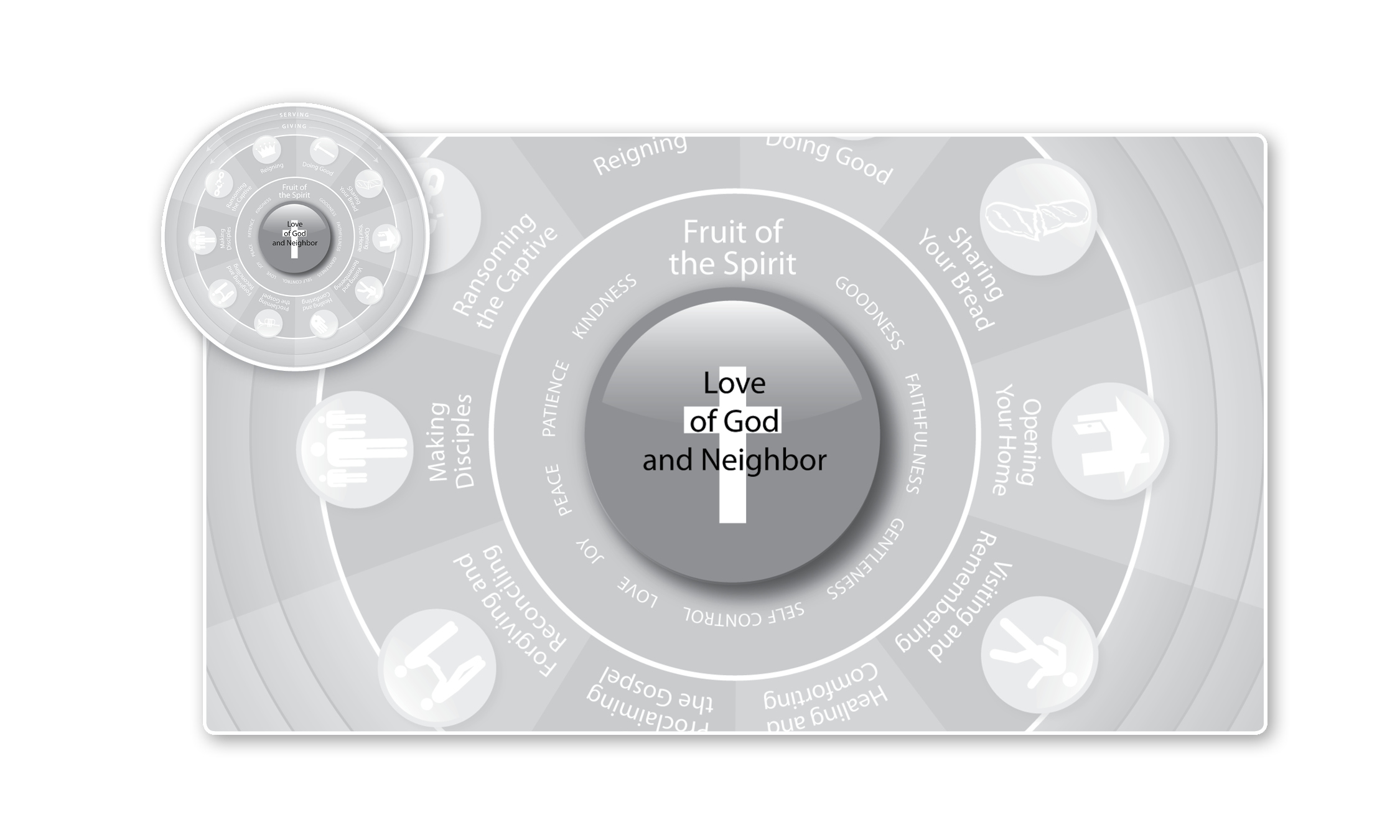
In our last post we talked about how the Lord’s Supper is extraordinary for many reasons, not the least of which is that in it we see Jesus delivering all ten of the Works of Mercy to humanity.

At the end of that post, I gave you a homework challenge: identify each of the Works of Mercy in the Lord’s Supper story, from the supper on through the crucifixion.

How’d you do?

There can certainly be more than one right answer, but let me at least share my list with you to stimulate your further search.

Jesus:

  • Does good to his enemies: 
    • Jesus washes the feet of and fed even Judas, who Jesus knows will betray him (John 6:70, ESV: “Jesus answered them, “Did I not choose you, the Twelve? And yet one of you is a devil.”)
  • Shares his bread: 
    • This happens in the communion meal itself.
  • Opens his home: 
    • Through the upper room, and also in John 14:2-4 when he says, “My Father’s house has many rooms; if that were not so, would I have told you that I am going there to prepare a place for you? And if I go and prepare a place for you, I will come back and take you to be with me that you also may be where I am.”
  • Visits and remembers:
    • See 1 Peter 3:19-20 (NIV): “After being made alive, he went and made proclamation to the imprisoned spirits— to those who were disobedient long ago when God waited patiently in the days of Noah while the ark was being built.”
    • Also Jesus visits the three sleeping disciples in the garden (Matthew 26:40).
  • Heals and comforts our bodies:
    • Luke 22:49-51 (NIV): “When Jesus’ followers saw what was going to happen, they said, ‘Lord, should we strike with our swords?’ And one of them struck the servant of the high priest, cutting off his right ear. But Jesus answered, ‘No more of this!’ And he touched the man’s ear and healed him.”
  • Proclaims the Gospel:
    • His words throughout this whole section of Scripture are the Gospel. Note especially Luke 22:22 (NIV): “The Son of Man will go as it has been decreed” and Matthew 27:62-64 (NIV), “The next day, the one after Preparation Day, the chief priests and the Pharisees went to Pilate. ‘Sir,’ they said, ‘we remember that while he was still alive that deceiver said, “After three days I will rise again.” So give the order for the tomb to be made secure until the third day. Otherwise, his disciples may come and steal the body and tell the people that he has been raised from the dead.’”
  • Forgives and reconciles:
    • Matthew 26:28 (NIV): “This is my blood of the covenant, which is poured out for many for the forgiveness of sins.”
  • Makes disciples:
    • John 13:12-15 (NIV): “When he had finished washing their feet, he put on his clothes and returned to his place. ‘Do you understand what I have done for you?’ he asked them. ‘You call me “Teacher” and “Lord,” and rightly so, for that is what I am. Now that I, your Lord and Teacher, have washed your feet, you also should wash one another’s feet. I have set you an example that you should do as I have done for you.’”
  • Ransoms our bodies from captivity:
    • Matthew 20:28 (NIV): “just as the Son of Man did not come to be served, but to serve, and to give his life as a ransom for many.”
  • Reigns over creation
    • John 12:32 (NIV): “But I, when I am lifted up from the earth, will draw all men to myself.”

Remember this as our month of Preparation draws to a close and we get ready to begin next week (and next year) to hear and do each of the Works of Mercy, starting with Doing Good:

Before we do unto others, let us always first hear how God in Christ has done unto us.

Posted in Uncategorized | Tagged , , , , , , | 1 Comment

