
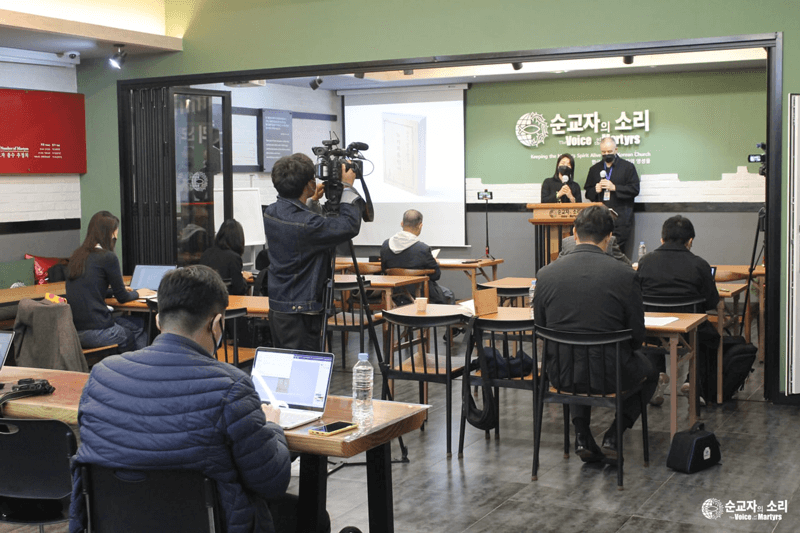
Voice of the Martyrs Korea announced the official release of its new John Ross Bible “Reader’s Edition” Gospel of Luke at a press conference at its Jongneung office this week. Reporters were treated to a celebratory lunch of North Korean noodles prepared by some of Voice of the Martyrs Korea’s North Korean defector students.
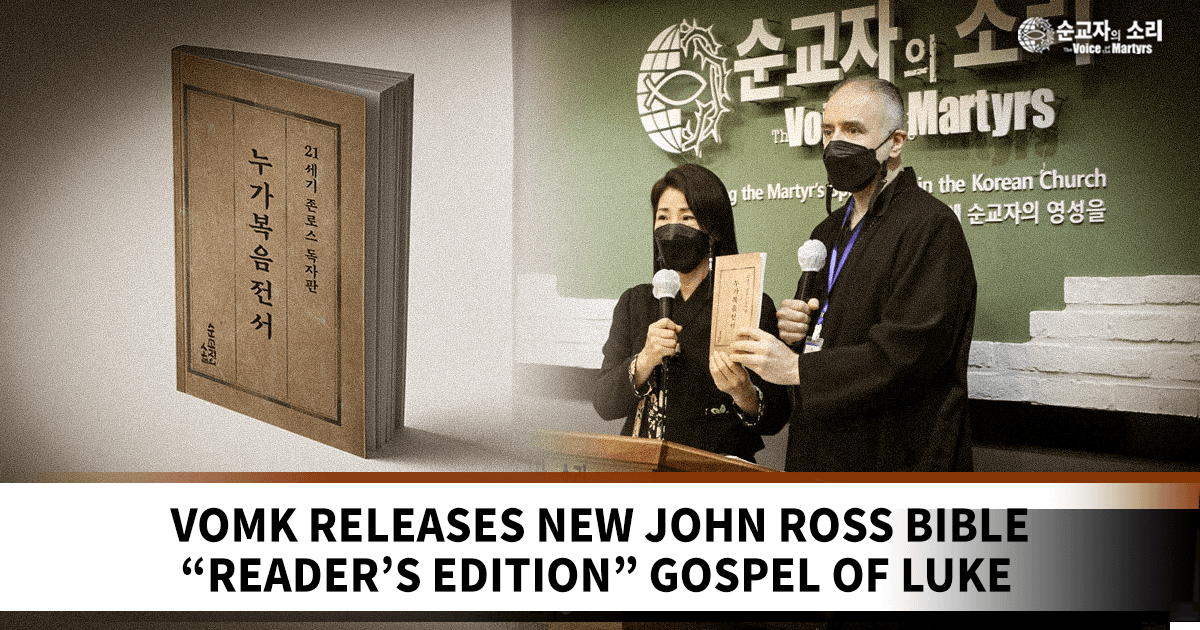
2022 marks the 140-year anniversary of the release of the first portion of scripture ever translated into the Korean language: Missionary John Ross’ Gospel of Luke, first published in 1882 and smuggled into Korea from Moukden, China (today’s Shenyang).
“The Ross Bible is how the voice of Christ first came to ordinary Korean people,” says Voice of the Martyrs Korea Representative Dr. Hyun Sook Foley. “Ordinary Korean people deserve to hear that voice again today. The Ross Bible was completed before the Korean language was standardized, so in its original form it is not readable by modern Koreans. The new John Ross Bible ‘Reader’s Edition’ Gospel of Luke updates the text direction, word order, letters, grammar, and spelling so that modern readers can read it easily and understand it fully. It retains the full original wording and adds simple notes to briefly and clearly explain unfamiliar vocabulary.”
The Ross Bible “Reader’s Edition” Gospel of Luke is printed in the same size and shape as the original version, in a convenient and durable paperback format. “This reader’s edition is designed for easy, frequent reading and for tossing in your backpack to read on the subway, not for being displayed in a museum,” says Representative Foley. The Ross Bible “Reader’s Edition” Gospel of Luke is available for 10,000 KRW at https://vomkorea.com/product/ross-bible-luke/ or by phone at 02-2065-0703.
The Ross Bible Reader’s Edition Gospel of Luke is the first of three Ross Bible versions Voice of the Martyrs Korea will be releasing over the next two years. The organization is currently working on a Luke/John/Acts trilogy edition for publication in mid-2023 and a full Ross New Testament “Contemporary Reader’s Edition” for publication in 2024.
Voice of the Martyrs CEO Pastor Eric Foley says the goal of the publication of the Ross Bible is for Koreans both north and south to be able to experience the spiritual power of the original Korean Bible translation.
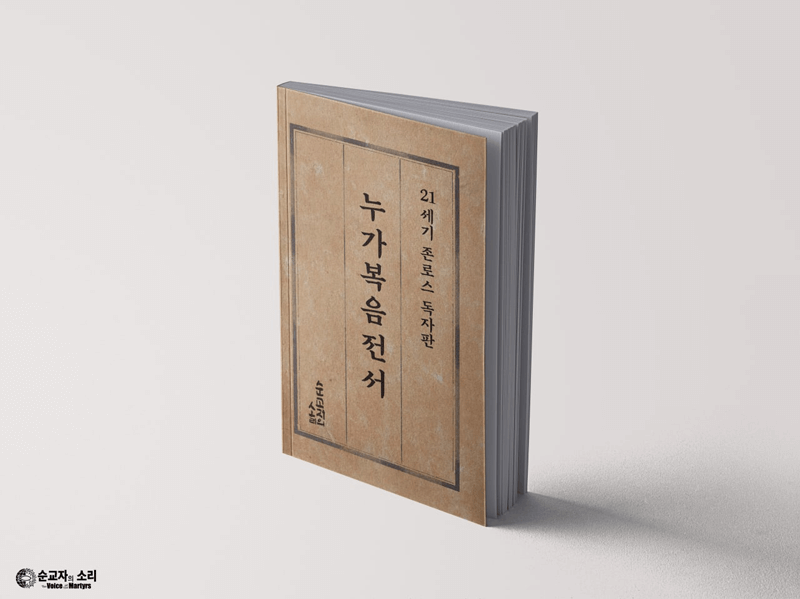
“Today, Korean Christians are able to read the Bible in a large number and variety of translations. Sadly, the one Bible that has not been available for them to read is the Bible that has been called the foundation of the Korean Church,” says Pastor Foley. “The Ross Bible was for the first two decades of Korean Christianity the only Hangul New Testament available to Koreans. It was the Bible of the Korean church during its formative period, and it left a permanent imprint on the Korean church in the form of a church that is Bible-centered and lay-driven. God used the Ross Bible powerfully to impart the saving knowledge of Jesus Christ to the first generation of Korean Christians even before missionaries arrived in Korea.”
According to Pastor Foley, previous republications of the Ross Bible have focused on use in commemorative displays or study by trained scholars, not ordinary Bible readers. “Our project is designed to more closely mirror the original one,” says Pastor Foley. “Then and now, the Ross Bible has always been the work of ordinary North Koreans, assisted by missionaries, to put the New Testament in an inexpensive paperback book format that ordinary Koreans can read. Though the work is meticulously done and documented, in the Reader’s Edition itself there are no complicated footnotes, no scholarly comments, no fancy printing or binding. Just the words of life, expressed in ordinary Korean words through the work of ordinary North Korean people who are learning to follow Christ.”
Respect for the Ross translation has continued to grow over the years. Richard Rutt of the British and Foreign Bible Society wrote, “The best piece of [Bible] translation work so far done in Korean was Ross’s.”
Pastor Foley said that his organization’s work in creating a “contemporary reader’s version” of the Ross Bible has given the participants in the project a deep appreciation for how sophisticated Ross’ translation process was. “Missionary Ross and his team may not have been professional Bible translators,” says Pastor Foley, “But when you read the detailed documentation of the steps they went through to ensure both the accuracy and the understandability of the translation, it’s clear that they had a professional process. And when you look at how the Ross translation fundamentally shaped the character of the Korean church, it’s clear that the process was guided by the Holy Spirit.”
Pastor Foley says that his own motivation for participating in the project comes from a desire to see that spirit return to the Korean church. “Missionary Ross had absolute trust in the sufficiency of scripture to reveal Christ fully. There’s a great story about Yi Song Ha, one of the earliest colporteurs, when he was trying to smuggle Bibles into Korea. He was staying at an inn on the border, and the innkeeper reported to the authorities that he had these books. So Yi had to quickly burn some of the books and then throw the rest in the Yalu River. He was sad and embarrassed to tell this to Missionary Ross. But Missionary Ross responded, ‘Whoever then drinks the waters of the Yalu or lives in the houses on which fall the ashes of burning Bibles will believe in Christ!’ And Ross was right: Christianity spread up and down the banks of the Yalu. Now, with Korean Christianity in decline, we need to recover Missionary Ross’ trust in the word of God. We hope the publication of the ‘Contemporary Reader’s Edition’ can accomplish that goal.”
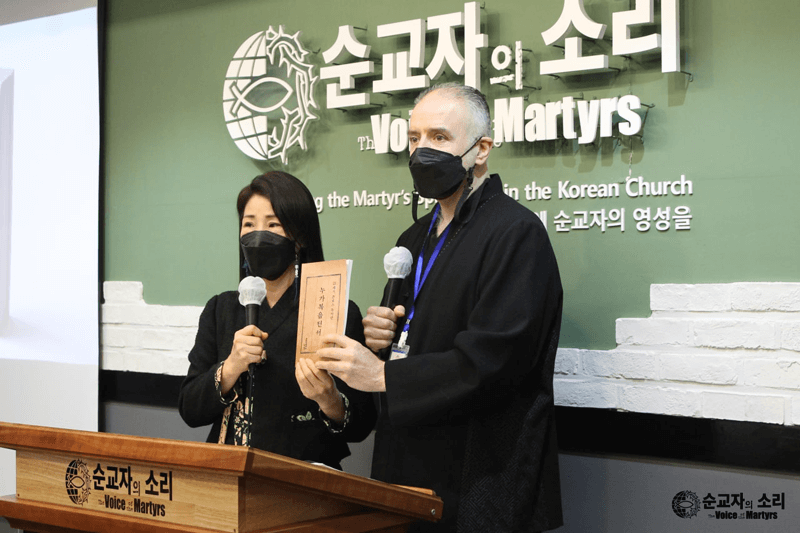
Pastor Foley says that he has had the goal of publishing a reader’s edition since starting Voice of the Martyrs Korea twenty years ago, but that he and his wife and ministry co-founder Dr. Hyun Sook Foley found that it was a project that professional translators and publishers were reluctant to undertake. “Some told us there would be little popular interest in the book. Others told us that it might be too controversial to publish it. But to me, when I see Korean Christians reading the Message Bible or the Living Bible or some of the other popular new translations, how can it be that the only place to see a Ross Bible is in a museum and the only people who can read it are scholars of early Korean writings? The Ross Bible is how the voice of Christ first came to ordinary Korean people. Ordinary Korean people deserve to hear that voice again today, exactly as it first sounded—or as close to how it first sounded as possible.”
According to Pastor Foley, undertaking the project has required assembling a team and process similar to Ross’. “We have foreign missionaries and bilingual staff who are able to read Ross and McIntyre’s English language notes in order to help track down why certain words or phrases were used. We have people who can look at the Chinese versions that Ross’ team used, which is necessary for solving certain translation puzzles.”
But Pastor Foley says that the core members of the team are Voice of the Martyrs Korea’s North Korean students and constituents. “Since the Ross translation was originally done by Koreans from the north and west parts of the country, ordinary North Koreans of today actually can better understand some of the dialect and vocabulary than professional South Korean translators can.”
Pastor Foley says that the Ross Bible project has become the entire curriculum of both of Voice of the Martyrs Korea’s schools for North Korean defectors this year, just as it was for the North Koreans who came to Ross and McIntyre. “Now that we’ve been doing the project for a while, it’s easy to see why Missionary Ross discipled North Koreans by having them translate. Many of our North Korean students get completely absorbed in the work of updating the translation,” says Pastor Foley. “They will work intensely all day and into the evening without taking a break. It’s been the most effective form of ministry we’ve ever done with North Koreans. Missionary McIntyre wrote that during the translation process, his role was mainly to sit back and listen. That’s been our experience, too.”
Pastor Foley added, “I believe God has given North Koreans a particular anointing or gift or connection related to the Ross Bible. One of our North Korean students attends a North Korean defector congregation at a South Korean church. Some of the church members were skeptical about the project. So she stood up in front of the leaders and passionately shared with them how she encountered God in translating the Bible, and how important the project is to both North Koreans and South Koreans. There were South Koreans there who heard her, and they clapped enthusiastically. One said, ‘I have never heard any testimonies like this one before.’”
Pastor Foley emphasized that creating a “Contemporary Reader’s Version” of the Ross Bible is hard work. “It’s difficult to explain how long it takes, and how challenging it is for the participants,” says Pastor Foley. “The Ross Bible was done before the standardization of the Korean language, so the text represents every word phonetically. You have to sound out the word, figure out what it is, write it out, figure out how it is written today, figure out what the whole sentence is, figure out what words are obsolete, research those—literally every sentence is a challenge. But it drives all of us further into the text, and like our North Korean student said, that’s where you meet God.”
Voice of the Marytrs Korea offered samples of the Ross Bible Gospel of Luke compared to the Korean Revised Version.
Luke 5:5
(KRV/개역개정) ”시몬이 대답하여 이르되 선생님 우리들이 밤이 새도록 수고하였으되 잡은 것이 없지마는 말씀에 의지하여 내가 그물을 내리리이다 하고”
(Ross Contemporary Readers Version) ”시몬이 가로되 영감 우리 종야를 입부(수고)고 얻은 바 없으나 영감의 말로써 그물을 치리라 하고”
Luke 22:7
(KRV/개역개정) “유월절 양을 잡을 무교절날이 이른지라”
(Ross Contemporary Readers Version) “누륵금하는 날이 오니 넘는절 양 잡는 때라”
In addition to distribution in South Korea through the VOMK website and phone orders, Pastor Foley says Voice of the Martyrs Korea is already at work distributing the new Ross Bible Gospel of Luke in North Korea and wherever North Koreans are found. “For the security of our colporteurs and our intended recipients, we are not able to specify the routes, the means, or the quantities, but we have made sure that North Koreans, the original readers of the Ross Bible, were the first to receive this new Reader’s Edition.”
The Ross Bible “Reader’s Edition” Gospel of Luke is available for 10,000 KRW at https://vomkorea.com/product/ross-bible-luke/ or by phone at 02-2065-0703.








 Do the Word