
Why Pray Fixed Prayers?

Part X of our series on Healing and Comforting
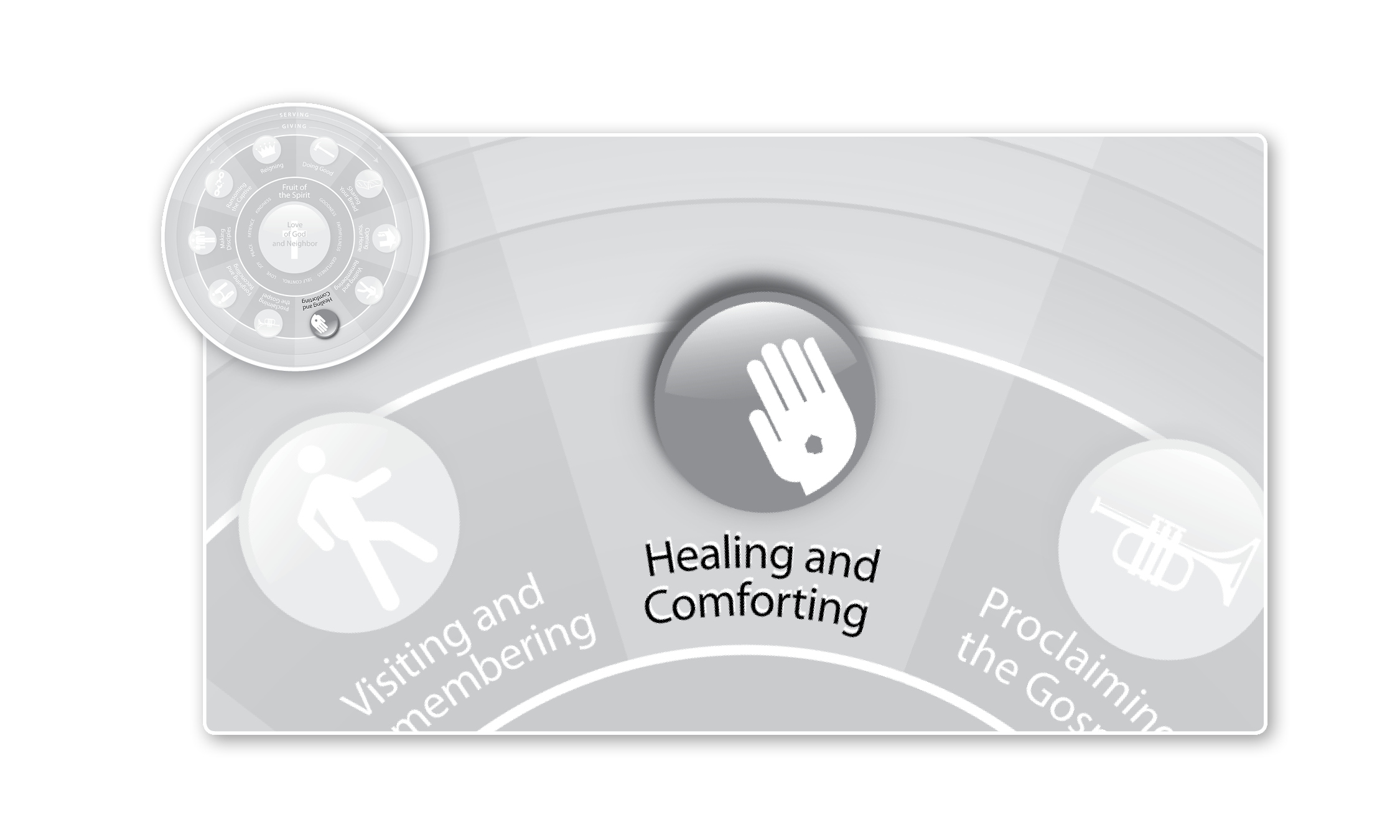
As we learned in Friday’s post, Christians have been praying fixed prayers (not ones they came up with) at fixed hours of the day (not whenever they felt like it) for a long, long time.  This practice relates to the Work of Mercy of Healing and Comforting in some very practical ways, but before we get to that, I want to revisit those two questions we concluded Friday’s post with.

First: Why might Christians have prayed psalms and other Scriptures rather than their own extemporaneous prayers during their fixed hour prayer time?

Here’s one possible reason. It comes from David Hegg, who wrote The Obedience Option. He wasn’t writing about fixed hour prayer but rather about our practice of prayer in general. But what he writes sure has a lot of carry-over to this subject:

If we’re honest, we have to admit that most of our praying is self-centered. Even when we start off extolling God and His greatness, it most often is just a show of praise in hopes that God will think good things of us and grant us all of our wants and needs. It’s almost like we need to let God know the day’s announcements and agenda so He can make sure our day goes well. We treat prayer as though it were a fax machine to heaven that puts our list of needs on God’s desk so He can serve us better (p. 123). 

(By the way, a fax machine is a… well, never mind.)

An interesting thing happens when we pray the Psalms rather than our own extemporaneous prayers at certain points in the day: We grow into bigger prayers and into bigger pray-ers! That is, we ensure that our prayers—and us—become bigger than our needs. Prayer becomes not our way of getting God to focus on us, but God’s way of getting us to focus on him. Hold onto that thought, because we’re going to come back to it when we talk about what all of this has to do with the Work of Mercy of Healing and Comforting

This certainly doesn’t mean that praying our own extemporaneous prayers is wrong—by no means. But it does mean that praying only our own extemporaneous prayers probably is. If Jesus and Peter and Paul and Christians down through the Middle Ages prayed a mixture of the Psalms and their own extemporaneous prayers, there’s probably a good reason why. And as we’ve just talked about, the reason likely is that if all we pray is our own prayers, we’re going to remain intensely focused on ourselves.

Second, then: Why did Christians—from Jesus on through the Apostles on through the Middle Ages—pray at specific hours throughout the day?

Just as praying the Psalms reminds us to concern ourselves with God and not just our own needs, praying at set hours every day has a way of reminding us that each part of each day belongs to him.

When we observe fixed hour prayer, we are reminded every few hours that the day itself belongs to him, and our living is intended to be our whole life offering.

“Yes, but isn’t that why we pray before each meal and at the start of each meeting?” Well, yes. But typically when we pray at these times, what’s our focus? It’s on ourselves and our agenda.

And that’s not bad. After all, God cares about us! A lot! So right before a meal or a meeting is a great time for our own extemporaneous prayers.

But if the only times we pray during the day are right before our own activities, well, the day—and the agenda thereof, and the concerns and issues therein—are pretty much set by us.

So rather than thinking of these things as an either/or—“either we pray the Psalms or we pray our own extemporaneous prayers,” “either we pray at fixed hours or we pray before we eat or have a meeting”—we think of them as both/and. We do both, because each has its own particular purpose in growing us to fullness in Christ.

Besides, since our purpose as human beings is to mirror Christ and his goodness to us into the world, we should ask, “Which way did Christ pray?” And the answer is: both ways! He prayed at fixed hours and before each activity. He prayed the Psalms and his own extemporaneous prayers.

If we are seeking to mirror that into the world, then we should go and do likewise.

What objections do you have to praying this way?

Posted in Uncategorized | Tagged , , , | 1 Comment

What Does Fixed Prayer Have to do With Healing?

Part IX of our series on Healing and Comforting

We are continuing our focus on hearing and doing the Work of Mercy of healing and comforting. And you may be surprised where that focus takes us today: to the subject of fixed-hour prayer—that is, praying specific prayers at specific hours every day.

What does that have to do with healing? Prepare to be very surprised!

You may be surprised that we’re even talking about fixed hour prayers at all. After all, praying at several set times throughout the day every day is something that today we may associate primarily with Muslims. But it was a core part of not only Jewish practice at the time of Jesus but Christian practice as well, from the birth of our faith on through the middle ages. Here’s an extremely helpful excerpt from The Divine Hours: Prayers for Summertime by Phyllis Tickle:

Centuries before the birth of Jesus of Nazareth, the Hebrew psalmist wrote that “Seven times a day do I praise you” (Ps. 119:164)….

By the beginning of the common era, Judaism and its adherents, already thoroughly accustomed to fixed hours for prayer, were scattered across the Roman Empire. It was an empire whose efficiency and commerce depended in no small part upon the orderly and organized conduct of each business day. In the cities of the Empire, the forum bell rang the beginning of that day at six o’clock each morning (prime or “first” hour); noted the day’s progress by striking again at nine o’clock (terce or third hour); sounded the lunch break at noon (sext or sixth hour); called citizens back to work by striking at three o’clock (none or ninth hour); and closed the day’s markets by sounding again at six o’clock in the afternoon (vespers or evening hour).

Every part of daily life within Roman culture eventually came, to some greater or lesser extent, to be ordered by the ringing of the forum bells, including Jewish prayer and, by natural extension, Christian prayer as well. The first detailed miracle of the apostolic Church, the healing of the lame man on the Temple steps by Sts. Peter and John (Acts 3:1), occurred when and where it did because two devout Jews (who did not yet know they were Christians as such) were on their way to ninth-hour (three o’clock) prayers. Not many years later, one of the great defining events of Christianity—St. Peter’s vision of the descending sheet filled with both clean and unclean animals—was to occur at noon on a rooftop because he had gone there to observe the sixth-hour prayers….

Such readiness to accommodate circumstance was to become a characteristic of fixed-hour prayer. So too were some of the words Peter must have used. We know, for instance, that from its very earliest days, the Christian community incorporated the Psalms in their prayers (Acts 4:23–30); and the Psalter has remained as the living core of the daily offices ever since….

We know from their writings that by the second and third centuries the great Fathers of the Church—Clement (c. 150–215 a.d.), Origen (c. 185–254 a.d.), Tertullian (c. 160–225 a.d.), etc.—assumed as normative the observance of prayers in the morning and at night as well as the so-called “little hours” of terce, sext, and none…or in modern parlance, nine a.m., noon, and three p.m. These daily prayers were often said or observed alone, though they could be offered by families or in small groups.

Regardless of whether or not the fixed-hour prayers were said alone or in community, however, they were never individualistic in nature. Rather, they employed the time-honored and time-polished prayers and recitations of the faith. Every Christian was to observe the prayers; none was empowered to create them.

So Christians prayed “fixed prayers” (i.e., actual psalms from the Bible rather than their own extemporaneous prayers) at each of the major “turns” in the standard work day—the start of the day, the third hour, lunchtime, the ninth hour, and the close of the work day.

This brings up two questions that we can ponder over the weekend:

1. Why might Christians have prayed psalms and other Scriptures rather than their own extemporaneous prayers during their fixed hour prayer time?

2. Why did Christians—from Jesus on through the Apostles on through the Middle Ages—pray at specific hours throughout the day?

What do you think?

Posted in Uncategorized | Tagged , , , | Leave a comment

The Surprising Connection Between Confession and Healing

Part VIII of our series on Healing and Comforting

There’s a wrong way to read some Bible verses.  And, unfortunately, when it comes to experiencing God’s power at work in our lives, we’re prone to do so (of course, we have plenty of help from preachers of health, wealth, and prosperity). We identified one way to read a verse in Monday’s post, by noting that James 5:16 does not mean “you are sick because you sinned.” That’s the wrong way to read that verse.

Here’s the right way to read that verse—and do this word: “The trio of illness, death, and sin are joined at the root. None of these were ever meant to be hosted in the human frame. God’s healing focuses on all three, penetrating spirit, soul, and body. Confessing our sins to one another—and then praying for each other about what has been confessed—isn’t a prerequisite for healing or preparation for healing. It is healing.”

That’s why James admonishes believers to devote significant time to confessing our sins to each other and sharing the assurance of forgiveness from Scripture. It’s not just preparation to take communion; it’s the Work of Mercy of healing…in every service!

John Wesley’s “band meetings” were designed to help others confess to one another, and as a result be healed. Here are the five questions he came up with to ask each other each time we gather together–questions that are built around the confession of sin. The expectation? That as we do this word from James together we’ll experience that form of biblical healing known as holiness:

  1. What known sins have you committed since our last meeting?
  2. What temptations have you met with?
  3. How were you delivered?
  4. What have you thought, said, or done, of which you doubt whether it be sin or not?
  5. Have you nothing you desire to keep secret?

Wesley experimented with administering these questions in lots of different ways, so we can do the same. In an effort provide a bit more direction to my readers, I’ve come up with three options which I encourage you to try for a week at a time:

Option One:

In the context of a small group (formal or not) elect one person per meeting to answer the five questions. Then have the group pray for the person in light of what has been confessed.

Option Two:

Invite each person present to select and answer the one question of the five that is most relevant to them in light of what God is doing or showing or revealing or convicting them of in their life at present. After each person shares, let each person pray for another person in light of what has been confessed.

Option Three:

Work through the questions over five days of meetings (on, say, a retreat or during a daily journal group meeting). On the first day, ask the first question and have each person answer. Then after each person has answered, let each person pray for another person in light of what has been confessed.

As you do these things, seek to incorporate into your prayers the great assurances of forgiveness found in Scripture, like this one from 1 John 1:8-9:

If we confess our sins, he who is faithful and just will forgive us our sins and cleanse us from all unrighteousness.

That’s good news, indeed!

Posted in Uncategorized | Tagged , , , , | 2 Comments

