
How to Pray Better

The following is a written preview of our new Q&A style podcast where Pastor Foley takes questions related to the Whole Life Offering discipleship training model. Subscribe now!
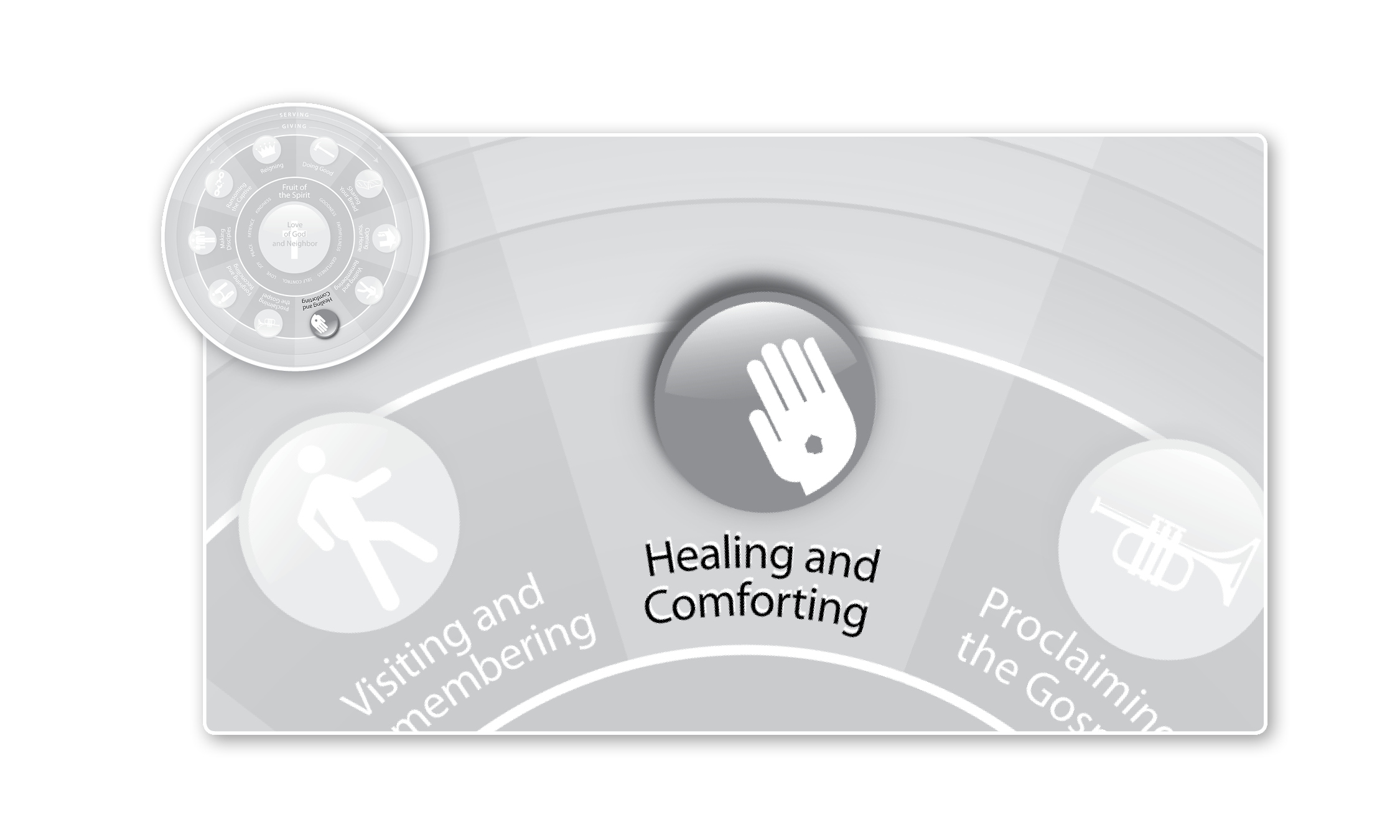
Q: One of the key things we learn about in Healing and Comforting is the danger of self-centered prayers. The message we portray when we pray this way is that we believe in a being who, if we’re good enough, is going to grant our wishes. What are the things that we should be praying for and how we can go about learning to pray better (i.e. more Biblical)?

A: We have a tendency when we get sick to become very focused on ourselves. So what does the church across Christian history do to be able to deal with this? It reminds us that no matter what our physical situation is, we can pray for other people and be a meaningful part of the kingdom of God working on Earth. That’s pretty exciting! There’s already a shift there from saying, “My nose feels kind of stuffy today” to saying, “Even though my nose feels stuffy today, I can still impact the work of God.”

Prayer is our permission. We invite and invoke the presence of God to be active in those specific areas of our lives and the lives of other people. Healing prayer, unfortunately, tends to be synonymous with very self-centered prayer: “Lord, I am really sick; therefore, heal me.” Is there anything wrong with that? No. Is it sufficient as a prayer life? No. The more you get sucked into that kind of prayer, the more efficacy is lost. That kind of prayer says that in order to be an effective Christian, I have to be healthy, I can’t be in debt, etc. Wow! That’s symptomatic of the way the church thinks today.

Karl Barth, the great theologian of the last century, said we have a human inclination to constantly look inside ourselves and say, “There’s nothing good in there.” God says, “Yes. Obviously. I know. So stop doing it.” Our focus, instead of looking inside and seeing that there’s nothing good in there, is to do what Jesus did. He said, “I only ever do what I see my father doing.” We should do what he calls Peter to do when summoned to walk across the water: we have an unerring focus on Jesus. If we find ourselves focused on anything else, we return our focus to him. And we need not fear that because we’re focused on Jesus that he won’t notice that we’re sick. Trust me, he’ll notice because he is a good father. If we’re not feeling well, the father knows it. So we say, “Lord, I’m turning myself over to you today, but I’m not going to allow my illness to stand in the way of carrying out my responsibility as a minister of the Gospel. I’ll pray for my own needs, but it will always be part of interceding for the needs of others.”

Q: This is an area that I think a lot of Christians struggle with. If you were to put on a seminar titled, “How to Pray Better” you would sell out! Christians go to church, they pray these self-centered prayers, and they have this feeling or knowledge that they’re not adequate or sufficient. But they don’t know what to do because that’s all they see modeled in the churches they’re in. Previously, you blogged about praying through the hours and praying the Psalms; can you go through that and any other ideas that will help train us to pray better?

A: Your distinction is a good one. We’re not talking about praying “better” as if by praying more eloquently, God hears you more. What we’re saying is that prayer is an integral component to the way that God grows us to fullness in Christ. As a result, we can’t pray to our lowest common denominator which is to be self-focused: only whenever we feel like it, at the times that we don’t have anything better to do, etc. We’re not going to grow that way. So the church has instituted various disciplines like praying through the hours, like prayers we memorize. People say, “Well, if I memorize it, then it’s not authentic,” but that’s absolutely not true. If that were true, we shouldn’t be singing any of the hymns or worship songs in church, we shouldn’t be reciting wedding vows, and we shouldn’t say the pledge of allegiance.

We have a tradition as human beings of knowing that if something is written down you have to make sure you’re not just going through the motions of rote memorization and speaking while your brain goes somewhere else. But the reason why we pray the prayers that the church has entrusted to us over these two thousand years, including the one that Jesus himself entrusted to us, is because we grow  into those prayers. They reshape what we think about when we pray and how we pray.

Submit your questions to Pastor Foley by posting a comment or emailing us at [email protected].

Posted in Uncategorized | Tagged , , , , | Leave a comment

Do We Need to Be Healed of Our Low Self-Esteem?

The following is a written preview of our new Q&A style podcast where Pastor Foley takes questions related to the Whole Life Offering discipleship training model. Subscribe now!

Q: I have to talk to you about the songs again. There’s a big push now towards healing people’s self-esteem.  How would something like “I lay my sins on Jesus. He bears them and frees me” fit into the general approach of that kind of message?

A: Here’s the problem. Look at every single instance of where Jesus encounters a sinner in the Bible; there’s not one where he diagnoses their problem as a lack of self-esteem. He is always straightforward about the person’s sin. But…what causes them to want to be around him is that, even though he’s straightforward about their sin, he knows something that is bigger than their sin that causes them to have absolute confidence that they can be set free.

When we are in the presence of God we can bring our sin to God and know that it doesn’t define our relationship with him. There’s a way he can help us, not only to be forgiven for it, but to be empowered to live in a way that allows us to rise above it. That’s the kind of God in whose presence we want to be.

That’s what the song really celebrates. I lay my sins on Jesus because our sins don’t just evaporate, right? It’s not that God is in the form of Christ, on the cross, saying, “Hey, I’m taking the punishment here because I love you. You guys are great!” Your sins have to go somewhere. Someone has to pay the price for those. That links you and Him together forever. He becomes your life, your only hope, your only way of not only being able to receive forgiveness for your sin, but to be set free for a new way of living that matches what it is that God designed you for in the first place.

Q: Very few churches, I think, are singing hymns anymore. I don’t know that they have praise band arrangements for these songs. 

A: The reason why we do music in the church isn’t primarily for emotional expression. It’s because it’s how we come to know the truths of God in both sides of our brain and in the fullness of our being. They teach us theology. The problem is, we have such a warped notion of theology, we think of it as just head knowledge, but it’s not. Theology is the hearing and the doing of the Word and you’ve got to have music in your head. That needs a soundtrack.

There are going to be times when that hymn gives you the guidance of what to do or what to say.

Submit your questions to Pastor Foley by posting a comment or emailing us at [email protected].

Posted in Uncategorized | Tagged , , , , , , | Leave a comment

How Does Confession Affect Our View of God?

The following is a written preview of our new Q&A style podcast where Pastor Foley takes questions related to the Whole Life Offering discipleship training model. Subscribe now!

Q: In James 5 it says, “If you’re sick, confess your sins.” Can you tell us why that verse isn’t necessarily saying that you’re sick because you’re sinning (even if that is a possibility)?

A: Here’s the problem: we look at confession as a bad thing. We look at it as ipecac syrup – something we would rather not take; the gauntlet through which we have to run to get to the other side. But we need to change the way we look at confession because the Bible doesn’t portray it that way.  The Bible portrays confession as a means of healing, a means of grace.

When we’re sick, the wrong way to read that passage would be, “You are sick because you have hidden sin; therefore, confess your sin. Own up to that. Fess up. Come on.” Like the bright light of the investigator is shining on us in the interrogation room. But that’s not how James portrays it. He says, “Look, if you’re sick, that ointment of healing is available to you in the form of confession. And it’s not just your confession as if everyone is just standing around listening.  The elders of the church are going to gather around with you and all of us – together – are going to do what we see the church doing every time it gets together because we see confession as a means of grace.”

Nothing separates us from the love of God in Christ Jesus…other than that which we hold on to and use to push him away. And we’re most tempted to do that in illness because in those circumstances, we put our faith in our own strength, in the wisdom of the doctor, etc. Those are important components of recovery, but they’re insufficient. What we need first of all is to receive the fullness of God’s love and we need to make sure that we are not doing anything that stands in the way of that like holding on to things that we’re embarrassed to confess to God because we don’t know how he’s going to respond.

Q: Do you think if we had a more Biblical view of confession that would influence even the way we approach God? 

A: Remember, we’re in the religion that says, “Consider it all joy when you suffer.” The next verse does not say, “Because God is going to do a powerful work of deliverance in your life.” Sometimes he does, by bringing bodily healing to you. And sometimes he does by giving you new insight into how fully you can depend on him; how completely you can experience his grace, regardless of your age, physical condition or health. Nothing is going to impair your ability to experience God’s grace.

We find, especially as we teach the .W order of worship to those who don’t have much background in the church, that they actually like confession. The reason is because they look at confession the right way. They think, “Here is a God who has fully accepted me in Christ Jesus. When I confess, I don’t have to worry that I won’t be received.” They read Genesis 1, 2, 3 and see that the fundamental problem there is related to the fact that when Adam and Eve sin, they hide. Adam and Eve demonstrate their lack of trust God’s character which is what caused them to sin in the first place.

We believe, because we’ve seen the fullness of that character expressed in Jesus,  that we can come quickly to him, without fear of reprisal and say, “Father, I sinned. This is what I did. I know this isn’t how you want me to live.” We name the sin. We name the grace that renders that sin powerless over us. And then, in the company of the other believers, we encourage each other towards a way of life that is true to who we really are.

Who is not going to want that? That’s where confession is something that we ought to really want to participate in.

Submit your questions to Pastor Foley by posting a comment or emailing us at [email protected].

Posted in Uncategorized | Tagged , , , , | Leave a comment

