A 100 Days Update: Why The NK Underground Church Loves The Ten Commandments So Much

SUSA-Korean

Greetings from the second week of 100 Days of Worship in the Common Places with the NK Underground Church!

  • If you’ve signed up and are participating, make sure to post up on our Facebook page with what you’re doing and how things are going. (And check out the posts of others, including the story about the husband and wife–and newborn baby–who did the NK Underground order of worship together in the hospital right after giving birth!)
  • If you haven’t yet signed up, it’s not too late. The participation kit is free; just cover the cost of shipping, and we can get it to you in the next few days. Here’s the signup page.

And whether you’ve signed up or not, here’s an answer to a question I get a lot: Why do NK underground Christians treasure the Ten Commandments so much?

Short answer: While a surprising number of Western Christians might view the Ten Commandments as a law from which we are set free by Christ, NK Christians receive the Ten Commandments as freedom–freedom from the idolatry of Juche, North Korea’s mandatory state religion.

Kang Ji-Min just authored a phenomenal post on this subject over at NKNews.org, a site well worth bookmarking and RSSing. Here’s a long-ish but rewarding excerpt:

Kim Il Sung was once a Christian. In fact, he was brought up in a very devout Christian family… It’s ironic that a man who came from such a religious family would erase his past once becoming a socialist. But he was no socialist – he was no more than the starter of Kim Il Sung-ism. He formed the ‘Ten Principles for the Establishment of the One-Ideology System’ which resembled Moses’ Ten Commandments – forcefully instilling it into us and compelling us to obey.

Here’s an example: ‘You shall have no other gods but me’ – this is a phrase from the Bible’s Ten Commandments. But it’s also seen in the Ten Principles – ‘You must be firm in your position which states there is not anyone or anything greater than the Great Leader Kim Il Sung.’

Once you look into the Ten Principles, you will notice Kim Il Sung took his political ideas from the Bible. Kim Il Sung also called himself ‘the sun’ and his son the ‘Shining Star of Paekdu Mountain’. They say if you commit your life to serving Kim Il Sung and his son, though your physical body may perish you will gain immortality in the political life. In purporting that he and his son were gods and therefore rightful leaders, Kim started creating a country of false religion that in no way adheres to socialist values. In North Korea, Marx’s and Lenin’s books are banned. I leave it to your assumptions as to why.

The core of Christianity is based around repentance, being forgiven and saved by God. Repentance is only confessed to God and forgiveness determined by him. And in North Korea? Every Saturday, North Koreans have to confess their wrongdoings and seek for forgiveness of the leader. It is as if North Korean’s political system has taken its stance somewhere between absolute monarchy and cultish fanaticism.

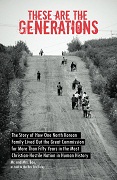
In These Are The Generations, the book I wrote with underground NK Christians Mr. and Mrs. Bae, my favorite part is Mr Bae’s depiction of an ordinary underground worship service, where the Ten Commandments formed an unshakable yet most ordinary and unremarkable pillar:

I first heard the Ten Commandments from the lips of my grandfather. He never called them the Ten Commandments, nor did he mention where they came from or who had given them. They were simply ten pieces of advice I would hear him give over and over again to my mother and father and uncle and other family members as we gathered together at my grandparents’ house each Sunday morning before dawn. Don’t steal. Don’t covet. Don’t lie. Honor your mother and father. No matter the problem, one of those ten pieces of advice always seemed to be the solution.

Perhaps one of the benefits of participating in the 100 Days campaign will be that while we are standing in solidarity with the NK underground church and remembering the Ten Commandments daily, some unexpected solutions to some unrecognized problems in our lives may somehow emerge…

Posted in 100 Days of Worship in the Common Places, North Korea | Tagged , , , , | 5 Comments

Video – The Real Life Agenda of Discipleship

Video – Have you recently hit a hard patch in life and put your discipleship on hold while you put out the fires? Pastor Tim points out that the agenda (or goal) of discipleship is irrevocable and immune to postponement. That is because Christ’s goal for our lives is best accomplished during difficult times and less than ideal circumstances.

For all of the latest podcasts on Making Disciples and on past Works of Mercy visit our Seoul USA Podcast Page!

Posted in Making Disciples, Videos | Tagged | Leave a comment

Practice Discipleship, In the Best of Times And the Worst of Times

Post by Pastor Tim – Just in case you haven’t figured it out yet, “The 100 Days of Worship” is a discipleship campaign. It’s an opportunity for Fathers to teach their children the Lord’s Prayer. It’s an opportunity for Mothers to explain to their children why the North Korean underground church used the Apostles Creed. It’s an opportunity to read the gospel of Luke at the bus top with others on your way to work in the morning. And it’s an opportunity for school kids to invite their friends to pray with them.

And as we found out last night on our Facebook page, it’s an opportunity to disciple the nurses who come into your room after the birth of your baby! Our good friend James posted on our page last night,

Very happy to report that our daughter, Moriah Faith, was born at 7:08am this morning, the same day of the 100 Days launch. Looks like our hospital room will be our public place of worship for the next few days.

But not only are we discipling each other through doing the “100 Days of Worship in the Common Places,” we are being discipled by the North Korean underground church. As Pastor Foley wrote earlier,

The North Korean believers strategized how they could advance the gospel in the teeth of their own destruction. They asked themselves and God, “How can we continue to be church in the most Christian-hostile nation in human history?

In other words, they prayerfully strategized their on their own discipleship campaign, and that campaign has now spread throughout the world!

One of the things that struck me about the original North Korean campaign was that this discipleship strategy was birthed out of the recognition that discipleship would be getting more difficult for them. Persecution was getting worse, but they knew that they had to find a way to pass their faith on from generation to generation.

Jesus spoke about something similar in Luke 9:57-62, when three separate people came up with excuses as to why they couldn’t fully follow Jesus. It’s interesting to note that in his response to each of these three people, Jesus never “lowered the bar” of discipleship. He never patted anyone on the back and said, “it’s okay, come and follow me after you’ve secured a good home for yourself.” He said just the opposite, “Foxes have holes, and birds of the air have nests, but the Son of Man has nowhere to lay his head.”

In other words, following Jesus (discipleship) doesn’t happen in a vacuum. It happens in the real world, with all of the challenges and difficulties that life brings. We are called to be and make disciples not just in the easy times, but in the terrible ones as well. We are called to make disciples with or without a home, job or jobless, in sickness or in health, and . . . you get the point.

The goal of discipleship has always been the same. Jesus commissioned his disciples to “teach them all that I have commanded you,” but this commission was fulfilled alongside of their own difficulties, less than ideal circumstances, persecutions, imprisonment and even death.

So, as we endeavor to worship with the four pillars over the next 98 days, don’t be discouraged if you find it a little difficult. Don’t wait for the perfect moment to lead your family in worship, because that perfect moment may never come. Take a moment in the grocery store, around your dinner table, out on your deck, or even at the library. Take the time to make a disciple no matter where you are and not matter what circumstances you find yourself in.

Posted in Making Disciples, Uncategorized, Worship | Tagged , , , | Leave a comment