Let’s Be Slow To Assume That Persecuted Christians Feel The Same Way About Their Situation As We Do

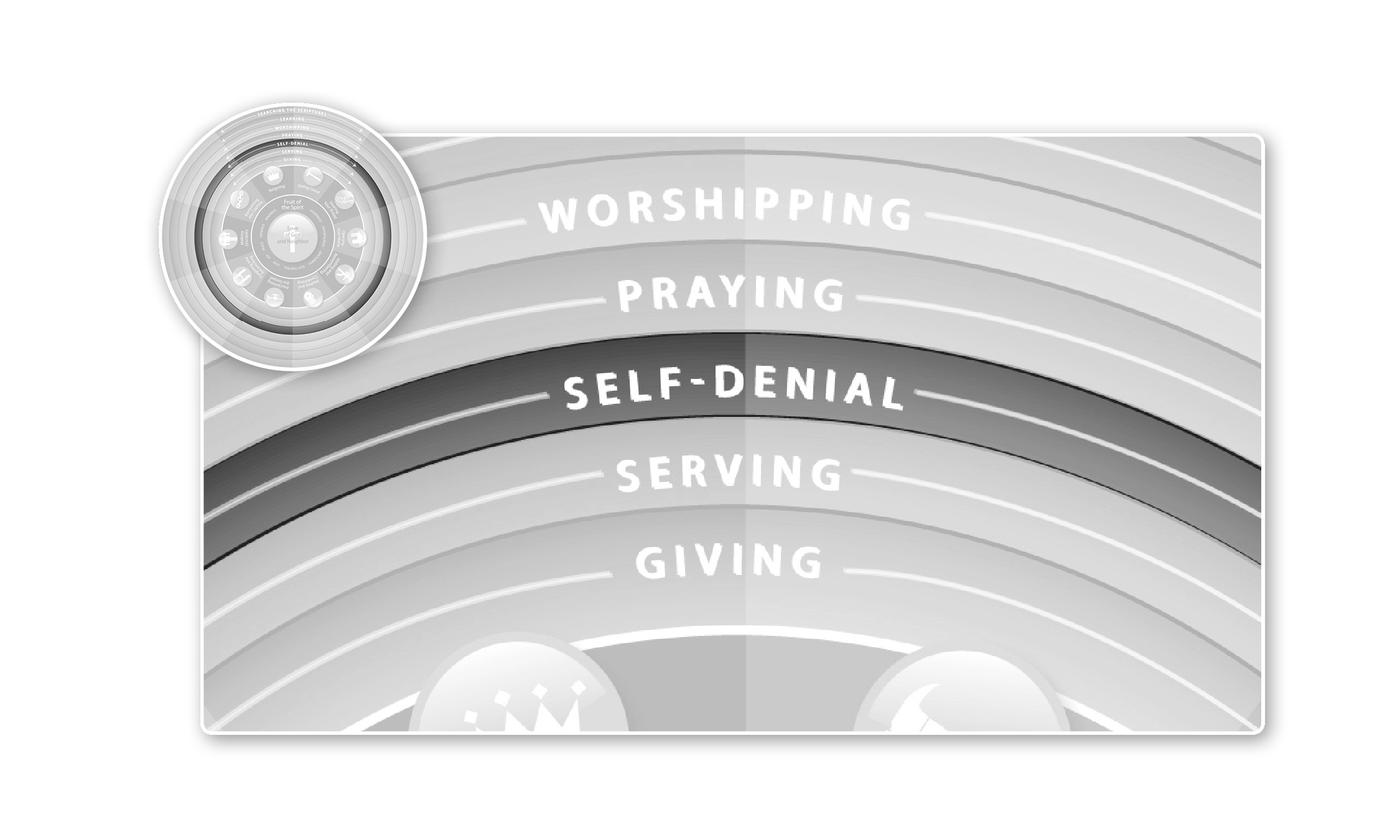
WLO_selfdenialWhat emotions are stirred up within you when you read a story like that of Kollol which was recently published on the VOM Blog?

“Kollol” and his wife were attacked by 15 radical Hindus during a June 4 prayer meeting in their home. The couple were beaten and then dragged to a Hindu temple, where they were forced to undergo a ritual cleansing . . .

Maybe you feel a great deal of horror, mixed in with shock, sadness and pity. And finally, maybe you feel a bit of outrage – you are angry that this is still happening in the 21st century.

None of these emotions are necessarily wrong. I often feel the same thing. And yet you and I may be surprised that the emotions expressed by persecuted Christians themselves are often quite different.

This is not to say that persecuted Christians don’t feel sadness, outrage or horror in the midst of their own suffering. But we should be slow to generalize our feelings onto them and quick to listen to them share the range of emotions they often feel.

Take for example the powerful witness of Varia, a former Communist who received Christ and was consequently imprisoned. Here is a portion of her letter as recorded by Richard Wurmbrand in Tortured for Christ,

The sufferings that God sends us only strengthen us more and more in the faith in Him. My heart is so full that the grace of God overflows. At work, they curse and punish me, giving me extra work because I cannot be silent. I must tell everyone what the Lord has done for me. He has made me a new being, a new creation, of me who was on the way of perdition. Can I be silent after this? No, never! As long as my lips can speak, I will witness to every one about His great love (pg. 140)

And listen to how Rev. Wurmbrand himself describes the beauty of imprisoned believers. He said,

There, Christians wear chains with the gladness with which a bride wears a precious jewel received from her beloved. The waters in prison are still. They receive His kiss and His embraces, and would not change places with kings. I have found truly joyful Christians only in the Bible, in the Underground Church and in prison (pg. 94).

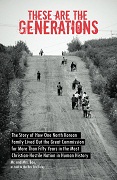
Finally, consider the words of Mr. Bae in These are the Generations. He said,

I became thankful to the Lord for this time in prison – his arresting me from my own pride and drawing me into a time of reflecting, of mumbling too soft for words, of striving to remembering by his grace every hymn that we had ever sung, every lesson my grandfather had ever taught. That is how I came to rely on only the Holy Spirit with faith (pg. 55).

In describing their own suffering, persecuted Christians use words such as grace, gladness, thankfulness and strength. Very different from our words of horror, sadness, pity and shock.

And often because of our powerful emotions, we seek ways to remove those Christians from prison. Yet many persecuted Christians say they would not be willing to change places . . . even with kings.

Like you, I don’t completely understand the depths of their feelings, situation or faith . . . and yet I sense that I have much to learn from their example. I sense that like the persecuted church, I must find joy, honor and God’s grace in the midst of difficult circumstances. I sense that instead of only solving problems with my money and power, I must learn to trust God . . . in everything. And more and more I must make a decision to voluntarily take up the cross in my own nation and neighborhood, while the wood is still green.

Posted in North Korea, persecution, Sanctification | Tagged , , , | Leave a comment

In North Korea You Are Free To Believe In Any Religion, So Long As It’s Juche: An Excerpt From North Korea’s Own Human Rights Report

SUSA-KoreanHenry Ford is famous for having said that you could order his new Model T automobile in any color you wanted, as long as that color was black.

North Korea takes much the same approach in matters of religion, as it acknowledges in the religious freedom section of its own human rights report, released earlier this month. North Korea writes:

In the DPRK everybody is fully provided with the rights to choose and follow their own religion and thought according to their own free will.

Every citizen has chosen to follow the Juche Idea… (p. 72)

For those of us who have long insisted that Juche is not merely a political ideology but a religion, it is worth noting that North Korea itself draws the parallel. It moves fluidly back and forth in this religious freedom report between mentions of Juche and mentions of various religions as it finds itself on the horns of a uniquely North Korean dilemma:

  • All North Korean citizens freely choose to believe in the Juche ideology, which is “the world outlook centred on human being.”
  • All North Korean citizens can—and do–freely choose to believe in and practice other religions, i.e., they are, according to the human rights report, “officially or personally, privately or jointly with others carrying out religious service, ritual and ceremony. They are free to build religious structures or conduct religious education.”
  • According to the report, these religions include Buddhism, Chondoism, Protestantism, and Catholicism.
  • Problem is, none of these religions is particularly well known for being “[a] world outlook centred on human being.”

Well, says the North Korean human rights report, that is because it is only in their adulterated, anti-DPRK forms that such religions are something other than Juche-flavored at the core. And when the Juche flavor fades, acknowledges the report, that’s when the North Korean government has to step in and stamp it out:

Freedom of religion is allowed and provided by the State law within the limit necessary for securing social order, health, social security, morality and other human rights. Especially, the Government prevents the religion from being used to draw in foreign forces or harm the state and social order.

Sum it up and say: You can have any kind of religion you want, so long as when you scratch the surface, there’s Juche underneath.

Sadly, as we’ve noted in a prior post, the World Council of Churches has not yet discerned this. Or, even more disconcertingly, perhaps they have discerned this and yet regard Juche-Christianity as an authentic expression of the Christian faith. Either way, one claim on which we completely concur with North Korea’s human rights report is that the World Council of Churches’ engagement is very, very useful for the North Korean regime:

At present we have the Korean Christians’ Federation, the Korean Buddhists Federation, the Korean Catholic Association, the Korean Chondoist Society and the Korean Association of Religionists in the DPRK. These religious organizations have well-organized structural system (Central Committee at national level, sub-committees at provincial, city and county level and sub-units under them) and their own church, publication, educational organ and so on. They are also conducting cooperation and exchanges with several religious organizations of the world. (Such as World Religionists Peace Conference, World Council of Churches and Asia Religionists Peace Conference)

Last week we wrote about North Korea’s confirmation that our balloon-launched New Testaments are landing true. It is worth noting that the New Testaments we send are ones originally translated and authorized for printing by the North Korean government. So if what we were sending is authorized by the North Korean government, and if North Koreans are indeed guaranteed the free choice and practice of religion, then it’s puzzling why our launches would concern them as much as they do. After all, we are doing little more than aiding the publication efforts they laud in their human rights report:

Publications of religious organizations in the DPRK include “Chondoist Scriptures”, “Chondoist Epitome”, “The Old Testament”, “Hymns”, “Selection and Practice”, “Let’s Know about Chonjugyo”, “Steps of Religious Life” and “Catholic Prayers”.

Interesting that they list the Old Testament but omit the New Testament.

Well, no worries. Fortunately we have that one covered.

Posted in Balloon Launching, Bible, North Korea, persecution | Tagged , , , , , , , , , , | 3 Comments

Make A List – How Is Your Suffering Similar To The Apostle Paul’s?

SUSA-KoreanOne of our Underground University (UU) students recently had a simple, yet profound insight that many Christians, more seasoned than her have not yet fully understood. Let me set the stage of our class last Saturday.

We had been studying the books of 1 & 2 Corinthians as it related to persecution. Interestingly enough, the Corinthian church did not have the problem of persecution and suffering that other churches in the region had, or that even Paul himself had. They were a rather prosperous church that viewed Paul’s propensity for suffering as problematic. But it was their viewpoint that was in fact problematic!

They had very little use for Paul’s brand of Christianity – humble, weak and persecuted! So in the Corinthian letters, Paul tried to convince the church that weak Christianity is the best kind of Christianity, because it’s through our weakness that Christ’s strength is displayed!

To go about proving his weakness, Paul listed out all the ways that he suffered. He said,

Are they serving Christ? I am serving him even more. I’m out of my mind to talk like this! I have worked much harder. I have been in prison more often. I have suffered terrible beatings. Again and again I almost died. Five times the Jews gave me 39 strokes with a whip. Three times I was beaten with sticks. Once they tried to kill me by throwing stones at me. Three times I was shipwrecked. I spent a night and a day in the open sea. I have had to keep on the move. I have been in danger from rivers. I have been in danger from robbers. I have been in danger from people from my own country. I have been in danger from those who aren’t Jews. I have been in danger in the city, in the country, and at sea. I have been in danger from people who pretended they were believers. I have worked very hard. Often I have gone without sleep. I have been hungry and thirsty. Often I have gone without food. I have been cold and naked. Besides everything else, every day I am concerned about all the churches. It is a very heavy load. If anyone is weak, I feel weak. If anyone is led into sin, I burn on the inside. If I have to brag, I will brag about the things that show how weak I am. (2 Cor. 11:23-30)

Not even thinking much about it, I had our UU students read this passage and then write out the specific ways in which Paul suffered. After doing the assignment, one UU student said that all of us (NK defectors) have at least suffered in half of the same ways that the apostle Paul did.

When I heard that, I felt a little deflated. I realize that they probably didn’t need to learn or read about Paul’s sufferings, because they had all been through the same thing already. Maybe somehow, reading through Paul’s list brought back some of the pain that they had once experienced. They were certainly much more well-versed in suffering than I was.

But then one other UU student spoke up. She said,

Yes, but when we suffered these things, we were not Christians . . . we did not suffer these things for the cause of Christ.

They had suffered these things as ordinary NK citizens and as ordinary NK defectors, but not because they followed Christ. Most of our current UU students did not become Christians until the after they left NK.

What’s the big deal . . . suffering is suffering right? But in pointing out that they had “not suffered these things for the cause of Christ,” she pointed to a very important Scriptural distinction when it comes to suffering. We tend to group all suffering/difficulties together, but when the Bible speaks of suffering it is primarily talking about suffering for the sake of righteousness. The New Testament was written by suffering believers in God for other believers who were also suffering.

In other words, all human beings suffer in a general sense, but we tend to think that Christianity should provide some protection against suffering. Following Christ should bring some measure of strength, prosperity and immunity from suffering . . . at least that’s what the Corinthian church would say!

Paul tried to help the Corinthians understand that suffering wasn’t just a part of the human life, but it was a unique feature of Christian discipleship. If you were truly following the Lord, you would endure a “special kind” of persecution and suffering that only righteousness could bring. And Paul understood that this type of “weakness” brought about God’s strength in a way that couldn’t be experienced apart from suffering for the sake of righteousness. He said,

But he said to me, “My grace is sufficient for you, for my power is made perfect in weakness.” Therefore I will boast all the more gladly of my weaknesses, so that the power of Christ may rest upon me. (2 Cor. 12:9)

Posted in North Korea, persecution | Tagged , , | Leave a comment