God’s Response to Christian Genocide? He Sends a Bible Book

Logo 071414

“…barbaric atrocities committed against Christian minorities”…”blood…splashed everywhere“…”Christian communities being brutalized and extinguished“…”Is there not a stage when violent reciprocation becomes the only effective alternative?”

These are the recent news reports and opinions about what is more and more frequently being called “the year of the Christian genocide.” One commentator writes that the situation “can only be compared to the first centuries when Christians were hunted down as criminals in the Roman Empire.”

Amidst warnings that the situation will worsen “unless world leaders take more concrete actions to safeguard the religious and human rights of people,” and amidst claims that Jesus’ teachings don’t mean what they sound like they mean or  don’t apply in this case of large-scale barbarity, it’s worth asking:

How did God respond in that comparable situation of Christian genocide in the first centuries of the church’s existence?

He sent a book. Or, more accurately, he sent a revelation that was to be written up in a book–The Book of Revelation.

In that book, amidst scenes that could easily be drawn from the last few months, victims of religious violence cry out, “How long, Sovereign Lord, holy and true, until you judge the inhabitants of the earth and avenge our blood?”

Jesus does not respond by chiding government inaction or by limiting the applicability of his teachings to the interpersonal, non-geopolitical realm. Instead, he reveals.

And what he reveals above all else is that God is not only aware of what is happening but is in fact the one most intimately, compassionately, and victoriously involved on behalf of his children, no matter how bloodily bleak things may appear to the . Far from being passive or counseling passivity, he personally fights with the sword of his mouth, dispatches supernatural and natural forces, offers specific words of encouragement and correction for each local congregation, and generally calls the hearer to understand that what is at stake is too vast, too cosmic for mere geopolitical players to implement, let alone comprehend.

We give thanks to you,
Lord God Almighty,
who is and was,
for you have taken your great power
and enforced your rule.

Brandon O’Brien describes it in a passage that is worth quoting at length:

When the biblical writers call us to faith, they are calling us to reject this view of the world and, instead, foster an active imagination that can see what God sees. When the prophets looked around them, they too saw injustice, sin, and unrighteousness. The rational response to this sort of experience is despair. But the prophets called the people—and us—to hope. A constant refrain of the prophets is a summons to imagine a godly future. “The day is coming,” they said again and again, a day when injustice will be judged, when evil will be put right, when exploitation will cease, when God’s faithful people will experience the deliverance they have hoped for—hoped against experience. This is a radical message. It requires a godly imagination that can form “images or concepts of external objects not present to the senses,” an imagination shaped by the truth that God is a loving Creator who is deeply connected to his people and works tirelessly for their good. The prophets call us to share this vision, and they do so by painting landscapes of a world that contradicts our experience because it exists only in the mind of God until that “day” comes.

Jesus calls us to an even more demanding act of imagination. He stood in the line of the prophets, but he radicalized their message. “The day is coming,” they had said. He changed the tense. He says, “The day has come.” The world the prophets had envisioned is no longer a future reality. It is happening here and now. Jesus invites his followers to imagine that the kingdom of God is at hand, and with it have come all those promised reversals. If I may be so bold, it appears that the imagination was Jesus’ main target. With his parables about the kingdom of God, Jesus helps us peek behind the veil and see the truth beneath the appearances of our experience.

The name of our organization, VOM, stands for Voice of the Martyrs, not Victims of the Muslims. There is a reason for this. Christian martyrs are first and foremost witnesses not to their own suffering but rather to the revelation that the day has come–the kingdom of God is at hand. If those martyrs cry out How long?, it is always followed by the recognition that Christ is their Sovereign Lord, provision, and hope of salvation. He has not left them orphaned nor consigned their care or revenge to earthly suzerains.

As Rev. Darrell Johnson puts it in his incomparable commentary on the Book of Revelationthings are not as they seem (nor as the commentators and reporters describe it).

A setting that appears to call into question the fundamental truths of the gospel. Indeed, the setting appears to negate the truths of the gospel. “The time is fulfilled, the kingdom of God has come near.” Where? Where is the kingdom? “Jesus is Lord”–but where is the evidence? The church was having to operate behind closed doors. Immorality was gaining footholds in some of the congregations. John, the beloved pastor and bishop, is hauled off by the police into exile. Where is Jesus in all of this?

So in response to that first Christian genocide God sends a Bible book to reveal the answer, set the strategy, and call for obedience, discipleship, and patient endurance.

It is likely not the response that analysts, commentators, activists, or martyrs in the present “year of the Christian genocide” are looking for. A book? It hardly seems like a response at all.

Perhaps that’s what the book’s first recipients thought as well.

Posted in Brandon O'Brien, Christian genocide, Darrell Johnson, persecution, Revelation | Tagged | 2 Comments

What Did Rev. Wurmbrand And Lee Su Jung Have In Common? God Transformed Them Through Their Righteous Desires

A Ransom For WurmbrandAs I was reading the four-part series on Lee Su Jung, it occurred to me that Missionary Lee deeply loved his home country of Korea.  After rescuing the princess, he was granted a wish and his wish ended up being a visit to Japan for the benefit of Korea.  Rev. Kim Sung Chul said of Missionary Lee, He was eager to be a driving force for development in his homeland.

Lee Su Jung had expected to bring some specialized agricultural knowledge back to Korea from Japan, but he brought Christianity instead. And this Christian faith was exactly that “driving force” that he originally desired.

Lee Su Jung’s story reminded me what Anutza Moise recounted about Rev. Richard Wurmbrand early on in his ministry, before his days of persecution.  Some of the sisters involved with Rev. Wurmbrand’s ministry had begun to minister in the prison.  There were some prisoners who had even come to faith.  Moise said,

When Richard heard about this new opportunity for witness, he exhorted us to pray that the Lord would open ways to start a greater work in the prisons; he himself was the keenest in praying for this.  Of course, he was thinking that he might go to the prisons as a ministering pastor, but the Lord had His own way of answering this prayer.  During Richard’s fourteen years in prison, he was such a blessing to most of those he came into contact with that it cannot be measured in human terms (A Ransom For Wurmbrand, 66).

In both cases God granted the desires of their hearts in an unexpected way–one that may not have accorded with the desires of their minds.  And yet, years later when Rev. Wurmbrand looked back at own suffering he had a different reaction than you or I might expect.  Hieromonk Damascene recounted a conversation he had with Wurmbrand in 1998. He said,

I asked him how to face persecution, if and when it comes. He told us not to be fearful of persecution. “Persecution must come to all Christians,” he said, “but do not be afraid.”

Mother Nina asked him how to bear suffering. He said that he had always been afraid of suffering, but then he began to be joyful in suffering. “Be joyful!” he exclaimed, “leap for joy!” As Mother Nina remarked later, as he said this his eyes seemed like a sea of light opening into eternity.

In both of these cases, God answered the righteous prayers and desires, but He did it in an unexpected–and personally costly–way.  Instead of answering in a way that left the pray-er unchanged and untouched, he answered in a way that cost the pray-er everything. One might describe this as a very earthy and practical answer rather than just a “spiritual” one. The pray-er became the answer to the prayer in God’s hand, in God’s way, in God’s time.

Neither Missionary Lee nor Rev. Wurmbrand probably expected God to transform them when they were praying, since their prayers were focused on the transformation of something external. But that transformation through prayer is why Rev. Wurmbrand could have joy in the face of such terrible suffering.  Wurmbrand knew that God had a greater purpose and that God had not simply utilized him but also completely changed him in the process.

Anutza Moise said it best when she said,

Whenever I agree with some of my friends to pray for something special, I always warn them – it is dangerous to pray if you are not willing to take the consequences.  The Lord might answer your prayers in a way you least expect (A Ransom For Wurmbrand, 66)!

Posted in Korean Christianity, martyr, persecution, Sanctification | Tagged , , | 1 Comment

Lee Su Jung: A Man of Macedonia for Korea, Part 4

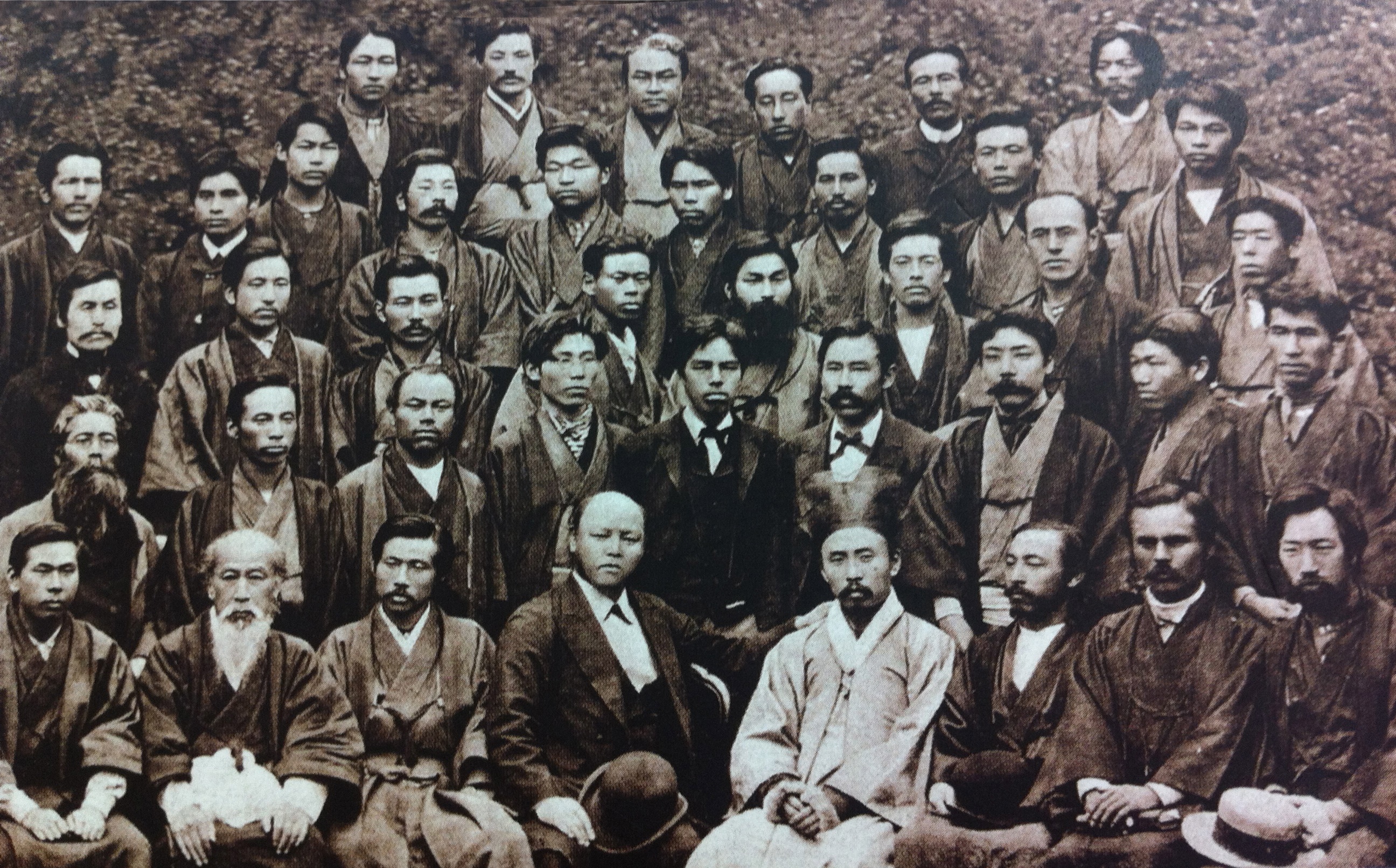
Photo 1_A Memorial PhotoIn this Voice of the Martyrs guest blog series, Pastor Kim Sung Chul tells the intriguing story of Lee Su Jung, the man responsible for bringing Christianity to Korea–and the man who was martyred because of it.

The Korean government summoned the 30 students in Japan back to Korea to separate them from the rebellious power.  Christianity was severely prohibited by the Korean national law. From the political aspect, Lee Su Jung did not belong to the aggressive revolutionists who led the failed three-day coup d’état.  He was a political comrade with Min Young Ik, the nephew of the Last Empress, and faithfully carried out all official tasks in Japan. Therefore, he was not summoned and executed because he was disloyal to the government.  The only reasons for his summons and execution were that he believed in Christianity, preached the gospel to the students in Japan, and translated the Gospel of Mark into Korean.

Lee Su Jung found the most precious seed in the world when he flew to the south to look for the rice seed.  One day before his summons and execution Lee Su Jung’s brother came to Japan with ten thousand nyang (the ancient Korean currency) to bring him back to Korea.  Lee Su Jung told his brother he didn’t need the money and that he should return to Korea without him.  He told his brother that he had a very important thing to do in Japan. He said he had found a much better thing than the railroad, the telegraph or the steam ship for the people of Korea. He found the Word of God, Jesus Christ.

The Research Mission of Christians’ Biographies in Korea published a series of biographies about the martyrs in the Korean church.  In the first volume, the first martyr mentioned is Missionary Thomas. The second martyr mentioned, and the first Korean martyr in the biography is Lee Su Jung, a Man of Macedonia for Korea.  In the last part of the biography, Pastor Inagaki delivered these words of encouragement for the sake of Lee Su Jung:

He intended to return to Korea and to evangelize his people. However, the Korean Government did not understand his faithful passion for his country and its people. That is why he was summoned and martyred upon his arrival. He reminds me of the word that the Lord told the Apostle Paul on the way to Damascus: “He is a chosen instrument of mine to carry my name before the Gentiles and kings and the children of Israel. For I will show him how much he must suffer for the sake of my name.” He also reminds me of the prayer of the first martyr, Stephen, “Lord, do not hold this sin against them,” who cried out with a loud voice and fell asleep. Lee Su Jung was a chosen instrument, indeed. He was a faithful servant of the Lord on the stage of Korea and Japan for a short period of time. He carried his own cross and preached the Gospel and fulfilled God’s command. A grain of mustard seed fell and rotted and bore abundant fruits.[1]

This concludes the four-part series on Lee Su Jung.

Lee Su Jung: A Man of Macedonia for Korea, Part 1

Lee Su Jung: A Man of Macedonia for Korea, Part 2

Lee Su Jung: A Man of Macedonia for Korea, Part 3

About the Author 

The Rev. Kim Sung Chul 

CEO, ITC Inspirational Theatre Company

Former Professor, Theatre Department, Seoul Institute of the Arts

Former Guest Professor, English Department, Yonsei University

[1] Kim Jonah, The Biography of Martyrs in the Korean Church, (Seoul: The Research Mission of Christians’ Biographies in Korea, 1994), pp. 294-295.

Posted in Korean Christianity, martyr, persecution | Tagged , | Leave a comment