
It’s important to know where a story ends. If you end the story too early, you can miss the point.
This is true with any story, but it is especially true with the Easter story. If we end it in the wrong place, it can make us sad, worried, or hopeless. But when we end the story of Easter in the right place, we will always be overjoyed. In fact, living a life of joy regardless of the circumstances and environment is proof that we have truly understood how the Easter story ends.
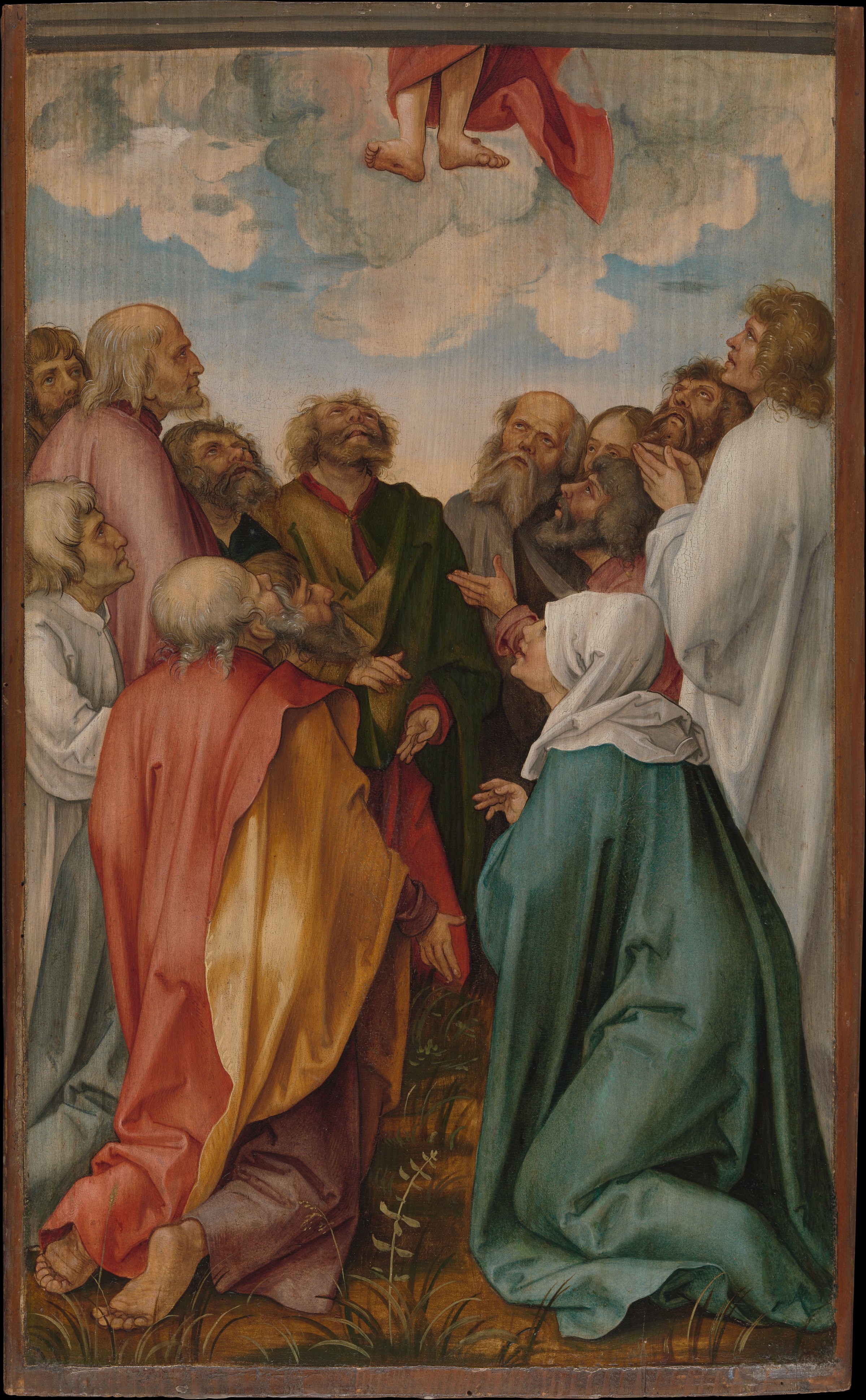
Interestingly, in the Bible, Easter does not end with Jesus coming out of the tomb and celebrating with his disciples. He appears to his disciples over a period of forty days and then ascends to heaven.
Jesus’ ascension to heaven is not just the end of the Easter story, it is actually the climax of the entire Bible and of all history. Jesus’ ascension is prophesied throughout the Old Testament and is also frequently prophesied by Jesus himself and recorded in the Gospels. Throughout the rest of the New Testament, Jesus’ ascension and entry into heaven is frequently found as a central topic.
Jesus’ ascension should be at the center not only of the Bible, but also at the center of our life, hope, confidence, and faith.
Why?
We can find the answer at the cross.
On the cross, Jesus defeated all of God’s enemies and has been given all power. We can see this clearly in Colossians and Revelation.
“He disarmed the rulers and authorities and put them to open shame, by triumphing over them in him.” (Colossians 2:15)
“She gave birth to a male child, one who is to rule all the nations with a rod of iron, but her child was caught up to God and to his throne, and the woman fled into the wilderness, where she has a place prepared by God, in which she is to be nourished for 1,260 days. Now war arose in heaven, Michael and his angels fighting against the dragon. And the dragon and his angels fought back, but he was defeated, and there was no longer any place for them in heaven. And the great dragon was thrown down, that ancient serpent, who is called the devil and Satan, the deceiver of the whole world—he was thrown down to the earth, and his angels were thrown down with him. And I heard a loud voice in heaven, saying, “Now the salvation and the power and the kingdom of our God and the authority of his Christ have come, for the accuser of our brothers has been thrown down, who accuses them day and night before our God.” (Revelation 12:10)
“who has gone into heaven and is at the right hand of God, with angels, authorities, and powers having been subjected to him.” (1 Peter 3:22)
“Then Jesus came to them and said, “All authority in heaven and on earth has been given to me.” (Matthew 28:18)
Jesus is not just “Lord of our hearts”. The Father has given the Son authority over all things in creation. Jesus has authority over the weather, economy, life, death, angels, human, present, future, and power over every molecule in all creation. All of these are now under the authority of Jesus Christ since his ascension. All of these things directly serve his plans and purpose, whether they want to or not.
“Then I looked, and I heard around the throne and the living creatures and the elders the voice of many angels, numbering myriads of myriads and thousands of thousands, 12 saying with a loud voice,
“Worthy is the Lamb who was slain, to receive power and wealth and wisdom and might and honor and glory and blessing!” And I heard every creature in heaven and on earth and under the earth and in the sea, and all that is in them, saying, “To him who sits on the throne and to the Lamb be blessing and honor and glory and might forever and ever!”” (Revelation 5:11-13).
The first thing Jesus does after receiving all authority is to send out four horsemen which affect the world’s economy, people’s health, and many other things in the world.
These days, more and more Christians are teaching and being taught that Jesus will defeat his enemies in the future and that, when he ascended, he departed and put the church in charge of the work. They wrongly think that it is the church’s job to defeat Christ’s enemies with Jesus merely providing help from heaven.
They wrongly understand Psalm 110:1
“The Lord says to my Lord: “Sit at my right hand, until I make your enemies your footstool.” (Psalm 110:1)
They teach that Christ is waiting for us to make his enemies his footstool and for us to elect Christian officials which will effect Christian laws and Christianize the nations so that Jesus can come back from heaven.
But Christ’s enemies being made his footstool does not mean that Christ has not already conquered his enemies. That is why Psalm 110:2 says this:
“The Lord sends forth from Zion your mighty scepter. Rule in the midst of your enemies!” (Psalm 110:2).
The reason there is a period of time between Christ’s ascension into heaven and his return to earth is because Christ is offering mercy to the enemies whom he has conquered. He invites them to surrender and acknowledge that he is Lord so that they might yet repent, believe, and be saved.
We ourselves were Christ’s enemies, but, as Paul says in Romans 10:9, “If you confess with your mouth that Jesus is Lord and believe in your heart that God raised him from the dead, you will be saved.” And so we were saved.
The confession that saves us is not “I believe Jesus died for my sins so that I can go to heaven when I die.” The confession that saves us is “I believe that all power in heaven and earth is now in the hands of the living Lord Jesus. I believe that nothing happens except by his permission and according to his purpose. Jesus Christ is Lord.” This and this alone is the confession that saves, according to the Apostle Paul.
At the present time, even though the enemies of the Lord Jesus are trying to oppose him, they are actually carrying out his purposes just as effectively as the Lord Jesus’ friends. Even Satan and Satan’s angels are like attack dogs that are held on a chain that is held by the Lord Jesus. They are still able to deceive and are given power by the Lord Jesus to carry out their plans. But, no matter how much they try to deceive, destroy, and rebel against the will of the Lord Jesus, they only end up fulfilling the will of the Lord Jesus and end up destroying themselves in the process.
In scripture, we see the Lord Jesus working through shipwrecks, imprisonments, disciples losing their homes, jobs, and even their lives. Through all of these things, the plans and purpose of the Lord Jesus are never destroyed or even delayed by His enemies.
But doesn’t the Lord’s work get done more effectively when Christians are in charge of the government and can influence the law to be more in line with Christian values?
I would ask you this: Where is the church growing faster today; North Korea or South Korea? The answer is North Korea. Even though North Korea is the worst persecutor of Christians in the world, the church is growing faster there than it is in South Korea, where the church has not had a year of growth since 1989.
In fact, when we look at the places around the world where the church is growing fastest today, almost all of them are places where Christianity is restricted and Christians are persecuted or even martyred. And in places where there is the most religious freedom, like the U.S. and Europe, the church is in decline.
Does that mean Christian governments and religious freedom are bad? Of course not. But it does mean that the Lord’s work does not rely on states, governments, laws, and politics in order to be effective.
The scripture tells us that the present form of the world is passing away. Things like our bodies, governments, health, etc. are passing away. The Lord Jesus tells us not to put our trust in these things, but to trust in him alone. His plan is not to send us out as a Christian army to make this world live according to Christian values. He certainly does not promise us worldly wealth and prosperity in this life and heaven as a final reward.
Instead, he promises us something much greater.
He promises us a new heaven and new earth on which he will live together with us. He will live in his resurrected body and we will live with him in our resurrected bodies.
That is why the ascension scripture ends with this verse:
“Men of Galilee, why do you stand looking into heaven? This Jesus, who was taken up from you into heaven, will come in the same way as you saw him go into heaven.” (Acts 1:11)
He will return just as he left. He didn’t leave his body behind and ascend as a spirit. He ascended on the clouds. And these clouds are not ordinary clouds. These clouds are the presence of God in physical form.
Jesus ascended to the throne room in the highest heaven. He was given all authority in heaven and earth. And, when he comes again, he will bring the new heavens and new earth with him and make his home among us. That is the great and final promise of scripture and it is the promise that is guaranteed by his ascension.
Christians often wrongly say, “We are the hands and feet of Jesus and we complete the work that he left behind”. But he didn’t leave any work behind. So what do we do?
The Lord already provided the answer in Acts 1:8. We are His witnesses. And, as his witnesses, we testify to the world of who Jesus is and what he does. We testify to the rulers of this world that they serve only because the Lord Jesus permits them to. We testify to all people that the Lord Jesus holds all power in heaven and on earth now and forevermore. And we live a life that confidently reflects that belief.
Faith is not just that you believe that Jesus died for your sins. Faith means that you confess that the Lord Jesus holds all authority in heaven and on earth even today.
And, until his return, we should expect to suffer for our faithful witness. In Acts 14:22, the disciples encouraged each other, saying that, “through many tribulations we must enter the kingdom of God”.
The Lord Jesus does not promise that the enemies of God will not be able to harm or even kill us. Our testimony that Jesus is even now King of Kings and Lord of Lords may cost us our lives, but on the day when the Lord returns, our testimony will be revealed as true.









 Do the Word