
“So you also, when you have done everything you were told to do, should say, ‘We are unworthy servants; we have only done our duty.’” (Luke 17:10)

As we wrote in our book Living in the Underground Church, whenever we open the Bible to read, even just for our daily devotions, it is essential for us to ask the following kinds of context questions about each scripture we read:
- Who is talking? Who are they talking to?
- Where is the scripture taking place?
- What happens before and after this scripture?
- Are there any other scriptures in the Bible related to this scripture?
Today’s scripture, Luke 17:10, is a good example of why it is important to do this. If we don’t ask these context questions when we read today’s scripture, it will sound like Jesus is sitting under a tree like the Buddha, teaching his disciples general truths about life:
“Jesus said to his disciples: “Things that cause people to stumble are bound to come, but woe to anyone through whom they come. It would be better for them to be thrown into the sea with a millstone tied around their neck than to cause one of these little ones to stumble. So watch yourselves. “If your brother or sister sins against you, rebuke them; and if they repent, forgive them. Even if they sin against you seven times in a day and seven times come back to you saying ‘I repent,’ you must forgive them.” The apostles said to the Lord, “Increase our faith!” He replied, “If you have faith as small as a mustard seed, you can say to this mulberry tree, ‘Be uprooted and planted in the sea,’ and it will obey you. “Suppose one of you has a servant plowing or looking after the sheep. Will he say to the servant when he comes in from the field, ‘Come along now and sit down to eat’? Won’t he rather say, ‘Prepare my supper, get yourself ready and wait on me while I eat and drink; after that you may eat and drink’? Will he thank the servant because he did what he was told to do? So you also, when you have done everything you were told to do, should say, ‘We are unworthy servants; we have only done our duty.’”
But when Jesus gives this teaching, he is not sitting underneath a tree talking generally about life. In the following verse we read:
“Now on his way to Jerusalem, Jesus traveled along the border between Samaria and Galilee.”
Ever since Luke 9:51, Jesus has been traveling from Galilee to Jerusalem. He is not just traveling to Jerusalem to die for our sins. According to the scripture, he is traveling to Jerusalem to lead an Exodus.
That’s what we read in Luke 9:28-36, when Jesus consults with Elijah and Moses on a high mountain and brings Peter, John, and James as witnesses. In Luke 9:31, it says “They spoke about his departure”, with the word “departure” being exodon—exodus—in the original Greek. What is the Exodus that Jesus is leading?
Jesus is leading his people out of the present age into the age to come, into the Kingdom of God. The way he prepares people for this is not by lecturing people about the atonement. He prepares them by preaching and teaching to them of the Kingdom of God, which they will soon enter.
This doesn’t mean that the atonement is not important. It means that the atonement is important because it opens the way for us to enter the Kingdom of God. Being a Christian doesn’t just mean being a forgiven sinner. It means living in the Kingdom of God now even while we are here today.
We do not enter the Kingdom of God at our death. We enter it at our baptism, which is the time we renounce our rebellion against God and die to the present age. Even while we are still physically alive in this present age, Christ rules over us directly. His family replaces our flesh and blood family. His possessions replace our possessions. His cross replaces our search for self-fulfillment. That is what Christ is teaching on the way to Jerusalem.
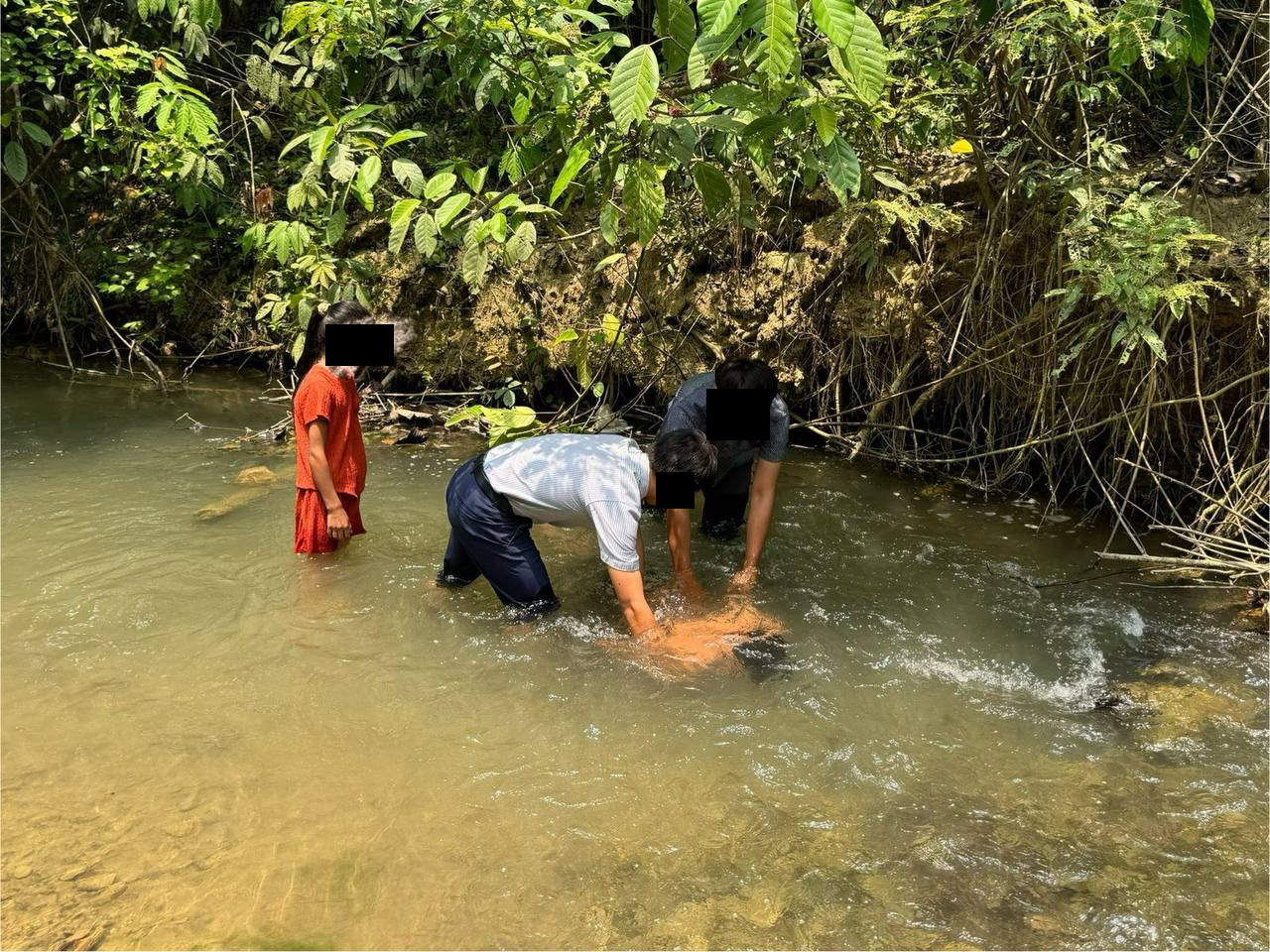
Jesus shares several parables which compare life in the present age to life in the Kingdom of God.
- Luke 12: A parable about a man whose farm produced a big crop. He saved the bumper crop for his own retirement. Jesus called this man a fool and said that people in the Kingdom of God live like the birds and wildflowers, relying on God for daily provision.
- Luke 14: Jesus says people in the present age eat with their flesh-and-blood family and with people of influence. But Jesus says they should treat Jesus’ family, the poor, crippled, lame, and blind, as their family.
- Luke 15: The parable of the prodigal son wherein, at the end, the older son excludes himself from the welcoming party for his long-lost brother because he doesn’t think his father, who threw the party, is taking his obedience or his brother’s disobedience seriously. Jesus says that people who act like the older brother are excluding themselves from the Kingdom of God.
- Luke 16: The parable of the Rich Man and Lazarus where the Rich Man ignored the “little one”, Lazarus.
In these parables, Jesus shows us the values of the present age:
- Being successful in your work so you can retire well
- Spending time with your family
- Becoming a person of influence in the world
Jesus says that these are not the values of the Kingdom. Rather, the values of the Kingdom are the opposite of these. Jesus says that what is valued in the Kingdom is caring for the “little ones” (Luke 17:2), who are the poor, crippled, blind, and lame. This is the main thing that Jesus wants to see reflected in our behavior, and the worst thing that we can do is cause one of these little ones to sin.
Remember, sin doesn’t just mean doing something wrong, it means rejecting relationship with God, leaving the family of God. Jesus guarantees that things will happen which cause disciples to leave the family of God but that doesn’t mean that it is okay when it happens. In fact, he says that if you are responsible for one of the little ones leaving, it would be better for you to be thrown into the sea with a millstone around your neck than to meet Jesus on judgment day.
This is the opposite of the way we usually think when people sin and fall away from God. We usually think, “Their relationship with God is their responsibility, not mine! My responsibility is to stay focused on God myself and keep myself from sinning like them!” But Jesus gives us a warning in Luke 17:3: “Watch yourselves.” Not “watch yourselves so you don’t sin like other people” but “watch yourselves so you do everything to restore your brother when he sins”.
We might think “Well, this doesn’t apply to me because I haven’t done anything to make other people sin and turn away from God”. But this is exactly what the Pharisees and teachers of the law thought about themselves. Causing people to sin doesn’t only mean what we do to other people,. It also includes what we don’t do to others.
For many chapters, Jesus has given us parables about how righteous people were causing others to fall away because of what they were not doing. When they had big harvests, they only thought about how to care for themselves. When they had banquets, they invited their family members and important people, but not the little ones. The rich man feasted and completely ignored Lazarus. In the parable of the Prodigal Son, the older brother showed no care for his younger brother, who is the little ones.
This is why Jesus says, “watch yourselves”. Christ holds us accountable for anything we do, or don’t do, to help the little ones enter and remain in the Kingdom of God. When we hold worldly values higher than caring for the little ones, we end up focused on ourselves and not on caring for them. We don’t share with them, regard them as family, or help them with struggles against sin. The highest value in the Kingdom of God is restoring sinners to the family again, again, and again.
If we are focused on anything else other than this, we are focused on the wrong thing. If we prioritize anything else, we are prioritizing the wrong thing. The main question that Jesus has for us about our behavior is: “What are you doing about the little ones?”
It is important to note that Jesus doesn’t say that we should ignore sin and restore people to the family without repentance. Jesus says, “If your brother sins, rebuke him, and if he repents, forgive him,” (ESV). Notice, he doesn’t say, “If your brother or sister sins against you” but “If your brother or sister sins”. That means that it is not the Christian thing to focus on your own work and try to be nice to everyone in order to avoid conflict. You are not permitted to stand off while others are sinning and falling out of the kingdom and family of God. We even have to be vigilant to help them with the small sins.
“Catch for us the foxes, the little foxes that ruin the vineyards, our vineyards that are in bloom.” (Song of Solomon 2:15)
We might think that it is reasonable to forgive people’s sins if they change their behavior. But Jesus says to forgive a person who sins against us seven times a day and come back to us saying “I repent”.
This sounds crazy to us, which is why the apostles responded by saying, “Increase our faith!” It seems to us that this kind of patience and mercy requires superhuman abilities. But Jesus responds to their request by saying, “If you have faith as small as a mustard seed, you can say to this mulberry tree, ‘Be uprooted and planted in the sea,’ and it will obey you.” This is not a matter of lack of faith.
Why? Because the forgiveness we share with others is not our forgiveness. It comes from Christ. It is his forgiveness, and he gives it to us to steward. He tells us when, how, and to whom to give it. And he tells us to give it to his little ones as often as they ask for it. It is their food.
What causes sinners to change is not their own will to change. What changes sinners is the forgiveness of Christ, given again and again and again, just as he commands.
In Luke 17:7-10, Jesus tells a parable about servants who finish work in the field and come to the house. Jesus said it would be crazy for a master to say, “Wow, you worked hard all day. Please, sit down, I will cook for you.” It is the servant’s job to work in the field all day and then to take care of the house in the morning and the evening. When the servant does that, he is just doing his job. The master doesn’t thank the servant for just doing his job.
Why does Jesus tell this parable? Jesus is saying, “The things I have commanded you to do here, to constantly take care of the little ones and give them my forgiveness repeatedly–these are your basic responsibilities in the Kingdom of God, not special praiseworthy actions. You are to do these things every day, and you should not expect praise or thanks from me when you do them. If you don’t do these things, then when you see me, you should expect punishment worse than drowning in the sea with a millstone around your neck”.
Don’t let the little ones wander away. There is no higher priority in the Kingdom of God.







 Do the Word