
In the Gospel confession, “Christ died for our sins according to the Scriptures”, the importance of the first words–“Christ died for our sins”–is obvious. But it is rarely noted that the rest of that confession–“according to the Scriptures”–are as important as the first words.
Many of the things preached and taught these days about Christ’s death for our sins don’t come from the Scriptures at all but instead come from efforts by some Christian evangelists to create a simple, easy way to explain Christ’s death. They formulate this the same way advertisers sell cars and cosmetics: By using a “problem-solution-benefits” model.
It usually goes something like this:
- God wants us to have a peaceful and joyful life.
- We ourselves are the source of a problem—sin—that keeps us from having that life.
- God sent Jesus to remove that problem.
- If we believe in Jesus, we can have that peace and joyful life both now and even after we die.
This modern evangelistic method provides everything that’s needed for someone to say yes to Jesus. Often a video presentation is provided that you can show to others if you are unsure about your own ability to present it well yourself. Or if you want to do the presentation, there are tracts available, as well as drawings that you can draw out for other people as your doing the presentation. There is even a standard prayer form that a person can pray to receive Jesus.
How different this is from the gospel that is preached in the Scriptures! Paul says that the gospel is the things of first importance about who Christ is and what he does. Who decides what is of first importance about Christ? Christ does! He is the first preacher of the gospel, and he passes the gospel on to his Apostles, and this proclamation is recorded in Scripture.
Modern evangelistic methods also share “what is of first importance”, but here “what is of first importance” means “what is of first importance to the listener”, namely, our own happiness and well-being and how it is advanced by the gospel.
But the gospel proclamation says that Christ died for our sins “as according to the
Scriptures”, not “as according to our human understanding”. We are not free to give our own explanations of how Christ died, or why. These things are all given to us in the Scriptures.
If we ask, “Which Scriptures?”, Jesus gives the answer in the Scripture we have been studying this week. It’s the story of Jesus on Easter, walking on the road to Emmaus with two disciples who don’t recognize him. And the things that have happened regarding Jesus don’t make sense according to their human understanding. Jesus says to them in Luke 24 beginning in v. 25:
“How foolish you are, and how slow of heart to believe all that the prophets have spoken! Did not the Christ have to suffer these things and then enter his glory?” And beginning with Moses and all the Prophets, he explained to them what was said in all the Scriptures concerning himself.
Jesus says it is foolish to use our human understanding to understand how and why he died. He says we have to turn to the Old Testament—all of it, he says—in order to understand. And even then, Christ has to open our minds through his Holy Spirit to understand the things that are written there.
In fact, that’s exactly what we see a few verses later, beginning in v. 44, when Jesus comes to the Apostles for the first time since his resurrection. Jesus says to them also, just like he told the two disciples on the road earlier that day, that it will be necessary for them to go back to the Old Testament to understand what it means that he died for their sins:
He said to them, “This is what I told you while I was still with you: Everything must be fulfilled that is written about me in the Law of Moses, the Prophets and the Psalms.” Then he opened their minds so they could understand the Scriptures.
When we go back to those Old Testament scriptures, it challenges many of the things we hear preached these days about why and how Christ died.
Even when Christ teaches us and the Holy Spirit opens the Scripture to us, that doesn’t mean that it is a magic process where everything instantly makes sense to us. It’s not like the Buddhist idea of enlightenment. It feels like a lot of hard work.
And that’s what we see with the disciples in the Scriptures too. All the way through the book of Acts, Peter and Paul and James and all the Apostles and early Christians are still figuring things out. It’s a kind of “two steps forward, one step backward” process.
Jesus told us it would be like that. In John 16:13, when Jesus is preparing the disciples for his death, he says:
But when he, the Spirit of truth, comes, he will guide you into all truth.
The Holy Spirit doesn’t suddenly and instantly make everything clear to us. He guides us into all truth. That’s a long-time process. That was true for John himself. Even in the very last chapter of the Bible, Revelation 22 beginning in v. 8, he says:
I, John, am the one who heard and saw these things. And when I had heard and seen them, I fell down to worship at the feet of the angel who had been showing them to me. But he said to me, “Do not do it! I am a fellow servant with you and with your brothers the prophets and of all who keep the words of this book. Worship God!”
So for our whole lives, Christ will be teaching us through his Holy Spirit, and it will always go against our human understanding. Two steps forward, one step back.
So you may be thinking, “Why does it have to be like that? To lead people to Christ, do we really have to take them through the whole Old Testament like Christ does with the disciples on the road to Emmaus? Why couldn’t Christ have given us something simple to share with other people–as simple as the 4-step problem-solution-benefit models of modern evangelism?”
And the answer is:
He did!
What I want you to notice in today’s scripture is that it does not say:
And beginning with Moses and all the Prophets, he explained to them what was said in all the Scriptures concerning himself. Then their eyes were opened and they recognized him, and he disappeared from their sight.
Something very important happens in between those verses. It says:
When he was at the table with them, he took bread, gave thanks, broke it and began to give it to them.
Christ is our only teacher. And yet, it was not through his teaching that their eyes were open and they recognized him. It was through him breaking the bread.
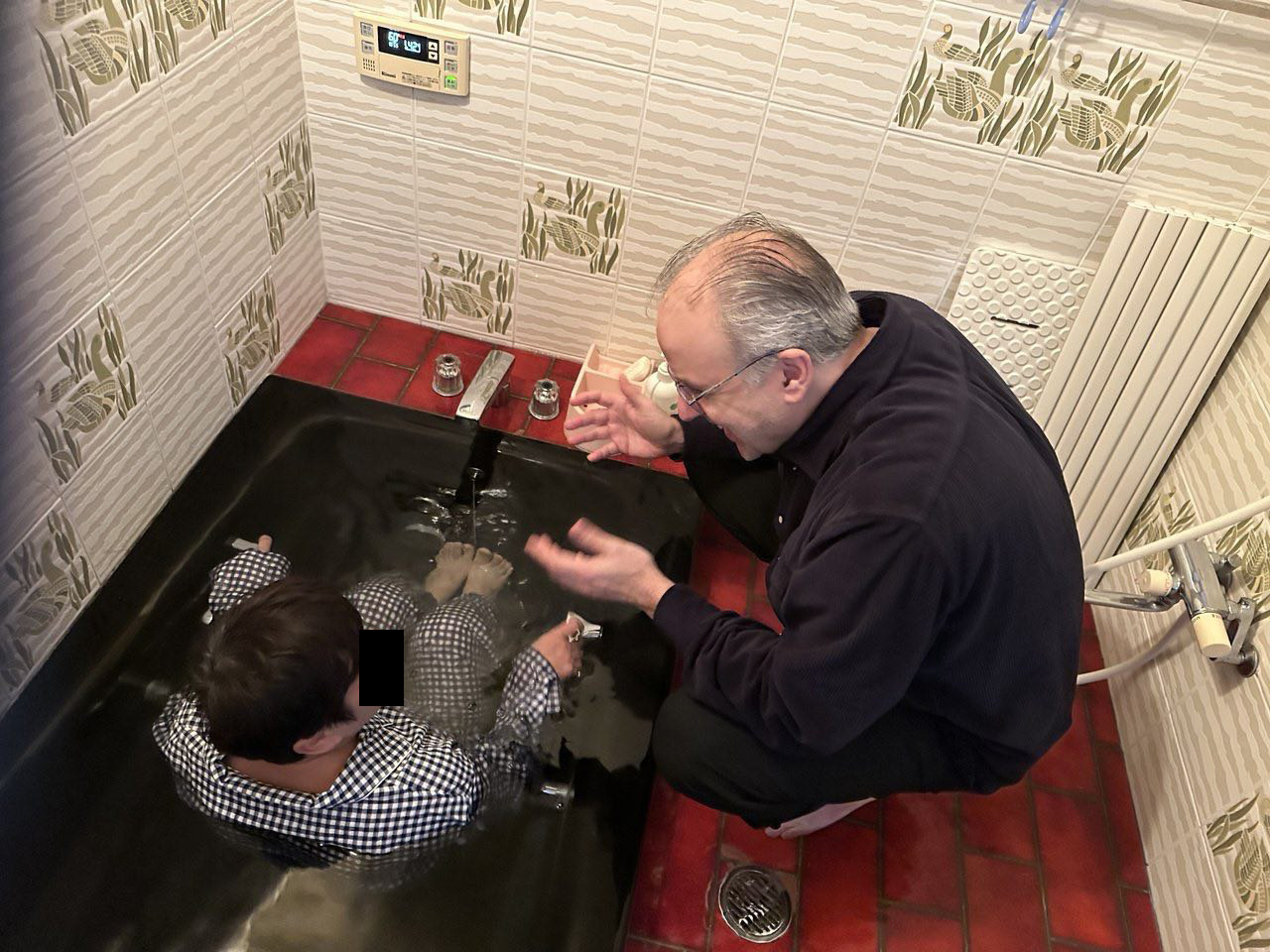
You see, Jesus has given us the simplest, easiest way to understand and receive his two great promises. He has given us Baptism and the Lord’s Supper.
Through baptism, we enter into the Lord’s death; we receive the forgiveness of our sins; we receive the Holy Spirit; and we are marked to be resurrected bodily and raised up to live eternally with Christ on the New Earth on the Last Day. Christ binds these promises to the waters of baptism, so that the way we receive these promises is to believe and be baptized. Those are the Lord Jesus’ own words in Mark 16:16.
At the Lord’s Table, we eat the meal that seals the New Covenant. Our role is to receive the promises that the Lord makes in the New Covenant. We receive these promises by partaking of the bread and the cup to which he bound the New Covenant. The Lord’s Supper is the meal we eat with the Lord as part of the New Israel.
These two sacraments are how the Lord commands us to understand and receive his two great promises to us: Salvation and incorporation into the New Israel under the New Covenant. They are simple, but profoundly deep.
And they are according to the Scriptures.







 Do the Word