
God gave the Apostle Paul the responsibility of spreading the gospel to the Gentiles. But then in God’s wisdom, God decided that Paul would spend his most important years of that ministry in prison. If we were Paul, we might cry out to God, “Why would you give me this task but not give me the freedom to complete it?”

But the New Testament never records Paul complaining about the time he spent in prison. In fact, when Paul writes the church in Philippi, he says his imprisonment is actually advancing the spread of the gospel!
God put Paul in chains so that the gospel would go to all the world. That is a very difficult thing for us modern believers in Korea and the West to understand.
Since the time of Christ, governments around the world have banned or restricted the practice of the Christian faith. Even today, in more than 70 countries around the world, governments restrict Christianity. They control when and where and under what circumstances Christians can practice their faith.
They put Christianity in chains.
There are some countries like North Korea where the government declares that there are no circumstances under which Christianity can be practiced in their country. We think of such countries as “closed”. That is why often when I come to a church or conference in South Korea to preach, Christians will come to me with tears in their eyes and tell me that they are praying night and day for North Korea to open to the gospel.
Until that day comes, they say, they will do all they can to “sow the seed”. They will pray. They will plan and set aside money for missions for when North Korea opens. They will support Christian medical or humanitarian or educational projects to North Korea. They hope that this will give North Koreans a good impression of Christianity which may cause them to be more “open” to Christianity, or maybe the missionary might somehow get the opportunity to secretly share the gospel with a North Korean.
These are well-meaning thoughts and prayers. But in reply to all of these thoughts and prayers, the Apostle Paul gently corrects us in 2 Timothy 2:9 by saying, “But God’s word is not chained.”
Scripture shows us that God is not limited to working through his servants. It is of course true that God invites his servants to carry out his work. But when they don’t, this does not stop him; he simply works through his enemies. That is because God’s enemies are his servants too, whether they want to be or not. Even when they seek to destroy his work, they can only end up completing it.
This is why Joseph says to his brothers who tried to kill him and then sold him into slavery, “You intended to harm me, but God intended it for good to accomplish what is now being done, the saving of many lives.”
In the book of Esther, Haman sets up a plan to kill all the Jews. Esther has miraculously become the queen of Persia. Mordecai, Esther’s cousin and guardian, sends her this message: “Do not think that because you are in the king’s house you alone of all the Jews will escape. For if you remain silent at this time, relief and deliverance for the Jews will arise from another place, but you and your father’s family will perish. And who knows but that you have come to royal position for such a time as this?”
In other words, Mordecai has no doubt that God will rescue the Jews. But Mordecai doesn’t beg Esther to be the one to rescue them, even though she is in the most obvious position to help. Mordecai knows that God will always be faithful to his promises, even when his own people are not.
The message of Scripture is clear: The enemy can put God’s people (like Paul) in chains. God’s own people, in their ignorance, can even reject him and his work. But no one can stop his plan.
Always, God’s plan is carried out by his word. In the beginning, when God creates the heavens and the earth, he does so through his word. In Isaiah 55, God says, “As the rain and the snow come down from heaven, and do not return to it without watering the earth and making it bud and flourish, so that it yields seed for the sower and bread for the eater, so is my word that goes out from my mouth: It will not return to me empty, but will accomplish what I desire and achieve the purpose for which I sent it.”
In Acts 16:6, the Holy Spirit stops Paul from preaching the gospel in the province of Asia. But Acts does not say that Paul came to this conclusion because the authorities stopped him from preaching. In fact, throughout the book of Acts, many different authorities try to stop the Apostles from preaching the gospel. But unless the Holy Spirit directs the Apostles to stop, they keep preaching.
This does not mean that Christians are free to break the law. Romans 13:1 says, “Everyone must submit himself to the governing authorities”. But God does not permit us to submit to authorities’ efforts to put his word in chains. We must instead preach the whole gospel of Christ, in whatever place Christ commands us to preach it, to whomever Christ commands us to preach it, and we must do so whether or authorities grant us a “right” to preach.
At the same time, we must always remain subject to the penalties and punishments the authorities lay upon us for refusing their chaining of the word. We must always preach boldly but then go to prison willingly, even joyfully. As the global founder of Voice of the Martyrs, the Rev. Richard Wurmbrand, explained with regard to the Romanian Communists who imprisoned him, “We reached an understanding. We would preach, and then they would beat us. In this way we were both happy.”
In many ways, the situation in North Korea today is no different than when Christianity first came to Chosun 140 years ago: There was a complete and total ban on all foreign religion. Anyone found possessing a Bible or having made contact with a missionary would be killed.
Even the first Western missionaries to Chosun—Allen, Appenzeller, and Underwood—worried about the ban on foreign religions. It was not possible for missionaries to plant a church or to preach in public. They were not permitted to come to Chosun as religious workers. They could only come as men who could bring from the West the skills necessary for Chosun to modernize. Chosun was completely “closed” to Christianity.
But it’s important to remember that the first Chosun Christians did not become Christian through contact with Appenzeller, Underwood, or Allen. Instead, the first Chosun Christians came from the northern part of Chosun. They became Christian through reading the Bible on their own—a Bible they had to acquire secretly from a smuggler. They could not meet together with missionaries or other Chosun Christians for worship or discipleship. They had access to no Christian materials other than the Bible. They had access to no Christian teachers to help them understand that book other than the Holy Spirit.
So before Appenzeller, Underwood, and Allen had even come to Chosun, there were already Christians there. It was the result of the Holy Spirit working through the ministry of Missionary John Ross. By the time the first Western missionaries arrived, somewhere between 15,000 and 50,000 copies of Ross’ translation of books of the New Testament had already been smuggled into Chosun—even though Chosun was at that time regarded as the most closed country on earth—a “hermit kingdom”.
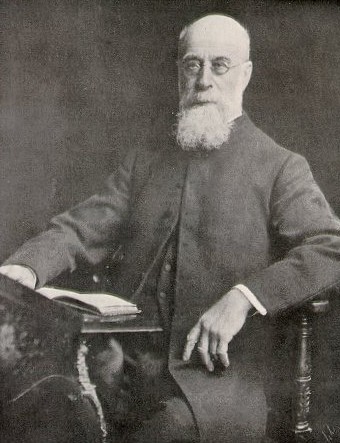
“That’s because the word of God is not chained,” the Apostle Paul would say.
Ross was the first translator of the Bible into the Chosun language. Ross had never been trained in Bible translation. And his fellow translators from Chosun were not even Christian. They were merchants from Chosun whose businesses had all gone bad. Some were ill or struggling with alcohol or other addictions. They got involved with Ross for one reason: they were desperate for some way—any way—to make money.
How did they become Christian? Through the process of translating the Bible.
This was the core of John Ross’s missionary strategy: introduce people to Christ by giving them only the word of God, since Christ is fully present in his word. Nothing else was needed.
In 1882, these new Chosun Christians risked their lives to smuggle the first ever copies of the Chosun language version of the scriptures from China inside of what is today North Korea. Imagine the surprise of the first Western missionaries to Chosun when shortly after their arrival, hundreds of Chosun Christians appeared at their door asking to be baptized. When the missionaries asked these Chosun people how they would even know about baptism, they showed their copies of the Gospel of Luke. The missionaries were certain that the Chosun people could not possibly understand Christian doctrine enough to be baptized, so they gave them a doctrinal examination. Most of them passed easily.
The missionaries agreed to baptize the Chosun believers, but they were so concerned about violating the ban on religion that they insisted that the baptisms had to be done in secret, far away from the city.
Chosun was the place where the word of God came before missionaries arrived.
And what about today? There is a common misconception among Korean Christians that gospel ministry to North Korea is still a future event, that North Korea is “closed” to the gospel. But God is not waiting for a future date for North Korea to open. God is continuing to bring his word inside North Korea today. And despite the life-threatening consequences of being caught, more North Koreans are reading the Bible and being transformed by it today than any other time in history.
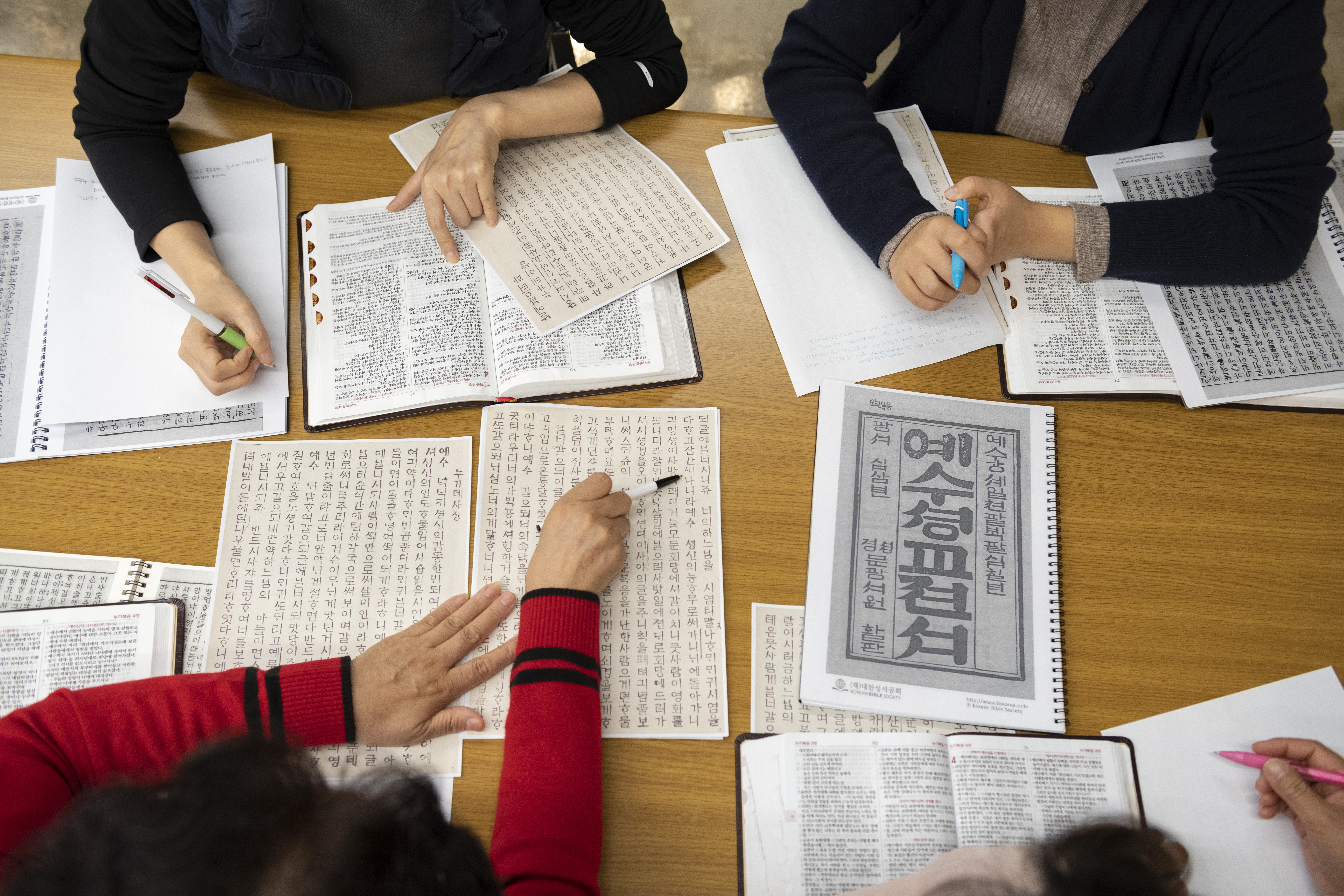
Voice of the Martyrs Korea delivers more than 40,000 Bibles into North Korea annually via land, sea, and air. In addition, we broadcast four daily shortwave radio programs into North Korea.
But is it working? Is the word of God truly “unchained” inside North Korea?
Database Center for North Korean Human Rights is an independent data-gathering NGO. They have been conducting an ongoing study about various aspects of life inside North Korea. One of the questions they ask is, “Have you ever seen a Bible with your own eyes inside of North Korea?” In the first year of their study, in the year 2000, they found that effectively 0% of people inside North Korea had ever seen a Bible with their own eyes. However, they have continued to update that study. At the end of 2020, the most recent year for which data is available, they determined that nearly 8% of people inside of North Korea have now seen a Bible with their own eyes.
To all those who have been praying night and day for North Korea to open to the gospel, give thanks to the Lord! He is already answering your prayer! By every objective measurement, North Koreans are hearing the word of God today in greater numbers than ever before, despite every effort that is still being made to restrain it.
“That is because the word of God cannot be chained.”
And that is why today is the day for gospel ministry to North Korea.







 Do the Word