
Have you ever wondered how the New Testament came together as a single book?
You may know that each of the books and letters that makes up the New Testament were originally each sent to or used by individual churches (like Paul’s letters), or to the churches in a particular region (like the six churches mentioned in the book of Revelation). So what was it that brought all of the individual books together into a single book?
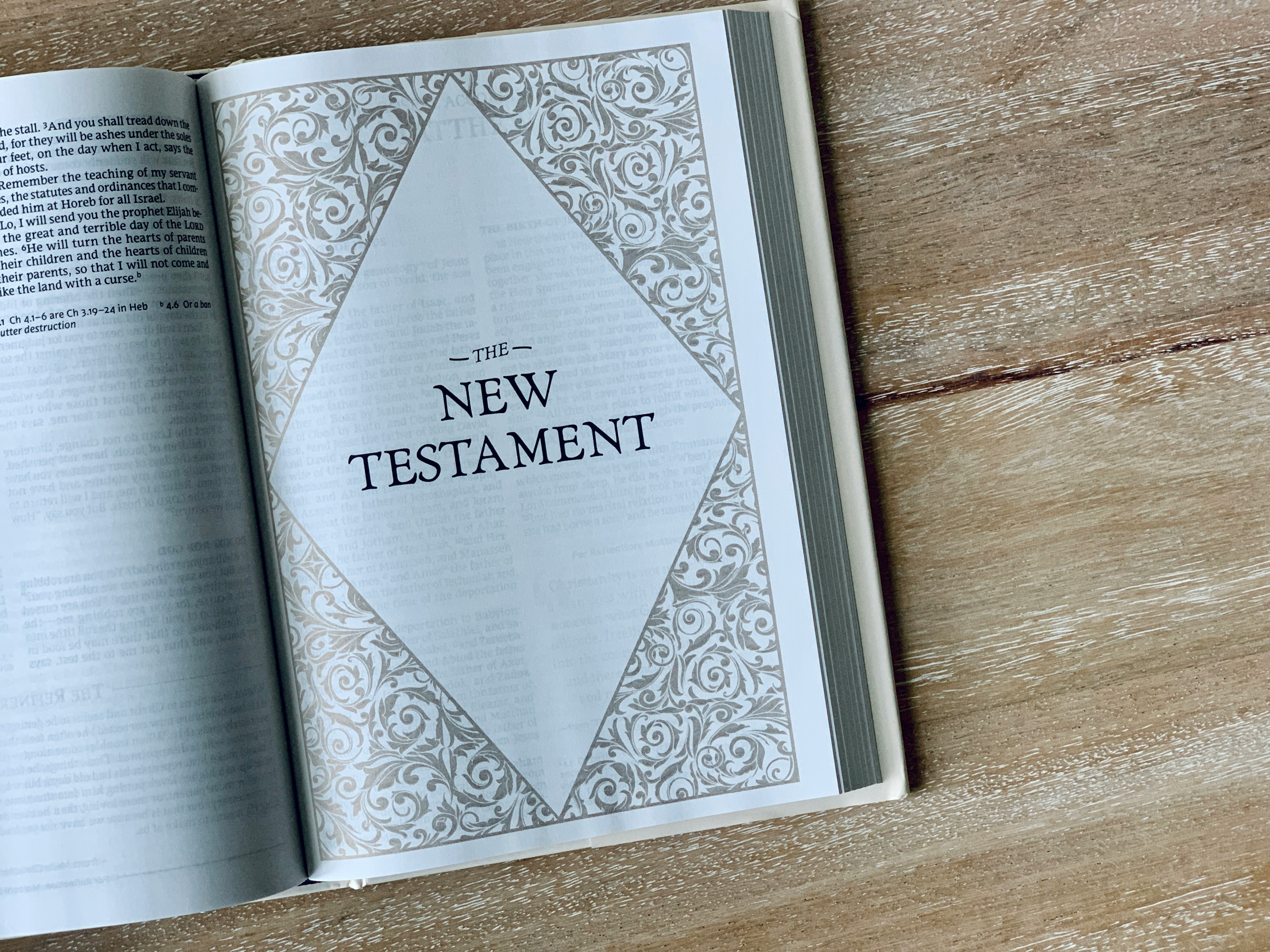
You may have heard that it happened in the fourth century at around the same time as the Nicene Creed, when the church was seeking to put down various heresies. And you may have heard that the question of what to include in and exclude from the New Testament was to ask simply: “Was this book written by an apostle?” If ‘yes’, then it was included. If ‘no’, then it was excluded.
There’s certainly a lot of truth to that. But that’s really only the end of the story. The story of how the New Testament came to be begins back in the early second century. And it happened not because of something internal to the church but because of something external:
Persecution.
At the beginning of the second century, as the gospel began to spread throughout the world, it faced growing opposition. Christians—those carrying the gospel, especially the leaders of the churches—began to be persecuted, even unto death. These leaders each came to see the need to bring together in one collection all the individual letters and books of the apostles that would enable Christians to faithfully testify to the Lord Jesus—and to know how to respond to the opposition that arose from that testimony.
So it was from persecution—and because of persecution—that the New Testament was born.
By the beginning of the second century, most churches were using some or most of the books and letters that came to be included in the New Testament. But the books and letters were in many different orders, with certain books and letters being more emphasized by some churches and other books and letters being emphasized in other places. And there were some books and letters—for example, Acts, Hebrews, Revelation, 2 Peter, 3 John—that were missing from the collections of many churches, often because they were difficult for ordinary believers to understand. And some churches were using books and letters that were ultimately excluded from our New Testament—for example, The Didache (or “The Teaching of the Twelve Apostles”), and other books like the Revelation of Peter, the Letter of Barnabas, the Gospel of James, and the Shepherd of Hermas, all of which were quite popular.
But the New Testament wasn’t a collection of the most popular books about Jesus, nor was it simply a collection of writings related to the apostles.
Instead, the New Testament was created as a martyr’s manual. It was designed to equip disciples to be faithful witnesses to the Lord Jesus even unto death.
In a sense, there were two “tests” that every book in the New Testament had to pass in order to be included in the New Testament:
First, the book had to teach that Jesus Christ was the Son of God, born of a woman, born of the seed of David, sent at the end of this present age in the flesh to die for our sins and offer the mercy of God as prophesied in the Old Testament Scriptures, who was buried, who was raised on the third day in a visible, physical resurrected body as according to the Scriptures, who ascended into heaven and is seated at the right hand of the Father, who will come again soon to judge the living and the dead. If a particular book didn’t teach all these things, it at least had to be consistent with these teachings. If a book included or emphasized anything other than these things, or if it stated or implied or could be used to teach something different than these core truths, then it was excluded. That was the first test.
The second test was this:
Did the book make clear the cost of following Jesus? If a book showed Jesus as simply a teacher of wisdom or a giver of blessings; if it failed to make clear the suffering that disciples would face in this world, then that book was omitted.
These two “tests” weren’t formally applied at a specific meeting of church leaders that happened at a certain place on a certain date. But as we read the letters between church leaders—like Ignatius, Polycarp, Iranaeus, and Origen—and as we study the history of the church in the second century when the New Testament began to be assembled, it is clear that these were the two key tests for what books would be included in this “martyr’s manual” called the New Testament.
That’s because it was the reality of persecution in the early second century that made it urgent for churches—especially those in the areas facing persecution—to put together a single collection of reliable books to prepare Christians for faithful witness and martyrdom. Even the ordering of the books is designed to make it so that when we read the New Testament from the beginning to the end, we focus on who Jesus is, what he does, and the suffering we will face for testifying to him.
These days we are taught that we have a legal “right” to believe in Jesus (or whatever we want to believe in), and that persecution due to our faith is a “violation” of our legal “rights”. We are taught that we should fight for these rights by becoming involved in political, where we elect the right people, make the right laws, and protest to uphold the right values. We have been taught that belief and suffering for belief are two separate things. We have been taught that belief is good and suffering for belief is wrong and should be eliminated or prevented.
But this understanding goes against the whole New Testament.
The New Testament is, and always has been, a martyr’s book. It never separates belief in Jesus from suffering for his name. The New Testament is consistent in saying that to believe in Jesus is to suffer for Jesus. And the New Testament is consistent in saying that suffering for Jesus is an honor, a blessing, and a gift, not a tragedy.
When we believe in Christ but don’t suffer for our belief in him, we are like a flower without roots, stuck in a vase: It can look pretty for a while, but soon it will wither and die. It is only in suffering for our belief in Christ that we become rooted deeply in Christ, and he will nourish us through those roots of suffering for his name until he returns and we see him face to face







 Do the Word
Nothing that you could possibly boast about – such as “hey look how much I suffered for Christ” will determine whether we are saved or not. The Bible clearly says that we are to rest in Christ, not suffer for him. Suffering may lead to a more mature faith but it has absolutely nothing to do with God being disappointed in us or effecting our relationship with him in any way. Your post reminds of the Pharisee in Luke 18:9-14 where the self righteous would say something like “hey God I tithe, I suffer, I pray, I give to the poor, etc… and the only thing required for the tax collector who is welcome in the Kingdom was to say “God have mercy on me, I am a sinner”. Jesus never had a problem with sinners. He had a problem with the self righteous who shut the door of the Kingdom into the faces of sinners who need a doctor by telling them what they are doing right (I am suffering) and what everyone else is doing wrong (I am not suffering).
Thanks for your thoughts, Brady. We certainly are in agreement that suffering for our witness to Christ is not a condition of salvation. It is, however, the result of it. 1 in 5 Christians today live in one of the more than 70 countries around the world where Christianity is restricted or prohibited. Their resting in the salvation of the Lord entails their suffering. In addition, Jesus told us that we could expect to suffer for our faith in him at the hands of our closest family members, and that a time would come when “all men” will hate us because of our faith in him. Jesus says that no servant is above his master, so just as Jesus suffered for his faithful witness to his Father, we can expect to suffer for him. Paul tells Timothy that everyone who seeks to live a godly life in Christ Jesus will be persecuted. And Paul tells the Philippians that they have been granted the privilege not only of believing in Christ but also suffering for him. By the grace of God, the New Testament provides the resources for all believers to know how we can not only overcome the suffering we face for bearing the name of Christ, but also how we can rejoice in those sufferings! And that is the purpose of the post on which you commented: It does not say that our suffering saves anyone, least of all ourselves, or that it is a matter for prideful boasting. Suffering for our faith in Jesus is simply a reality of the Christian life. The New Testament was assembled in order to bring people to faith in Christ, and then to equip them to face the suffering that the faith inevitably brings.
Hmm, please tell us all how or in what ways you are suffering for Christ today in the 21 century?
Hello Brady–you can read more about our ministry, Voice of the Martyrs Korea at http://www.vomkorea.com. It also contains some biographic information, though our primary purpose is to share not our own stories but those of today’s Christian martyrs in order to encourage, challenge, and teach us. Or if you are in the US, you can read about Voice of the Martyrs USA, our sister mission there (each VOM organization is independent), at http://www.vom.com.