We Pre-Launch The 100 Days Of Worship Campaign… With Eritrean Underground Pentecostal Christians Who Learned To Love The Creed

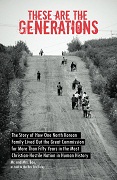
SUSA-KoreanIt would take a month of blog posts just to explain the predicament of the Eritrean underground church. On the one hand, Eritrea is consistently recognized as one of the most ruthless state persecutors of Christians on earth. The ingredients you’d expect are there: Paranoid dictator who self-consciously seeks to imitate North Korea. A population that is 60 percent Muslim.

But here’s where things get weird–and sad. Eritrea is a textbook case of Christian-on-Christian persecution, a little-discussed phenomenon precisely because it’s so disturbing. As Open Doors’ World Watch 2013 report explains,

The Eritrean Orthodox Church is the largest church in the country and its members are said to spy on the activities of CBBs [Christian background believers] and independent Christians and report them.

We decided to build a week-long discipleship training program for Eritrean underground Pentecostal Christians around the four pillars of the 100 Days of Worship campaign about which we’ve been writing for the past few weeks:

  • The Apostles Creed
  • The Ten Commandments
  • The Lord’s Prayer
  • The Lord’s Supper

.These are the selfsame pillars of the very Eritrean Orthodox Church which is alleged to facilitate their persecution.

It’s a fascinating paradox that is not unique to Eritrea. Think about it: Some persecuted Christian groups–Pentecostals and Evangelicals especially–reject these four pillars as lifeless formalism: memorized mumbo-jumbo that is assumed to work like a magical incantation. The North Korean Underground Church, on the other hand, sees the pillars as indispensible tools used by the Holy Spirit to fill the church with life and truth and hope. What gives?

What we learned from the Eritrean underground Pentecostal participants in our discipleship training program is that the pillars themselves–when properly introduced as discipleship training tools rather than as memorized mumbo-jumbo–become the answer to many of the discipleship problems facing the Eritrean underground church today.

It’s worth noting that in the Eritrean Orthodox Church, the four pillars are indeed pillars in the worship service…but the worship service is conducted in the Ge’ez language, which “has been near-extinct and mostly limited to liturgical use since the 10th century.” This means that Eritreans–who speak Tigrigna–can’t use, for example, the Apostles Creed for anything other than mindless mumbo-jumbo repetition.

So when the workshop participants translated the Apostles Creed and the Nicene Creed–for themselves, into their own language–we found ourselves in a mighty meaningful teaching time. “What does ‘One baptism for the forgiveness of sins’ mean?” asked one Eritrean leader. “If ‘catholic’ means ‘universal’ and not ‘Roman Catholic,'” asked another, “then why have we not reached out to other underground Evangelical groups to share this training and these pillars with them?”

Good questions. The right questions. Questions that lead to Christian growth, when the Holy Spirit is at hand.

So what did the participants say at the end of the training?

  • “I always was wondering how to help my household to get them rooted deeply in faith, because sometimes we would share the word and worship, but it was always so superficial. But this week I learned that I have some tools that help me root them deep in faith.”
  • “I am impressed with the use of the four pillars, because knowing that we face false teaching, and I think these will be the best tools to fight that false teaching.”
  • “I learned a lot from the creeds, especially a better understanding of the Trinity.”

But it’s not always a 10th Century language that locks the pillars up tightly in the theological cupboard. Sometimes (as in the case of English) it’s often our own lack of experience in knowing how to use the tools that consigns them to mis-(and dis-)use. We need to translate the pillars for ourselves–not into some kind of slang vernacular, but into the life and flow of our household worship and discipleship training where they can be used by the Holy Spirit to root us deeply in faith, too.

That’s one of the primary goals of the 100 Days of Worship campaign: Follow North Korean Christians in a new apprehension of these pillars that have brought life to Christians around the world and across the ages. Yes, the pillars have also been used to construct dead formalism. But when the tools are personally “translated” into our everyday Christian lives and household worship, something else emerges–something a lot closer to the Underground Christians of North Korea than the Orthodox Church of Eritrea.

With that in mind, make sure to visit our Facebook page to learn more about or sign up for the 100 Days campaign today.

Posted in 100 Days of Worship in the Common Places | Tagged , , , , , , | 3 Comments

Video – In John 3:21, What Does it Mean to Come Into The Light?

Pastor Foley admits that no one really likes having their deeds exposed by coming into the light.  But in order to live in the light, we have to overcome the lifestyle of inwardly struggling with sin but outwardly being holy.  Despite a common fear of being judged or rebuked, the apostle John assures us that coming into the light is for the purpose of seeing that “what he has done has been done through God.”  And one of the ways that we come into the light is when we confess our sins and ask for forgiveness.  This is truly a work that is “done through God.”

For all of the latest podcasts on Forgiving and Reconciling and on past Works of Mercy visit our Seoul USA Podcast Page!

Posted in Forgiving and Reconciling, Videos | Tagged , , | Leave a comment

What Does Forgiveness Have to do With Bad Acting?

WLO_forgivereconcilePost by Pastor Tim – On a daily basis, we encounter situations in which we need forgiveness or in which we need to offer forgiveness.  Take for example, a situation that we discussed in church this past Sunday.  A mother and her daughter related a story in which the daughter responded inappropriately to her mother.  Specifically, the daughter who was responsible for cleaning the kitchen didn’t clean properly, and when she was confronted with this fact, she responded defensively instead of humbly accepting her mother’s correction.

You might be thinking, why reference such an insignificant case of sin in relation to forgiving and reconciling?  Why not focus on something a little bigger and harder to forgive?  Quite simply, because these are the types of everyday encounters that we have to be willing to learn and grow from.  Otherwise, we are apt to continue repeating the same patterns of sin and unforgiveness that we first experienced, even though they were only experienced in a so-called “insignificant” event.

As a part of Offering Sunday, we focused on those “daily forgiveness encounters” by role-playing them in front of each other.  The above story was reenacted twice, one time with the way it really happened and the other time with the way it should have happened had humility and forgiveness been involved.  By reenacting this in front of the congregation, it not only enabled the mother and daughter to learn from their situation, but it caused everyone else to reflect and examine some of their own “daily forgiveness encounters.”

My own family began to think about a “forgotten backpack at school” situation in which both my wife and my son had reactions that were not conducive to forgiveness.   My son forgot his backpack, which of course is not a sin, but he specifically withheld this information from my wife, until it became too late and difficult to get the backpack that day.  When confronted with his sin, he became defensive and prideful instead of humbly asking for forgiveness and recognizing that he needed help in retrieving his backpack.

Role-playing real-life “forgiveness encounters” like these can accomplish a number of positive results.  First, it can give you the much needed perspective of the other person who was involved in the situation.  Second, it can give you a better understanding of your own actions. And by taking the time to examine these mundane “forgiveness situations,” it also helps you to plan how to respond better in the future.  In fact, my own family was able to use the lessons we learned in church, later that very same day.

As a church, we role-played a number of situations on Sunday, and one of those situations involved a problem that one of our younger members was experiencing out on the playground.  I wanted to share a short clip of our church reenacting this.  You’ll notice that we aren’t Broadway trained and our video is rather grainy.  But these things aren’t really so important.  It’s much more important to have a willingness to laugh at yourself a little bit, a willingness to learn and a willingness to be humbled and forgive as a result of what you’ve learned.

Posted in Forgiving and Reconciling | Tagged , , | Leave a comment