Q. On your web-site you state that 100% of your ministry is evangelism and discipleship. But I know you distribute ministry packs, and they aren’t discipleship-related, are they?
 A. You’re right in thinking that ministry packs are a little different than a lot of what we do, but ours are still 100% discipleship related!
One of the major misconceptions about North Korea is that North Koreans are only found inside its supposedly barbed-wired borders. But in truth, North Koreans are found all over Asia and even into the Middle East! Those who are in good standing with the government are able to visit their relatives in China with the proper (often expensive) permitting (and ideological pre-education for what they will see on the outside). Some are diplomats. Others go to school. But by far the largest number are those working difficult jobs abroad.
When North Korean men and women are sent by their government to other countries for temporary (typically one- to three-year) work assignments designed to raise hard currency for the regime, they are severely restricted in their contact with family members back home and are often given dismal accommodations and dangerous work assignments without much food or medicine.
Ministry packs contain basic necessities customized to the location. Some packs contain hygiene supplies, undergarments, socks, and rice or noodles. Others contain shoes and jackets and even work tools.
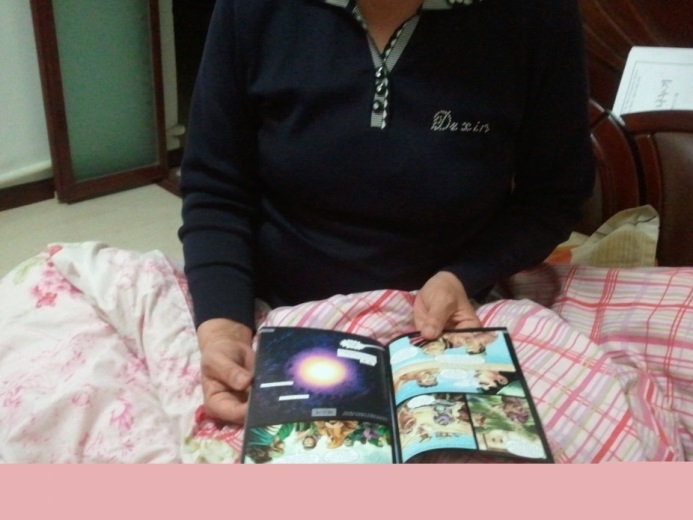
But loneliness, emptiness, and disillusionment can’t be remedied by a pair of socks. The packs also include the gospel in the form of a tract, New Testament, or other Gospel-sharing resource, such as The Story of Jesus, a visual depiction of Bible stories. All of these are done in the North Korean dialect.
We always give the packs to individual people who want them rather than mass distributing them. Recently, for example, we were able to distribute ministry packs inside of North Korea to North Koreans who had stayed at one of our discipleship bases about 10 years ago. When they visited our base, they were only teenagers, but even at such a young age they dedicated themselves to God. Since that time they have been trying to keep their faith alive in North, and as you can imagine the ministry packs were a great encouragement to them!
Do you see how discipleship is connected? For us, the packs aren’t simply an opportunity to distribute physical aid, but rather an opportunity to help someone grow in Christ . . . either by distributing the pack to others or by receiving it! Most pack recipients do both–give and receive. It’s the nature of North Koreans to care deeply for their family members and neighbors such that even when they are starving they will still almost always share what they receive with others.
Here’s the testimony of one woman who received a ministry pack. Interestingly, it came out in the form of a prayer:
Oh, loving father, thank you for remembering me and calling me to your presence. In the past, I have heard about the story of God from my grandmother just like a fairy tale. However, I never thought I would receive the gifts of God. I did not believe what grandmother shared and said to me, but as I was reading the Story of Jesus books, I came to know the old stories which my grandmother said were true. Before returning back to NK, I will complete reading the comic book [Editor’s note: This is the Story of Jesus comic noted above] and want to tell the stories to my children and parents like my late grandmother did. Please pray for me to share the word of God with my neighbors in NK. I am going to use it in precious way and carefully. Thank you so much.
Ministry packs are not an opportunity to mass distribute toothpaste. They’re an opportunity for God to invite someone to His presence as he cares for them in body, soul, and spirit! Please pray for this young woman as she memorizes the story of Jesus and prepares to evangelize and disciple her own family, just as she was discipled by her own grandmother and by the North Korea missionaries who gave her this ministry pack.









 Do the Word